Gwangju Special City to develop “Nambit Care” model reflecting the characteristics of 27 cities, counties and districts
- Input
- 2026-11-05 10:26:36
- Updated
- 2026-11-05 10:26:36
【Financial News, Jeonnam-Gwangju = Hwang Tae-jong, staff writer】Jeonnam-Gwangju Integrated Special City (Gwangju Special City) is setting out to develop a “Nambit Care” model reflecting the characteristics of 27 cities, counties and districts.
“Nambit Care” aims to upgrade “Gwangju-style Integrated Care,” which has been operating since 2023, and reflect the distinct characteristics of different areas, including urban, rural and island communities. Its goal is to build a care system that fills gaps in the national integrated medical and long-term care system.
At its core are “Nambit Basic Care,” for which the public sector takes responsibility, and “Nambit Community Care,” through which residents and communities look out for one another.
“Nambit Basic Care” is a system in which the public sector proactively reaches out to anyone who needs care, wherever they are, regardless of income, age, assets or disability status, and connects them with the services they need. “Nambit Community Care” is intended to help neighbors and communities work together to fill gaps in everyday care that public services alone cannot address.
Jeong Gwang-seon, director-general of Gwangju Special City’s Care and Welfare Bureau, said, “We will build a Jeonnam-Gwangju where people need not worry about care, wherever they live.” He added, “Guided by the principle that ‘the public sector should provide dependable care when it is needed, and neighbors should offer warm support in everyday life,’ we will develop care models tailored to different area types, taking into account local population structures, living environments and care infrastructure.”
He also stressed, “In areas where the supply of private care services is insufficient, we will establish public care hubs, such as basic care centers, and use local community resources, including the social and solidarity economy, to create a care system in which citizens can participate directly.”
Gwangju Special City previously formed the “Nambit Care Solutions Team” to move away from its former approach of drawing up policies related to “Nambit Care” and passing them on to cities, counties and districts, and instead pursue bottom-up policy development in which frontline practitioners take part directly in designing policies.
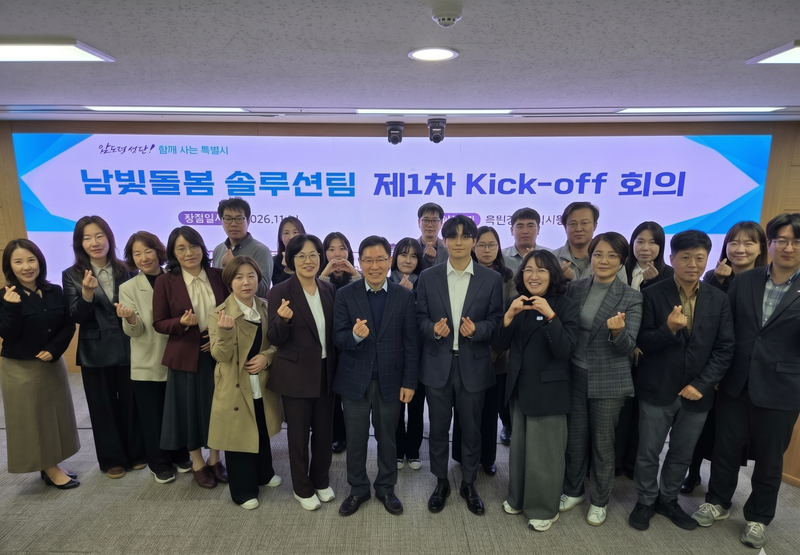
It also recently held its first meeting at the Muan office and began designing the “Nambit Care” model so that residents of the special city can receive the care they need regardless of where they live.
At the meeting, participants shared their experience operating integrated care in each city, county and district, and discussed on-the-ground challenges such as staff shortages, coordination among institutions and gaps in services.
They also exchanged views on care models suited to urban, rural and island communities, as well as plans to establish public care hubs, such as basic care centers, in areas with an insufficient supply of private services.
The Solutions Team plans to hold working-level meetings as needed to incorporate frontline input into policy, and to take part in designing and evaluating projects to develop care models tailored to different types of areas and roll them out across all 27 cities, counties and districts.
[email protected] Hwang Tae-jong Reporter