Seoul allocates 1.1022 trillion won for next year’s fire services budget, raises funding to replace aging fire trucks by 90%
- Input
- 2026-11-05 11:15:00
- Updated
- 2026-11-05 11:15:00
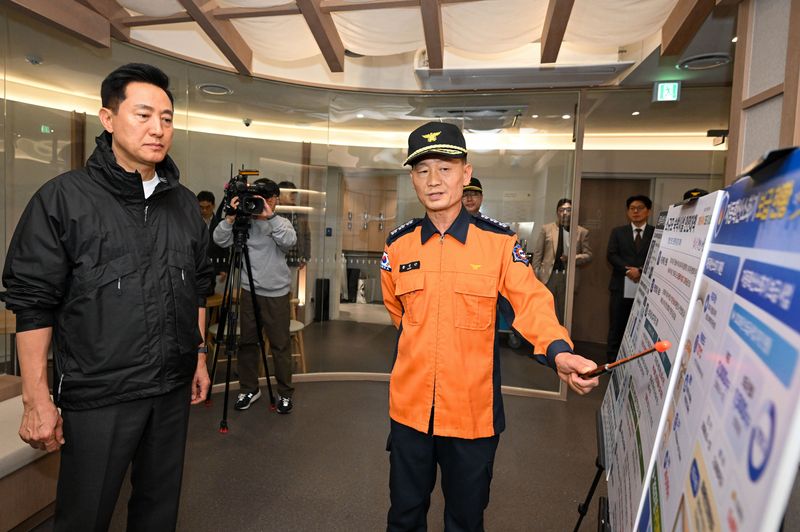
[Financial News] The Seoul Metropolitan Government has allocated 1.1022 trillion won for next year’s fire services budget, an increase of 25.8 billion won from this year. Although national funding will fall by 17.1 billion won, local funding will rise by 42.9 billion won, bringing the overall budget up 2.4%. The additional funds will be focused on replacing aging fire vehicles, bolstering ambulance team staffing, and supporting the health and welfare of firefighters. The Seoul Metropolitan Government said on the 4th that it had submitted a proposal for its 2027 fire services special account budget to the Seoul Metropolitan Council on the 30th of last month. The proposal will be finalized after review and approval by the council.
Policy program spending accounts for 210.1 billion won of the total budget, up 8.3 billion won (4.1%) from this year. The focus is on expanding the fleet of fire vehicles and on-scene equipment, and improving ambulance team operations. In particular, the budget for replacing and upgrading aging fire vehicles has been set at 16.5 billion won, an increase of about 90% from the previous year. The city plans to replace fire engines and water tankers, among other vehicles, and will separately invest 6.3 billion won to add specialized ambulances and negative-pressure ambulances.
The budget has also been increased to reduce the workload of ambulance teams that respond to calls frequently. Funding for the “Ambulance Team Professionalization Initiative” has risen by about 43% from this year to 3.55 billion won. This will provide additional support staff to heavily burdened ambulance teams that respond to at least 4,000 calls a year, while staff reassignments will be used to expand ambulance operations and strengthen the three-person response system.
The city will also step up support for firefighters’ health and welfare. The budget for meals for personnel on standby for emergency calls has been set at 5.6 billion won, a 14% increase. The city will provide specialized health screenings for retired firefighters and invest 370 million won in operating the 119 Mind Recovery Center, which offers professional counseling and healing programs.
The city has allocated 8.3 billion won for construction of a joint fire services headquarters that will house the Fire and Disaster Headquarters, the Seoul Comprehensive Disaster Prevention Center, and the Jongno Fire Station. Construction is scheduled to begin next May, with completion targeted for October 2031.
The city has newly allocated 980 million won to operate the live-fire training facility, which is scheduled for completion next May. It plans to conduct firefighting drills in conditions similar to actual fires to improve on-scene response capabilities. It will invest 6 billion won in relocating and rebuilding the Geoyeo 119 Safety Center, and 1.62 billion won in fire prevention projects, including the installation of automatic fire extinguishers.
Hong Yeong-geun, head of the Seoul Metropolitan Fire and Disaster Headquarters, said, “It is highly significant that funding has been allocated for essential fire services projects to protect public safety and frontline personnel despite difficult fiscal conditions.” He added, “We will continue to carefully assess the priorities for equipment and projects needed on the ground, seek out available resources such as the Disaster Management Fund, and make active use of them to continuously strengthen our disaster response capabilities.”
[email protected] Seong Chorong Reporter