KT, Samsung Electronics cut communication dropouts on KTX by 29% with AI
- Input
- 2026-11-05 10:27:00
- Updated
- 2026-11-05 10:27:00
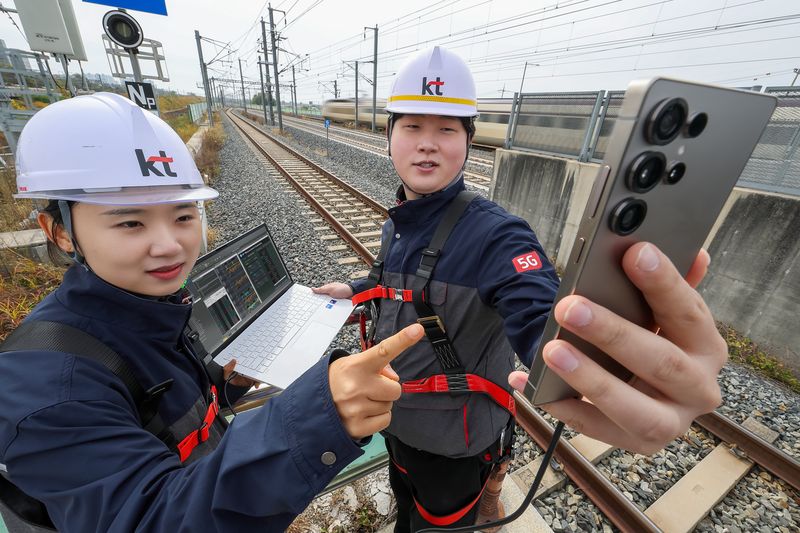
[Financial News] Wireless internet and phone calls often dropped out in high-speed sections when traveling on high-speed trains such as the KTX and SRT. KT and Samsung Electronics have succeeded in using artificial intelligence (AI) to reduce communication dropouts on high-speed trains by about 29%.
They identified a problem in which connections between base stations were delayed as trains moved at high speeds, and improved communications quality by adjusting when signals switch between stations.
KT said on the 5th that it had completed a trial of high-speed rail wireless network optimization technology developed jointly with Samsung Electronics.
The trial was conducted on a section of the Gyeongbu Line high-speed railway between Godeok-myeon in Pyeongtaek City and Maesong-myeon in Hwaseong City. A comparison of data from before and after the technology was applied showed that the rate of communication dropouts fell by about 29%. If dropouts had occurred 100 times before, they would be reduced to about 71.
The key to the technology is that it uses AI to optimize the timing of handovers between base stations. High-speed trains traveling at 250 km/h or faster move quickly, so the base station they connect to changes frequently. Delays in handovers can cause temporary disruptions to data transmission or phone calls.
To address these problems, the two companies used AI to analyze signal strength and records of connection failures collected along high-speed rail sections. Previously, they inspected individual base stations with degraded service quality through on-site measurements. This time, they used large-scale communications data to identify sections where failures recur and patterns in how connections are made.
According to KT, a major cause of communication dropouts was delays in connecting to the next base station as trains moved. The companies therefore validated the technology by identifying sections where problems occurred frequently and bringing forward the timing of handovers between base stations.
KT plans to consider implementing the technology on high-speed rail sections based on the trial results. It also plans to continue developing and validating AI-based radio access network (AI-RAN) technology with Samsung Electronics.
Jin-guk Jeong, vice president and head of the Next Generation Communications Research Center at Samsung Research, Samsung Electronics, said, "We will continue to take the lead together with KT in core AI-RAN technologies for user-centered experience innovation."
Jongsik Lee, head of the Future Network Lab in KT's Network Division, said, "We will continue developing AI-RAN technology to bring about tangible improvements in the quality customers experience."
[email protected] Choi Hye-rim Reporter