A-rated Jeju excluded from education innovation leading-region program; annual 4 billion won in support stalled
- Input
- 2026-11-05 09:15:06
- Updated
- 2026-11-05 09:15:06
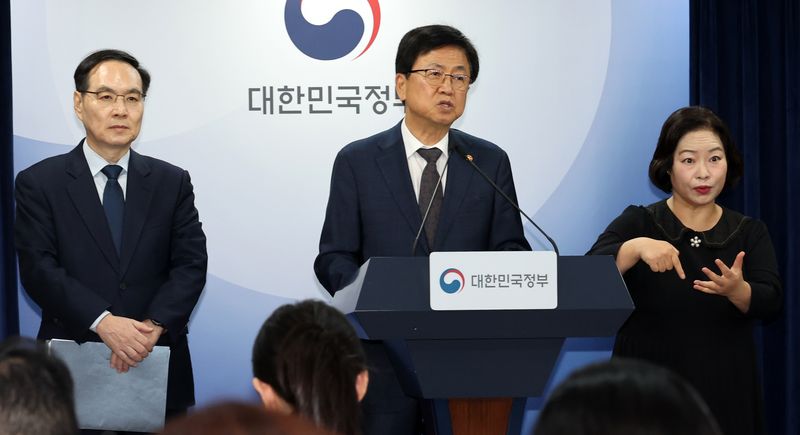
【Financial News, Jeju = Jeong Yong-bok】 Jeju, which received an A grade in the operational evaluation of the Education Development Special Zone, was not selected in next year’s call for applications for the Education Innovation Leading Regions program. With national funding of up to 4 billion won a year for metropolitan local governments now uncertain, the continuity of existing education programs has emerged as an issue.
According to the Ministry of Education on the 5th, the ministry announced the designation results for the “2027 Education Innovation Leading Regions” on the 3rd, selecting 43 of the 130 regions that applied nationwide. In Type 2, for which Jeju applied, 11 of 41 regions were selected; at the metropolitan level, the three selected were Jeonnam-Gwangju Integrated Special City, Busan and Daegu.
The Education Innovation Leading Regions program is a follow-up policy created after the pilot Education Development Special Zone program, launched in 2024, was revamped. It brings together local education offices, local governments and universities to reduce educational disparities between schools and establish a system for developing talent linked to local industries.
Type 1 supports joint curricula for small schools and improvements to school operating systems, focusing on areas with declining populations. Type 2, for which Jeju applied, focuses on improving educational conditions in areas such as old downtown districts and places with concentrations of students from immigrant backgrounds, and on developing talent needed by specialized local industries.
Selected metropolitan local governments will receive special grants of up to 4 billion won a year, with about 3.7 billion won per region scheduled for 2027. The initial support period is three years, with the possibility of extending it by two years following a phased evaluation.
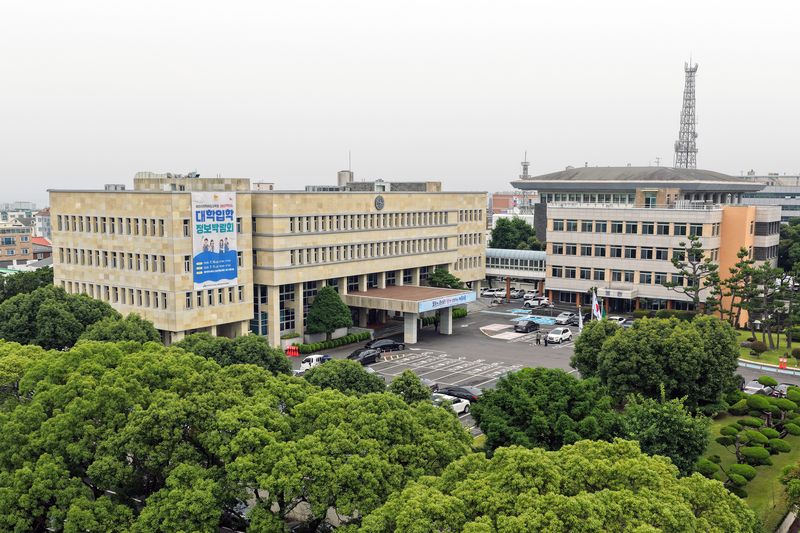
Jeju was previously designated a pilot area for the Education Development Special Zone and pursued education programs including Jeju-style autonomous schools, Global Competency Schools, the integrated care center “Kkum-nang,” and a school safety police officer system. In the 2024 Education Development Special Zone performance review, announced in October last year, it received the highest grade, A.
The evaluation at the time focused on cooperation between local governments and education offices, management of special grant disbursements, internal performance management, and the spread of best practices. The current Education Innovation Leading Regions call, however, separately assessed the innovation of new project plans, efforts to address regional educational disparities, links between universities and industry, and plans to secure funding.
The Ministry of Education said that, in selecting Type 2 regions, it placed importance on systematic analysis of local educational conditions, qualitative improvements to existing education programs, and plans to develop talent linked to industry.
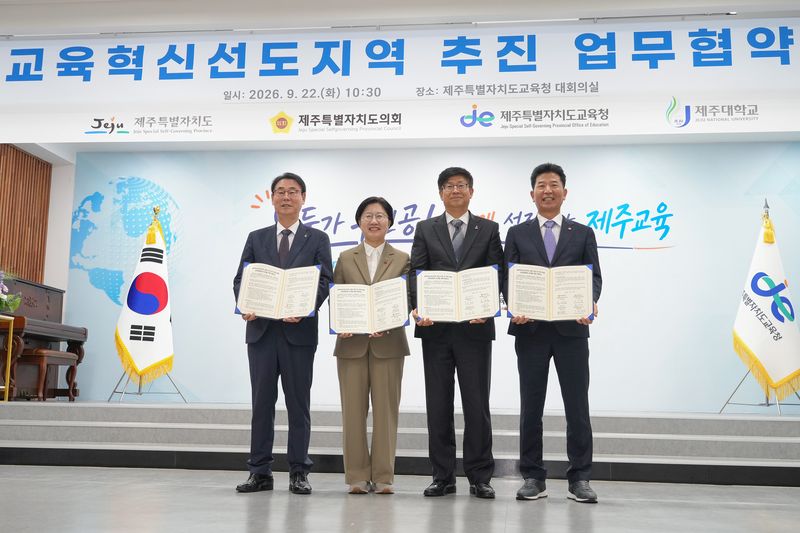
Last September, Jeju Province and the Jejudo Office of Education signed a memorandum of understanding with the Jeju Special Self-Governing Provincial Council and Jeju National University and jointly prepared an application. Now that Jeju has been excluded, they must reconsider how and with what funding to continue existing Education Development Special Zone projects.
On the 4th, the Jeju Teachers’ Association issued a statement urging the Jejudo Office of Education and Jeju Province to disclose the progress of the application process, the reasons for the rejection and the results of existing projects. Jang Jeong-hun, chair of the association, said, “The provincial office of education must come up with responsible measures to ensure that Jeju’s exclusion from the leading-region program does not immediately create gaps in projects on the ground.”
The association also stressed that the continuation of projects tied to schools, including Neulbom, care services and public education innovation, must be clarified. It called for separate funding to keep necessary programs running even if national funding is discontinued and, if cuts or discontinuation are unavoidable, for the project list, reasons and alternatives to be disclosed in advance.
It also said that the administrative burden resulting from the restructuring of programs must not be shifted onto teachers. The Jeju Teachers’ Association said the views of teachers on the ground should be reflected from the project adjustment stage and that steps must be taken to prevent unprepared cancellations from disrupting school operations.
The results of the current call have not yet been finalized. The Ministry of Education plans to finalize the designation results in November after an appeals process and to draw up plans for additional designations.
The Jeju Teachers’ Association asked the Jejudo Office of Education to promptly decide whether to file an appeal and to explain to the government the distinctive educational conditions of island and remote areas.
Jeju Province and the Jejudo Office of Education are analyzing why Jeju was not selected. Reviewing the evaluation results, responding to appeals and securing funding for existing education programs remain key challenges for Jeju’s education policy.
[email protected] Jeong Yong-bok Reporter