Salary gap between large and small companies widens from 5.44 million won at hiring to 27.26 million won for employees with 10 or more years of experience
- Input
- 2026-11-05 09:04:09
- Updated
- 2026-11-05 09:04:09
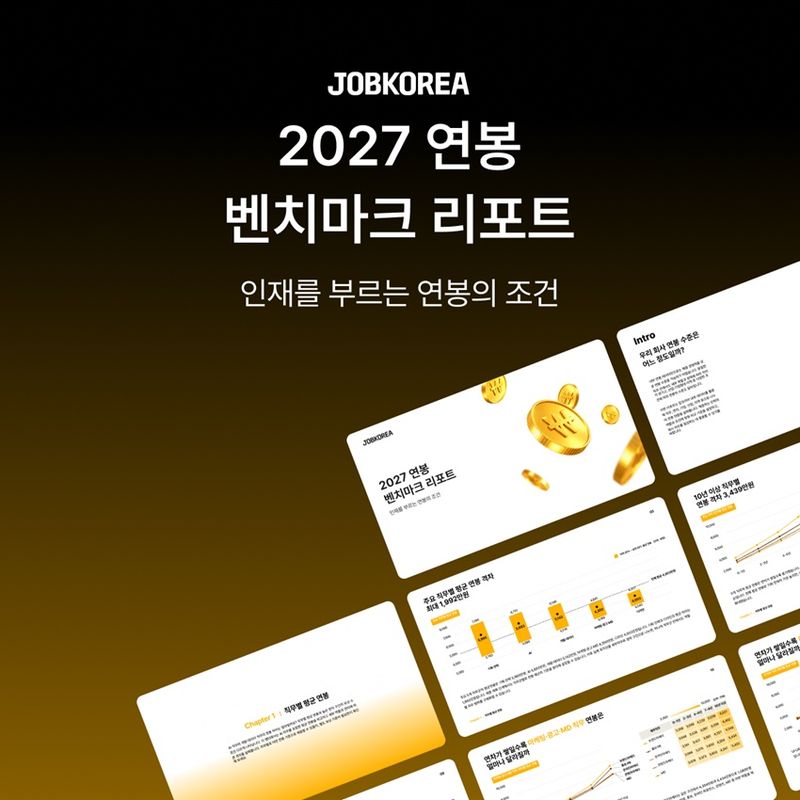
The analysis drew on company data held by JobKorea and résumé data from the past three years to calculate average salaries by job category, years of experience, company size, industry and region.
The salary gap between large companies and SMEs widened as employees gained experience. The difference was 5.44 million won for those with 0–1 years of experience, increasing to 8.34 million won for those with 2–3 years, 9.54 million won for those with 4–6 years, and 11.9 million won for those with 7–9 years. For employees with 10 or more years of experience, it reached 27.26 million won.
The difference in salary growth rates was especially pronounced around the 10-year mark. From 7–9 years of experience to 10 or more years, the average salary increase was 46.2% at large companies, compared with just 22.6% at SMEs. In other words, the increase at large companies was more than twice that at SMEs.
As a result, the average salary for SME employees with 10 or more years of experience was 51.35 million won, below the 53.77 million won average for employees with 7–9 years of experience at large companies. However, the salary cutoff for the top 25% at midsize companies was 60.31 million won, just 690,000 won below the overall average at large companies. This suggests that some midsize companies offer competitive salaries despite their smaller size.
The job-switching market showed another trend: 46.5% of people who moved on from large companies joined SMEs, a higher share than the 32.0% who moved from one large company to another. Analysts said this suggests that a range of factors beyond salary—including greater autonomy in their work, expanded roles and growth opportunities—may have influenced their decisions to change jobs.
Salary gaps across job categories also widened with experience. For employees with 10 or more years of experience, the average salary in AI roles was 81.97 million won, 34.39 million won higher than the 47.58 million won average in design roles. The difference between the two roles was 8.4 million won for those with 0–1 years of experience, meaning the gap grew to more than four times that as experience accumulated. Among AI roles, AI and machine-learning (ML) engineers with 10 or more years of experience had the highest average salary, at 97.1 million won.
By industry, finance and banking had the highest average salary at 61.23 million won, followed by manufacturing, production and chemicals at 48.35 million won. The gap between the two industries was 26.6%.
Regional differences were also evident. Among major business districts, Pangyo led with an average of 41.99 million won, ahead of Gangnam (39.66 million won), Gwanghwamun (39.57 million won), Yeouido (39.46 million won) and Seongsu (38.91 million won). By metropolitan- and provincial-level jurisdiction, Ulsan, where manufacturing is well developed, averaged 38.97 million won, higher than Seoul (38.59 million won) and Gyeonggi Province (38.54 million won).
“When candidates receive an offer, they compare the salary with what other companies have offered, so companies also need a benchmark to see where their own offers stand in the market,” said Eun-hye Jung, head of the Insight Strategy Team at Worksphere. “Companies can design effective salary packages and attract talent only if they also consider the role and experience level required for the position they are hiring for, along with overall compensation in the industry.”
[email protected] Lee Ju-mi Reporter