Israel begins forming new government as anti-Netanyahu forces rally
- Input
- 2026-11-05 10:12:34
- Updated
- 2026-11-05 10:12:34
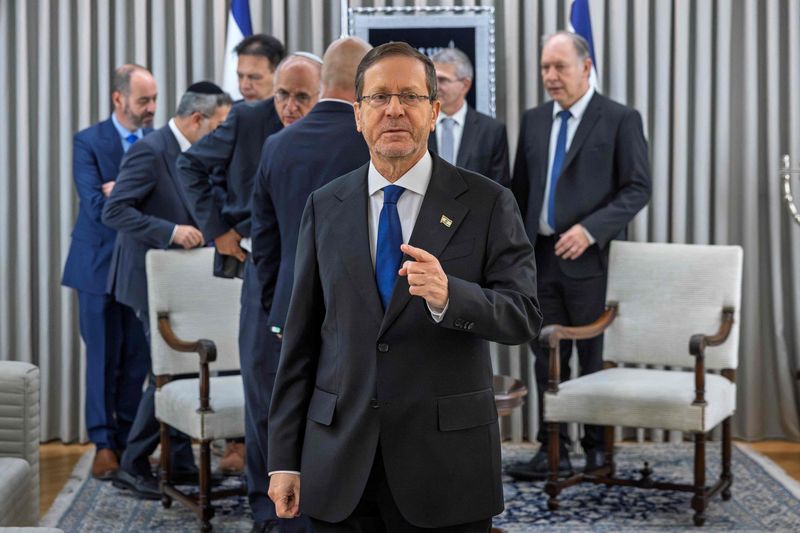
[Financial News] Negotiations to form a new government have begun in Israel, which held a general election last month. Prime Minister Benjamin Netanyahu, who has been in power for a cumulative 19 years, is finding it difficult to remain in office as Arab parties join the opposing camp.
According to local media including The Times of Israel (TOI), Israel's Central Elections Committee officially notified President Isaac Herzog on the 4th (local time) of the results of the 26th general election, held on the 27th of last month. That same day, Herzog met with leaders of right-wing parties in Jerusalem to discuss who would be given the mandate to form the next government. The consultations on forming a government are scheduled to last two days, and on the 5th, Netanyahu, who leads Likud, is expected to meet Herzog in person. The 26th Knesset is scheduled to convene on the 10th, regardless of whether a government has been formed.
In Israel, a parliamentary democracy, the prime minister-designate chosen by the president must submit a government proposal to the Knesset, including their own position and the other ministers. The candidate can take office as prime minister only if a majority of Knesset members approve the proposal in a confidence vote. The president typically nominates the leader of the party that receives the most recommendations from parties in the Knesset and grants them 28 days (with a possible 14-day extension) to form a government. If both sides fail to form a government, an “alternative government” outside the coalition could be formed. In the worst-case scenario, another election could be held next year, with Netanyahu remaining caretaker prime minister until then.
In the results of Israel's 26th general election, held on the 27th of last month, Likud and the right-wing bloc that allied with it to form a coalition government with Netanyahu won 53 of the 120 seats. Before the election, they held 68 seats, more than the 61 needed for a majority, but lost 15 seats in this election. Likud won the largest share of the right-wing bloc's seats, with 27. That was the most of any party in the Knesset.
The opposition alliance against Netanyahu won 48 seats. Yashar, which leads the alliance, secured 21 seats, while Yisrael Beiteinu, a right-wing party in the opposition camp, won seven. Beyahad and the Democratic Party won 12 and eight seats, respectively. Yashar leader Gadi Eisenkot attracted attention in this election as a challenger to Netanyahu. The Arab parties Joint List and Ra'am won 11 and eight seats, respectively.
Netanyahu said on social media on the 2nd that he could cooperate with some parties in the opposition alliance. However, targeting Joint List and Ra'am, he said, “There can be no government supported by Arab parties,” and ruled out cooperating with them.
In a statement on the 4th, Ra'am said it would recommend Yashar leader Eisenkot as Israel's next prime minister. This brought the number of lawmakers recommending Eisenkot to 56, more than the 49 backing Netanyahu. The Degel HaTorah faction (four seats), part of United Torah Judaism (UTJ), which had previously supported Netanyahu, declared at its meeting with Herzog that day that it would not recommend anyone for prime minister. The faction is dissatisfied with the Netanyahu government's policy of conscripting Haredi (ultra-Orthodox) Jews.
Earlier, Joint List leader Yousef Jabareen said in an interview with the British newspaper The Guardian on the 2nd that he would not join an Eisenkot-led coalition government. However, he said, “We will consider the possibility of supporting a new government from outside in order to use our political influence to oust the extreme Netanyahu government,” adding that they were considering indirect ways to offer support, such as a confidence vote in parliament.
[email protected] Park Jong-won Reporter