Will Crypto’s Clock Stop as U.S. Democrats Take Control of Congress? “Legislation Stalled, Business Goes On” [Crypto Brief]
- Input
- 2026-11-05 08:37:15
- Updated
- 2026-11-05 08:37:15
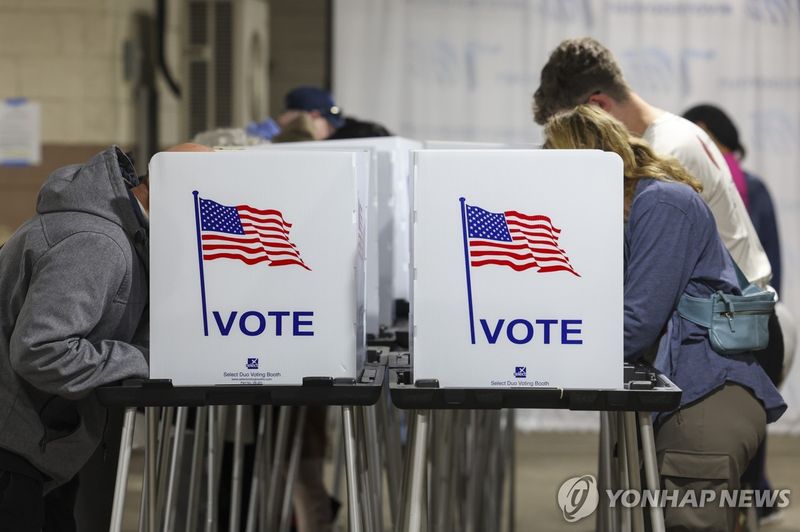
[Financial News] With Democrats taking control of both the House and Senate in the U.S. midterm elections, debate is underway over the future of the crypto policies pursued by the Trump administration. Comprehensive crypto legislation and regulatory easing could be stalled, but some expect businesses that have already entered the regulated financial system, including tokenized securities and stablecoins, to continue growing. According to the crypto industry on the 5th, global experts expect congressional oversight of the U.S. Securities and Exchange Commission (SEC) and the Commodity Futures Trading Commission (CFTC) to increase as a result of the Democrats’ control of Congress. Final approval of SEC initiatives—including exemptions for tokenized-securities trading platforms and revisions to transfer-agent rules—as well as the CFTC’s regulatory framework for perpetual futures, could also take longer than expected.
However, the prevailing view is that delays in regulatory agencies’ policy efforts and a halt to Wall Street’s crypto businesses are separate matters. That is because tokenized-securities and stablecoin businesses can make considerable progress under existing securities laws and financial regulatory frameworks, without new legislation.
“Limited Impact on Industry Growth”
BlackRock, the world’s largest asset manager, and crypto asset manager Grayscale said the election results would have a limited impact on the industry’s long-term growth. Robert Mitchnick, BlackRock’s head of digital assets, said at a New York ETF Investor Forum held before the election results were announced that the political shift would have “honestly, little impact” on crypto businesses. He explained that Bitcoin and Ethereum have gained considerable regulatory clarity needed to launch investment products, and that bipartisan support could grow as market adoption expands.
Peter Curley, head of global regulatory affairs at Ondo Finance, said, “Congressional oversight of the SEC and CFTC could increase, but there is little reason for tokenized-securities businesses to stop,” adding, “The relevant agencies have already made considerable progress under the existing regulatory framework.”
Aaron Kaplan, CEO of Prometheum, also forecast that businesses would make use of existing securities laws rather than wait for new legislation. Brokerages are currently considering ways to offer crypto-related products through brokerage accounts. Securities issuers and overseas trading platforms are also exploring businesses involving the issuance and trading of U.S. stocks, bonds and funds as blockchain-based tokens.
Jack Pandl, head of research at Grayscale, stressed that the crypto market is not driven solely by U.S. politics. A composite analysis of 14 indicators, including trading volume, mining and holdings, put the U.S. share of global crypto activity at an average of 19% and a median of 16%. This means about 80–85% of all activity takes place outside the U.S. He also said the likelihood that U.S. federal government debt will increase, regardless of which party controls Congress, could support demand for alternative stores of value such as Bitcoin.
“Spent the Money but Lost”...Political Spending Strategy Set to Change
By contrast, significant changes are expected in the crypto industry’s political spending strategy. According to foreign media outlets including Cointelegraph, the industry’s super PACs (political action committees) spent at least $176 million (about 230 billion won) across roughly 100 districts in this midterm election, including the primaries. That exceeded the $130 million (about 170 billion won) spent in the 2024 election. Fairshake and affiliated PACs alone contributed $154.5 million (about 200 billion won).
However, as key candidates backed by the industry lost, calls have grown to reassess the effectiveness of such massive political spending. Fairshake is reportedly currently holding at least $67 million (about 90 billion won) that it can use in the 2028 election. Jeff Better, a Fairshake spokesperson, said a new electoral landscape would take shape ahead of the 2028 election.
[email protected] Han Young-jun Reporter