“If You’re Obese, Just Get the Shot; This Game Will Be Over in Five Years” Professor Jang Hyung-woo’s Straight-Talking Take [The Shot That Changed the World 5]
- Input
- 2026-11-17 10:00:00
- Updated
- 2026-11-17 10:00:05

[Financial News] His words flowed freely. He was upbeat and clear. He said, “The moment you stop taking obesity medication, your weight goes back to where it was,” and bluntly declared that people who can lose weight through exercise and diet are not “obesity patients.” He spoke from his own experience of losing 40 kg. His words carried weight because he had lived with obesity as a patient before becoming a doctor.
I met Professor Jang, a cardiothoracic surgery professor at Seoul National University Bundang Hospital, known as “Professor Agu-tong,” on the 3rd. Asked where the future of obesity treatment was headed, he was certain that, with the arrival of Wegovy and Mounjaro, “this game will be completely transformed in five years.”
Lived with obesity all his life, reaching 118 kg... “Life was devastated by anxiety over not knowing when I might die”
—You lost a remarkable 40 kg. What was the process like?▲I had childhood obesity. I was already over 100 kg in high school, and my weight rose to 118 kg after I got married and began my residency.I had lived with obesity my whole life, and every attempt to lose weight ended in failure.Then warning signs began to appear. I developed sleep apnea and had to use a CPAP machine, and in 2018 I developed an arrhythmia.Anxiety over not knowing when I might die devastated my life.I tried every possible way to lose weight, but in the end, I could not. As a doctor, I searched the medical literature and concluded that “surgery was the only thing that worked.”Sleeve gastrectomy in 2020was what I underwent. I weighed 116 kg at the time. I lost weight quickly after the surgery, reaching 89 kg at six months and maintaining that weight for about a year and a half. But gradually I became less able to control what I ate, and by the fourth year my weight had returned to 102 kg. My health problems came back. I could not get below 97 kg no matter how hard I tried, and then Wegovy became available.Wegovy in October 2024I had a consultation and started treatment on the day it first became available. I felt much less hungry and digested food more slowly. After 10 months on the medication, I had lost 16 kg and weighed 81 kg. But the mild nausea from Wegovy was bothersome, so I switched to Mounjaro. I lost another 3 kg after that.Currently taking 5 mg of Mounjaroand maintaining a weight of 78 kg.Stop the medication after losing weight, and you return to the same “set point”
—You’ve maintained a weight in the 70–80 kg range for at least a year. Could your body accept a new set point even without medication?▲Not at all. The set point—the weight baseline set by the brain—only goes down when something seriously affects the body, such as cancer or a major injury. It may happen in rare cases, but generally it does not. I am overweight, but I am still an obesity patient. If I stop taking the medication, I will regain the weight, so I have to keep taking it. That is why I do not try to stop. (People who are not obesity patients) have no idea how frightening it is to regain the weight.People who can lose weight easily and keep it off are not obesity patients. If someone can maintain their body shape with a manageable degree of restraint, they are not an obesity patient.People with obesity find it hard to lose weight and even harder to keep it off. Those who have never felt that formidable force, like nuclear energy, keep repeating, “Just exercise and eat less.”—Some obesity patients who have successfully lost weight ask when they can stop taking the medication.▲I want to tell them, “You will find it extremely difficult to achieve the results you want.” If you stop, the weight will come back. The set point is still there.—Do you think the treatment paradigm for severe obesity should be reshaped around medication?▲More precisely, it should be medication and surgery. Surgery remains the best option for people with severe obesity. Some people have lost more than 30 kg with medication, but many have not. The average weight loss is around 17–22%. I think surgery should be added to medication for people who need to lose 15 kg or more.Resistance to obesity drugs? It took insulin 10 years to become established as a diabetes treatment
—There is still public resistance to treating obesity with medication.▲Generally,for new research findings that differ from established knowledge to be accepted as established fact, considerable timeis needed. It took more than 10 years for insulin to become established as standard treatment for diabetes. Statins, which treat low-density lipoprotein (LDL) cholesterol—often called “bad cholesterol”—also showed clear benefits, but faced a decade of resistance. In the case of Helicobacter pylori, considered a major cause of gastritis and stomach cancer, people still did not believe the discoverer even after he swallowed the bacteria himself and demonstrated that it caused gastritis.—How long do you think it will take for obesity drugs to bring about a paradigm shift?▲Obesity drugs are more accessible in the market than the three examples I mentioned earlier. Academia is also adapting quite quickly, and the environment is conducive to sharing papers and research findings, so we are not seeing the same intense resistance as before. The American Diabetes Association already ranks GLP-1-based treatments among its top options and recommends that patients with obesity and metabolic syndrome actively receive GLP-1 treatment. I believethis game will be completely transformed in about five yearsand am speaking out like this to bring that timeline forward.—The weight-loss effects are clear, but some people report side effects. Quite a few patients with severe obesity also complain of indigestion or diarrhea.▲People with severe obesity find it difficult to change their poor eating habits.They feel the side effects more intensely because they keep eating even when their bodies are unwell—that is why. But these side effects are temporary. They pass if people bear with them and eat foods that are easy to digest, such as porridge. The side effect most often cited is pancreatitis, but it is very rare, and the causal link is uncertain. Problems that arise when thin people take the medication are not a problem with the drug but with who is taking it.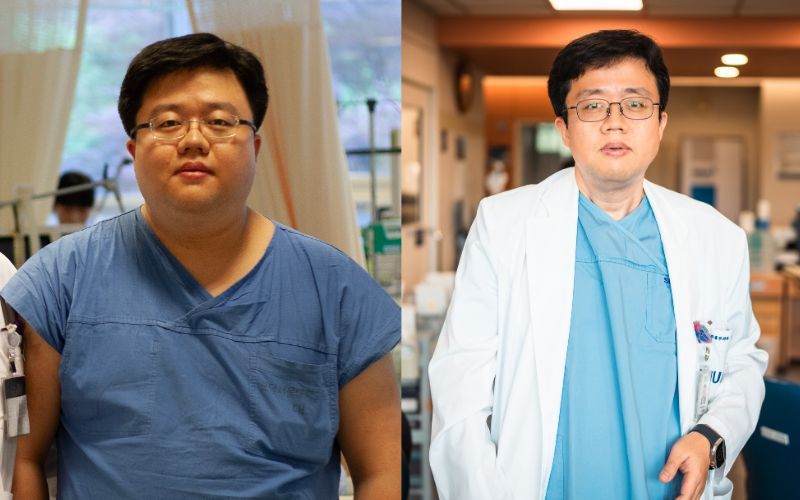
Just as drugs touted for boosting sexual stamina disappeared after Viagra arrived, the industry landscape will change
—The current obesity treatment and diet industries grew out of a paradigm that obesity could be treated with exercise and diet. How do you think GLP-1 obesity drugs will change the industry landscape?▲First, unproven treatments and drugs will be swept away all at once by medications with proven effects. It will be like the way drugs said to boost sexual stamina disappeared after Viagra arrived. Businesses such as diet camps that promise weight loss through exercise and diet will also contract. I think buffets have a bleak outlook, too. If obesity drugs make people unable to eat as much, they may feel their money is going to waste and stop going as often. The drugs also reduce the desire for alcohol, so alcohol consumption will fall further. People will also eat fewer ultra-processed foods and sugary foods. I used to eat three or four ice creams in a row, but now one is enough for me.—Conversely, which markets will grow?▲The markets for cosmetic procedures such as lifting and anti-aging treatments are already moving quickly. Clinics once known for specializing in obesity have also shifted their focus to anti-aging and rejuvenation. I had a pronounced double chin myself, but after losing weight, wrinkles appeared there. After a lifting treatment, my skin was noticeably firmer and I had fewer wrinkles. I also think demand in the fashion market will grow, since people who lose weight after being obese need to buy new clothes.—Is there anything you would like to say in closing?▲Obesity drugs are still far too expensive. They are a considerable burden for patients with obesity who need to keep taking them.I propose introducing an obesity certification system to support patients with obesity.For example, a university hospital could take two measurements three to six months apart. If a patient’s BMI is over 30 on both measurements and they have a comorbidity, or if it is over 35 on one measurement, they could be certified as having obesity and receive insurance coverage. I would be very grateful if coverage were even just 80%. People who do not have obesity can pay the full cost themselves.
It was a revolution. Weight that used to come off only after people starved themselves and ran began to come off with a single injection. When Mounjaro arrived in Korea last August, the “weight-loss game” was turned upside down. But revolutions have a dark side. Neighborhood gyms were pushed to the brink of closure, and hair and muscle loss along with the weight became new concerns.[The Shot That Changed the World]takes a five-part look at the changes obesity drugs have brought to the bodies and daily lives of people in Korea, as well as the bright and dark sides of the industry.
[email protected] Sung Min-seo, Kim Hee-sun Reporter