[Breaking] ‘Semiconductor supercycle’ pushes current account surplus past $60 billion to a record high
- Input
- 2026-11-05 08:00:42
- Updated
- 2026-11-05 08:00:42
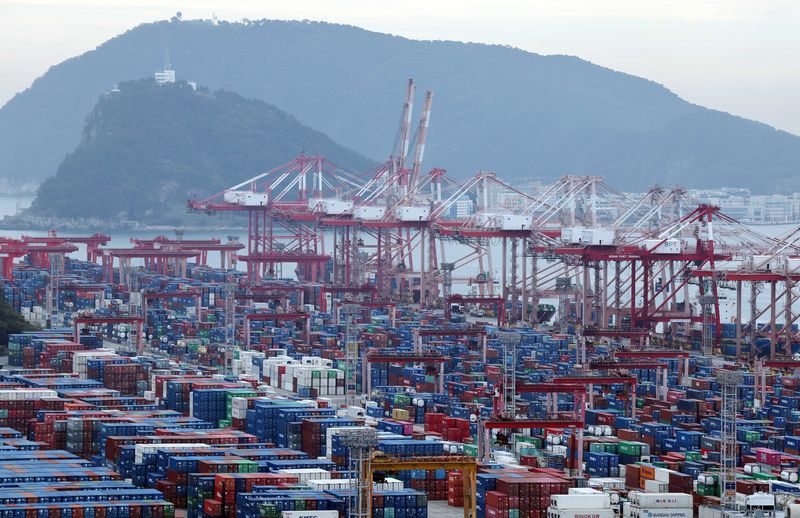
[Financial News] Fueled by the semiconductor supercycle, South Korea’s current account surplus topped $60 billion for the first time, setting an all-time record. The record-breaking run of surpluses is expected to continue into the fourth quarter.
On the 5th, the Bank of Korea announced that the September current account surplus was provisionally tallied at $61.46 billion. That was a sharp increase of $15.34 billion from the previous month and a new all-time high, surpassing the previous record after three months.
The cumulative current account surplus for January–September this year reached $340.66 billion, a steep increase to four times the $83.89 billion recorded in the same period last year.
The goods account posted a surplus of $62.75 billion in September.
Goods exports totaled $130.72 billion, a record high, and exceeded $100 billion for the fourth consecutive month. Information technology (IT) items in particular drove exports; by product (customs-clearance basis), computer peripherals (SSDs) surged 392.3% and semiconductors 260.3%. Non-IT items also rose broadly, including petroleum products (+73.3%), with non-IT goods up 13.4% overall.
Goods imports totaled $67.97 billion, up 29.4% from the previous month.
Robust growth continued in raw materials (+21.3%) and capital goods (+42.3%), while imports of consumer goods also edged up (+2.0%).
The services account posted a deficit of $3.35 billion.
The travel account posted a deficit of $770 million, little changed from the previous month, as the number of people entering and leaving the country both declined after the peak summer season for overseas travel.
The transportation account, however, posted a surplus of $130 million, with the surplus narrowing somewhat as charter-hire payments increased from the previous month. The intellectual property usage fees account also posted a deficit of $770 million as the seasonal boost from intellectual property receipts concentrated in the previous month faded.
The primary income account, which reflects money earned by working or investing abroad, posted a surplus of $2.65 billion.
The surplus widened considerably from $1.92 billion the previous month, thanks to a strong performance by the dividend income account ($2.24 billion) as the seasonal factor of quarterly dividend payments on portfolio investments—typically concentrated in May, August and November—fell away.
Net assets in the financial account, calculated by subtracting liabilities from overseas investment assets, rose sharply to $54.34 billion from $40.23 billion the previous month. The increase was the largest on record.
South Korean residents’ direct investment assets abroad rose to $11.43 billion. Foreigners’ direct investment liabilities in South Korea also increased to $6.52 billion, returning to an upward trend.
South Korean residents’ overseas portfolio investment remained at a high level of $16.63 billion, little changed from $16.6 billion the previous month.
By category, the increase in equities ($9.91 billion) narrowed somewhat, led by nonfinancial corporations and others. But debt securities ($6.72 billion) set a new record for net investment as overseas bonds became more attractive to investors.
Portfolio investment liabilities recorded a net outflow of $13.81 billion. The decline widened further as foreign investors’ net selling of equities increased sharply. Equity liabilities fell by $13.74 billion, reflecting a steep rise in net selling, particularly of large-cap semiconductor stocks.
[email protected] Jung Sang-gyun Reporter