Europe watches closely for Trump's next move [U.S. Midterm Elections]
- Input
- 2026-11-05 09:32:03
- Updated
- 2026-11-05 09:32:03
[Financial News] European countries are deeply concerned that President Trump, politically bruised by the Democrats’ winning a majority in Congress in the midterm elections, may take an even more unpredictable approach on the diplomatic stage during the remaining two years of his term.
A European Union (EU) diplomat told Euronews in an interview on the 4th (local time), “Trump is more likely to become an unpredictable ‘Mad Dog’ than a ‘lame duck’ whose power has weakened,” adding, “With his domestic political standing diminished, he may become more fixated on foreign policy in an effort to deliver results.”
Europe’s biggest concern is the energy crisis caused by the war with Iran. Energy prices across Europe have surged as Iran has blockaded the Strait of Hormuz.
A Congress in which the Democrats hold a majority may pressure President Trump to end the war with Iran through oversight of military spending and hearings. But if Trump vetoes a congressional bill to end the war, overturning the veto would require two-thirds support in both the House and Senate, making it difficult to impose any meaningful constraint. Experts forecast that a swift resolution will be difficult given the political standing of Trump and Israeli Prime Minister Benjamin Netanyahu.
By contrast, positive changes are expected on support for Ukraine. The new Congress, led by the Democrats, is expected to resume providing Ukraine with essential military supplies, including air defense systems and ballistic missile interceptors, and pressure the White House to take a tougher stance toward Russia.
Trump’s election defeat may somewhat curb radical proposals such as a full withdrawal of U.S. troops stationed in Europe, but it is unlikely to change the broader U.S. policy of disengaging from European security.
The U.S. Department of Defense has already announced the withdrawal of 5,000 U.S. troops stationed in Germany and is reviewing its force posture in Europe. The Democratic-led House may serve as a short-term safeguard, but European countries are facing the reality that they can no longer rely solely on the U.S. security umbrella and are moving to strengthen their own defense capabilities.
No major shift is expected in trade, either, because authority over tariffs and trade agreements remains concentrated in President Trump’s hands.
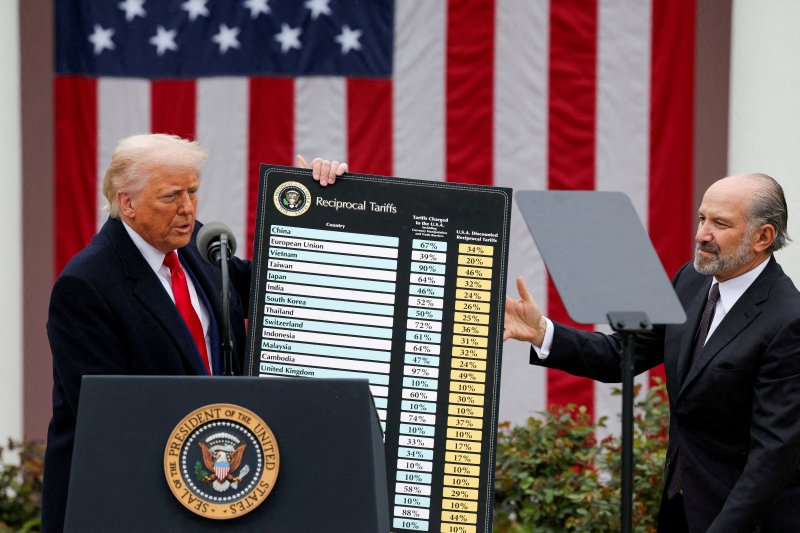
Under the trade agreement signed by the EU and the United States in July 2025, EU goods currently face a 15% tariff. While there are concerns that President Trump may threaten additional tariffs to vent his frustration over the election loss, some EU lawmakers are calling for the bloc to seek a renegotiation of the trade deal with a weakened Trump, including an exemption from the 15% tariff and a cut to the 50% steel tariff.
Sharon Hudson-Dean, a researcher at the British think tank Chatham House, appeared on a Sky News program and predicted, “Congressional hearings and oversight, as well as legal restrictions, will be strengthened going forward, and the Democrats will tighten controls further by using Congress’s power to review the budget.”
Hudson-Dean said Congress would wield substantial influence over the U.S. Department of Defense’s ongoing budget restructuring, particularly on matters including arms sales approvals. She explained that major defense priorities involving large budgets—such as missile types, the adoption of new technologies and the military use of artificial intelligence (AI)—would be subject to close congressional scrutiny.
Hudson-Dean emphasized, “The U.S. Congress will greatly strengthen its voice on these issues and conduct thorough investigations,” adding, “This will determine the position the United States takes on global diplomatic and security issues over the next year.”
[email protected] Yoon Jae-joon Reporter