Hanji Culture Recommended for UNESCO Intangible Cultural Heritage Listing; Final Review in Xiamen, China
- Input
- 2026-11-05 07:21:41
- Updated
- 2026-11-05 07:21:41
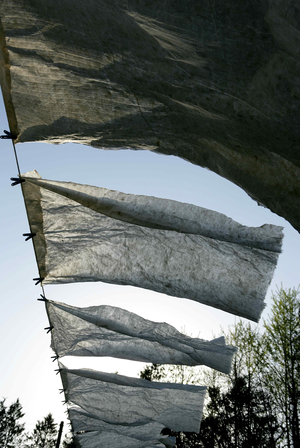
According to the Korea Heritage Service on the 5th, the Evaluation Body under UNESCO’s Intergovernmental Committee for the Safeguarding of the Intangible Cultural Heritage recommended inscription for all 59 applications to the Representative List reviewed this time, including South Korea’s application for “Traditional knowledge and skills and cultural practices of Hanji making.”
The final decision on inscription will be made at the 21st session of the Intergovernmental Committee for the Safeguarding of the Intangible Cultural Heritage, to be held in Xiamen, China, from November 30 to December 5. South Korea submitted its application to inscribe Hanji culture in 2024 and provided supplementary materials last year. Most recently, in 2024, “Korean jang-making culture” was added to the list.
Hanji is traditional paper made by mixing paper mulberry fibers, water and plant-based mucilage, then scooping the mixture onto a bamboo screen. A signature technique, oebal-tteugi, involves moving the screen back and forth and from side to side to drain the water while spreading the fibers evenly. In villages where paper mulberry is grown, artisans have passed down the papermaking techniques, and residents have helped with the work through reciprocal labor exchanges.
Hanji has been used for writing and printing, as well as for covering the doors and windows of traditional Korean houses. Today, it is also used to restore cultural heritage and make crafts. In South Korea, Hanji-making skills were designated a National Intangible Heritage in 2005 under the name “Hanjijang.” The UNESCO Representative List includes the techniques for making China’s xuan paper and Japan’s washi.
North Korea’s application for “Traditional Martial Art of the Democratic People’s Republic of Korea, Taekwon-Do” was also recommended for inscription. If inscribed, North Korea’s intangible cultural heritage elements would increase to six, including Ssireum, jointly inscribed by North and South Korea. The Korea Heritage Service proposed pursuing a standalone inscription for South Korean Taekwondo or an “extension inscription.” An extension inscription would add South Korea’s transmission community to the existing element if North Korean Taekwondo is inscribed first.
[email protected] Jang In-seo Reporter