[Exclusive] Seoul holds up remodeling, blindsiding 80 complexes with a single line in a document
- Input
- 2026-11-05 10:41:26
- Updated
- 2026-11-05 10:41:26
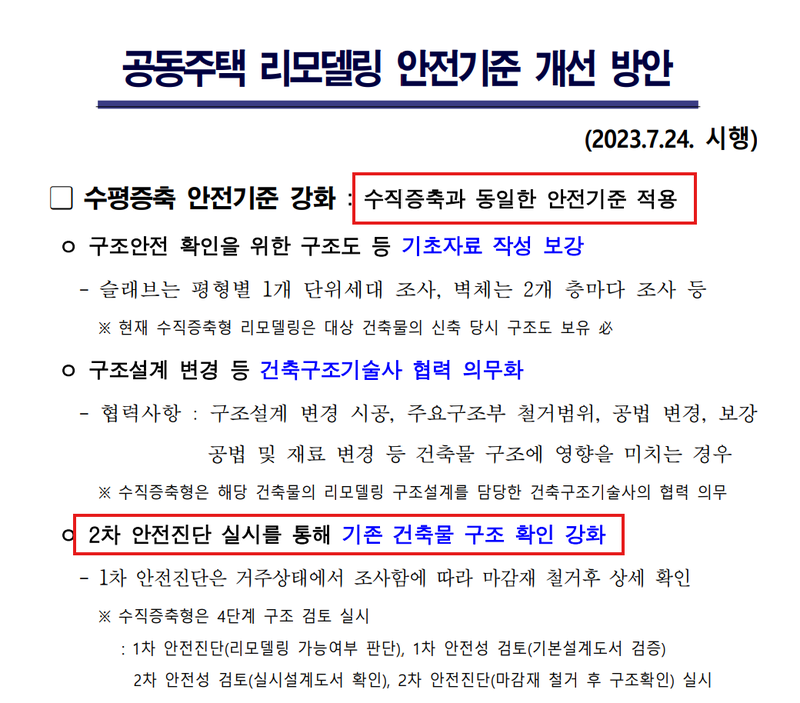
According to the redevelopment industry on the 5th, the remodeling association for A Apartment was recently notified, as a condition during the district office’s approval process for establishing a rights-change plan, that it must comply with Seoul’s “Improvement Plan for Safety Standards for Multi-Family Housing Remodeling.” Prepared by Seoul in July 2023, the document says that horizontal extensions should be subject to the same safety standards as vertical extensions, including a second safety inspection.
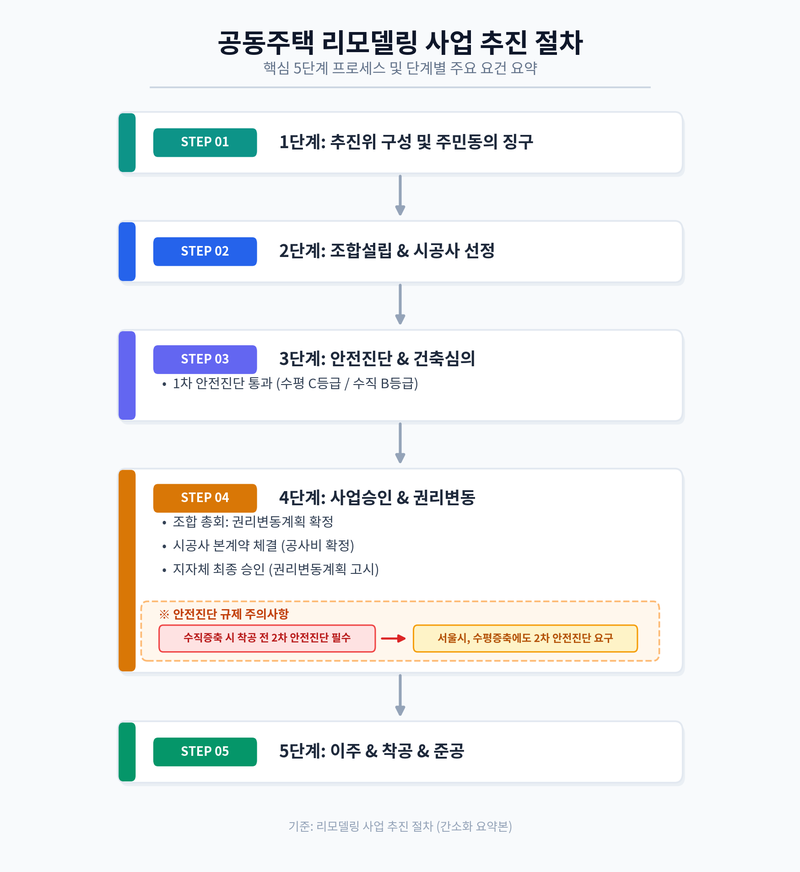
A Apartment, which is undertaking only a horizontal extension, is not subject to a second safety assessment under the current Housing Act. Vertical extensions, which add floors and require the building to support additional loads above, must receive a safety grade of B or higher and undergo a second safety assessment after residents move out and the building is demolished. By contrast, horizontal extensions, which expand floor area only to the sides, front, and back, do not add load above; they can proceed with a grade of C and do not require a second safety assessment.
The three-year-old guideline has only now come to light because no complex undertaking a horizontal extension had previously had its rights-change plan finalized. An industry official criticized the move, saying, “Many complexes in Seoul recognized the difficulties of a second safety assessment and gave up on vertical extensions or pilotis designs. They overcome all kinds of regulations and finally secure approval for a horizontal extension, only to be thrown straight back into a regulatory prison.”
Against this backdrop, association heads across Seoul are caught in a bind. They are struggling to persuade local governments and win residents’ understanding. Experts also say Seoul needs to review the matter. An expert on remodeling structures pointed out, “Since projects are being held back by an old internal document, Seoul should undertake a comprehensive review.”
A Seoul Metropolitan Government official responded, “On safety, our position is that requirements should be strengthened where necessary, based on the views of experts.” Asked about Seoul Mayor Oh Se-hoon’s comments that he would prepare measures to promote remodeling, the official said, “We are working to address all the concerns we can,” adding, “We will provide various forms of support to improve project viability, but we have no choice but to take a strict approach to safety.”
Meanwhile, confusion is unfolding in Gyeonggi Province following a sudden change by the Ministry of Government Legislation (MOLEG) in its authoritative interpretation of the law on pilotis-style vertical extensions. Neuti Village Complexes 3 and 4 in Jeongja-dong, Bundang District, Seongnam, have already obtained permits and completed around 99% of their structural-frame construction. However, the change in interpretation has led to confusion because the standards applied by the central government and local governments differ. The instability of administrative standards is seen as the biggest obstacle to the project.
[email protected] Jeon Min-kyung Reporter