“Pondering the climate crisis and the future of islands” ... 2026 Yeosu World Island Expo wraps up its 61-day run
- Input
- 2026-11-04 23:55:03
- Updated
- 2026-11-04 23:55:03
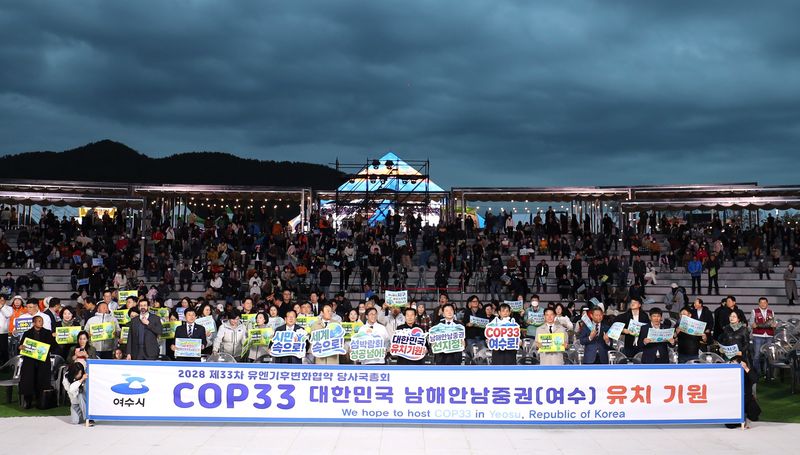
[Financial News] The 2026 Yeosu World Island Expo, the world’s first international event devoted to islands, closed on the 4th after a 61-day run.
The expo, which opened on September 5 under the theme “Islands, Connecting the Sea and the Future,” held its closing ceremony that afternoon at the main venue in Jinmo District on Dolsan, Yeosu, Jeonnam-Gwangju Integrated Special City, bringing its journey to a close. About 1,000 people, including Min Hyung-bae, mayor of Jeonnam-Gwangju Integrated Special City; Seo Young-hak, mayor of Yeosu; and Park Soo-gwan, the expo’s private-sector committee chair, attended the ceremony.
The highlight of the closing ceremony was the reading of the ‘Yeosu Islands Declaration.’ Its five articles set out five commitments: preserving the islands’ nature and culture; jointly responding to climate change; promoting the health and safety of island residents; balancing environmental conservation with regional development; and calling for the establishment of ‘World Islands Day’ as a UN international observance.
Mayor Min Hyung-bae said, “It was a meaningful occasion where islands from around the world came together to share their histories and cultures and reflect together on the climate crisis and the future of islands.” He added, “We will carefully review the expo’s achievements and challenges and expand the industrial and growth opportunities that the islands offer.”
The expo faced major criticism early on over poorly developed content and inadequate on-site operations. It was widely criticized for lacking facilities where visitors could experience future modes of transportation, for shoddy staging of local performances using converted cargo trucks, and for high restaurant prices. However, support from the central government, including the prime minister, combined with the organizing committee’s wide-ranging efforts to replace exhibits and strengthen programs, and the expo began to stabilize in its middle and later stages.
After overcoming its weak initial turnout, the expo recorded cumulative attendance of 2,502,594 as of the 3rd, the day before closing. It reached about 83.4% of its original target of 3 million visitors and is being assessed as “half a success.”
However, many challenges remain after the expo’s closure. The biggest issue is the budget. Direct project costs, initially set at 24.8 billion won when approved by the Ministry of Economy and Finance, rose to 72.3 billion won; including related projects, the total ballooned to around 185 billion won, prompting questions about whether the increase was justified. In response, Joo Jin-woo, a lawmaker from the People Power Party, has submitted a request for a public audit of the expo’s overall operations, backed by signatures from about 6,700 people.
The qualitative assessment of the expo’s success has also come under scrutiny. The organizing committee initially set a target of 9.6 billion won in paid ticket revenue (1.05 million tickets), but as of early last month, paid visitors accounted for only about 16% of total attendance, raising questions about the expo’s actual economic impact. Other urgent challenges include resolving disputes with companies over facility settlements and devising plans for the post-expo use of infrastructure, including the main venue, built with substantial funds.
[email protected] Park Ji-hyun Reporter