Special counsel searches National Election Commission for 12 hours over alleged voting-record tampering and 45.9-billion-won voting machine favoritism; about 10 booked as suspects
- Input
- 2026-11-04 23:14:42
- Updated
- 2026-11-04 23:14:42
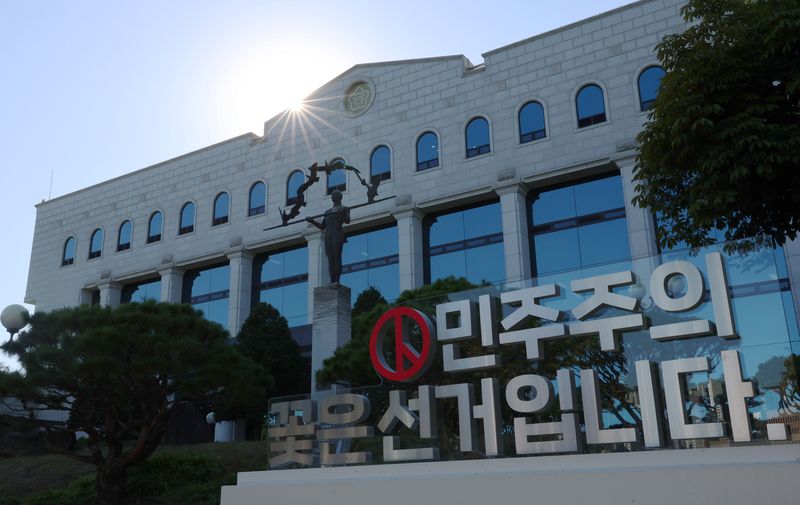
[Financial News] The Election Commission special counsel team (Special Counsel Lee Tae-han), which is investigating the ballot shortage and other issues in the June 3 local elections, conducted an intensive search lasting about 12 hours in connection with allegations of falsified voting records at the National Election Commission and favoritism in a ballot-issuing machine project.
According to legal sources on the 4th, the special counsel team deployed a large number of personnel, including prosecutors and digital forensic investigators, to search the National Election Commission, the Seoul Metropolitan Election Commission, and Company A, a manufacturer of ballot-issuing machines, starting at 9 a.m. that day. The search of the National Election Commission ended at 8:45 p.m., while the search of Company A ended at around 9:10 p.m.
■ “To evade responsibility” ... Evidence found of orders to revise voting records after the fact
The special counsel team launched a compulsory investigation, believing that the National Election Commission had carried out organized falsification of voting records to cover up the ballot shortage during the local elections.
According to the special counsel team, so-called “ballots without serial numbers” were distributed and used at around 140 polling stations nationwide during the election. This violated the Public Official Election Act, which requires serial numbers to be printed on ballots. Investigators found that, concerned about being held responsible and facing lawsuits over the use of unnumbered ballots, the National Election Commission instructed election commissions at various levels shortly after the election to “make post-election corrections to inadequately completed voting records.”
The local election commissions that received the instruction are believed to have arbitrarily retrieved voting records several days after the polls closed and added serial numbers to the unnumbered ballots, or inserted false information in the special-notes section, such as, “We anticipated a ballot shortage and requested countermeasures.” The special counsel team confirmed that such falsification took place at at least around 40 of the approximately 140 locations where unnumbered ballots were distributed. It believes the altered voting records were submitted unchanged to the National Assembly and others after the ballot shortage occurred.
The special counsel team has booked around 10 people, including the National Election Commission’s elections management division chief and elections division staff at regional commissions, as suspects on suspicion of conspiring to make post-election revisions, including dereliction of duty, falsification of official documents and their use, and related offenses. The investigation is being expanded.
■ Alleged favoritism in exclusive supply of ballot-issuing machines worth 45.9 billion won
Separately, the special counsel team is conducting an extensive investigation after finding evidence that the National Election Commission favored Company A in the “2024 Model Advance Voting Ballot-Issuing Machine Manufacturing and Consumables Procurement Project,” potentially constituting breach of trust in the course of business.
The special counsel team suspects that the National Election Commission leaked the project plan to Company A before announcing the tender, and turned a blind eye to a breach of contract even after Company A arbitrarily modified the machines following performance testing so they would recognize only its proprietary ink. Investigators also found evidence that the Commission changed internal guidelines so that election commissions at various levels would purchase consumables such as ink—which they had been buying from small businesses and small-scale merchants—only from Company A through sole-source contracts, creating a monopolistic supply structure for 10 years.
The project under investigation by the special counsel is worth a total of 45.9 billion won. The project costs for the approximately 17,000 machines supplied by Company A alone came to about 32.1 billion won, making it the largest project commissioned by the National Election Commission in the past five years. Company A also earned 13.8 billion won from the exclusive supply of consumables.
The special counsel team said, “We will do our utmost to thoroughly investigate the various allegations surrounding the ballot shortage, including the falsification of voting records, establish the facts, and determine where responsibility lies.”
[email protected] Park Ji-hyun Reporter