Legislation and Judiciary Committee pushes through ‘Special Counsel Act on Fabricated Prosecution’; withdrawal-of-indictment clause deleted, investigation targets added
- Input
- 2026-11-04 22:54:39
- Updated
- 2026-11-04 22:54:39
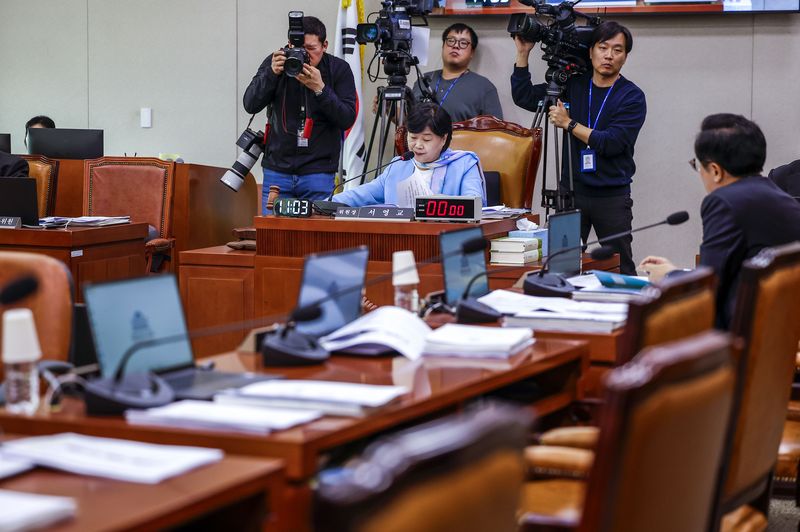
[Financial News] The National Assembly’s Legislation and Judiciary Committee held a full committee meeting on the afternoon of the 4th and passed the ‘Bill on the Appointment of a Special Counsel and Related Matters to Uncover the Truth Behind Allegations of Fabricated Investigations and Prosecutions by the Yoon Suk Yeol administration’s Prosecution Service, National Intelligence Service, Board of Audit and Inspection, and Others.’
The bill was tabled at the committee’s full meeting that morning, then went through the Subcommittee on Bill Review No. 1 and the Agenda Coordination Subcommittee before being pushed through under the Democratic Party of Korea (DPK)’s lead at the resumed full committee meeting that afternoon. People Power Party lawmakers opposed its passage, shouting, “A special counsel to whitewash President Lee’s crimes” and “railroaded through,” before all walking out of the meeting room just before the vote.
■ Key issue: withdrawal-of-indictment clause deleted; committee expert says it may still be possible
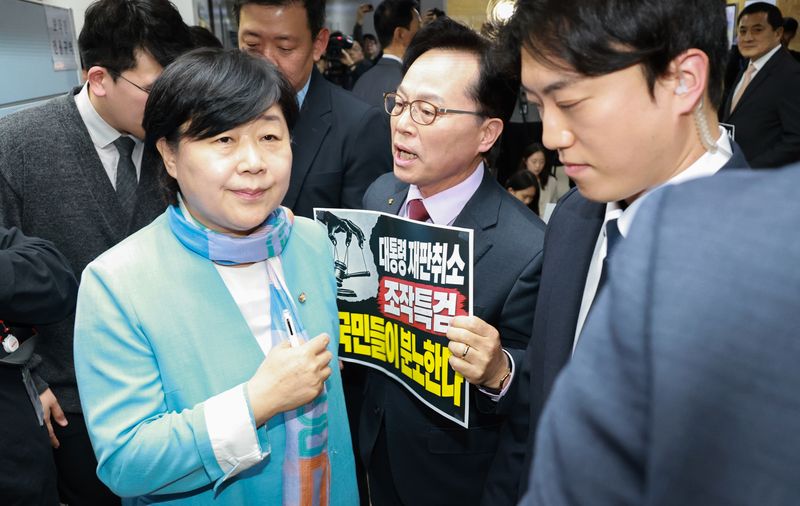
The most significant feature of the amended bill passed by the Legislation and Judiciary Committee is the removal of a provision that would have granted special counsel the so-called ‘power to withdraw indictments,’ which had been controversial from the outset. The original bill introduced by the DPK last April included ‘maintaining prosecutions and deciding whether to do so,’ as well as the right to demand the transfer of cases, within the scope of the special counsel’s duties. It had faced criticism that it was effectively a ‘law to cancel the president’s trial.’ In response, at President Lee Jae Myung’s request, the DPK deleted those provisions and the provision to establish judges dedicated to warrant applications last September.
However, Choi Gi-do, a committee expert on the Legislation and Judiciary Committee, noted in a review report that “a provision remains applying the Criminal Procedure Act of the Republic of Korea’s rules on prosecutors’ powers to special counsel, mutatis mutandis. This leaves room to interpret that special counsel could still withdraw indictments under Article 255 of the Act (Withdrawal of Prosecution),” keeping the issue alive.
■ 12 investigation targets retained, with numerous cases involving allegations under the Moon Jae-in administration added
The number of investigation targets remained unchanged at 12, but the actual scope of the investigation expanded considerably as cases related to President Lee were consolidated and new allegations involving the Moon Jae-in administration were added.
Specifically, the bill covers whether the prosecution’s investigation and charging processes were manipulated in cases linked to President Lee, including breach-of-trust cases involving Daejang-dong, Wirye New Town and Baekhyeon-dong; violations of the Public Official Election Act; remittances to North Korea by Ssangbangwool; bribery involving sponsorship funds for Seongnam Football Club; alleged subornation of perjury involving Kim Jin-seong; and allegations of corporate credit card misuse.
New additions also include manipulation of statistics under the Moon Jae-in administration; the shooting of a civil servant in the Yellow Sea and the forced repatriation to North Korea of crew members from the East Sea; bribery related to the preferential hiring of former President Moon Jae-in’s son-in-law; the leak of classified information about THAAD; and the investigative process in the case involving alleged manipulation of the economic viability of Wolsong Nuclear Power Plant Unit 1.
■ Mammoth special counsel on an unprecedented scale: 309 members in all; bill set to be introduced at plenary session on the 5th
The size of the special counsel team was also substantially revised. The number of seconded prosecutors was reduced to 20 and special investigators to 70, while the number of seconded public officials rose to 210, allowing for an investigative team of up to 309 members for up to 200 days. This is a record-setting scale comparable to that of the Special Counsel for Insurrection. The existing method of selecting a special counsel was retained: the DPK, People Power Party and Rebuilding Korea Party will each recommend one candidate, and the president will appoint one of them.
People Power Party lawmaker Kim Min-jeon sharply criticized the bill, saying, “This is an attempt to carry out a mass purge of the prosecutors and investigators who investigated the president.” Seo Young-kyo, chair of the Legislation and Judiciary Committee and a DPK lawmaker, countered, “We’re proposing an investigation into the Prosecution Service and the Board of Audit and Inspection distorting and fabricating evidence. What does that have to do with President Lee?”
The DPK plans to swiftly bring the special counsel bill before the National Assembly plenary session scheduled for the 5th and pass it. The People Power Party has warned it will take a hard line, including launching a filibuster (unlimited debate) against bills introduced that day, and the standoff between the ruling and opposition parties is expected to intensify. If the bill passes the plenary session, it will be the seventh special counsel since the current administration took office.
[email protected] Park Ji-hyun Reporter