Kang Chang-il: GOP Loss in U.S. Midterms Could Help Speed Up North Korea-U.S. Talks
- Input
- 2026-11-04 22:16:17
- Updated
- 2026-11-04 22:16:17
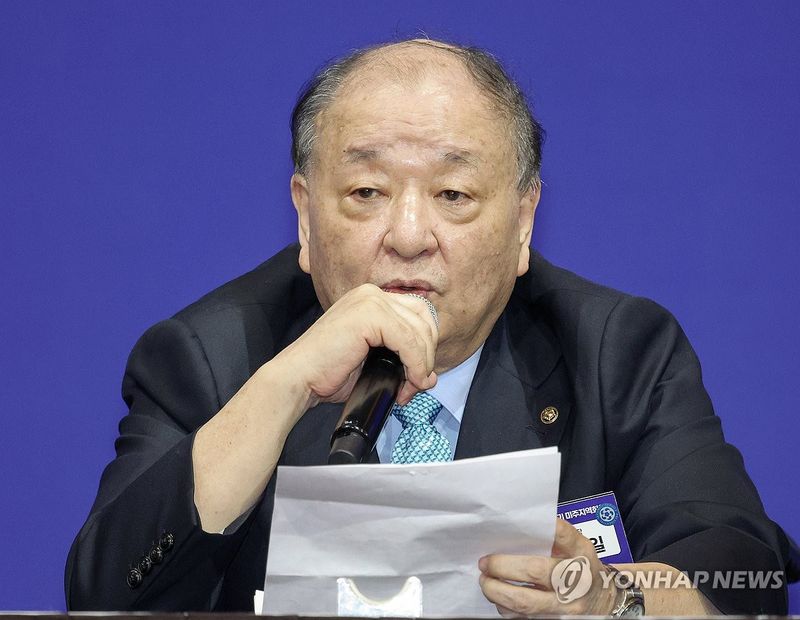
[Financial News] Kang Chang-il, senior vice chairman of the Peaceful Unification Advisory Council (PUAC), said the Republican Party’s defeat in the U.S. midterm elections could prompt President Donald Trump to take a more proactive approach to pursuing a summit with North Korea.
Kang made the remarks on the 4th while meeting with South Korean correspondents in Beijing, China, discussing the possibility of a North Korea-U.S. summit taking place on the occasion of the Asia-Pacific Economic Cooperation (APEC) summit, which will be held in Shenzhen, China, on the 18th and 19th.
Kang said, “I think President Trump may actually take a more proactive approach after the defeat (in the midterm elections),” adding, “He may even speed up (the North Korea-U.S. talks) further.”
However, he said there were still many hurdles to overcome before an actual summit could take place. President Trump had taken a cautious stance toward meeting with North Korean leader Kim Jong Un ahead of the midterm elections, and the situation in the Middle East remained unstable amid difficulties in negotiations with Iran. Given these circumstances, Kang predicted that “it would be difficult to pursue major negotiations.”
Regarding Kim Jong Un’s visit to Dandong, in China’s Liaoning Province, on the 24th of last month, Kang raised the possibility that North Korea and China had coordinated in advance with a resumption of North Korea-U.S. dialogue in mind. He said, “Kim made a day trip to Dandong and took steps to secure practical benefits by strengthening North Korea-China cooperation.” He added, “Because the visit to China came ahead of APEC, I believe there is a possibility that North Korea and China coordinated their strategy in advance.”
He also emphasized China’s role in bringing North Korea back to inter-Korean dialogue. Kang said, “I hope the momentum toward normalizing South Korea-China relations will lead to improved inter-Korean relations,” adding, “I expect China to play an active role as a leader of peace in Northeast Asia and a mediator for peace on the Korean Peninsula.”
In particular, he proposed four-party talks involving South Korea, North Korea, the United States and China as a way to transform the Korean Peninsula’s armistice system into a peace regime. He stressed the need for multilateral consultations among the countries concerned, saying, “Four-party talks need to take place right away.”
He played down the possibility of so-called “Korea passing,” in which South Korea would be excluded as North Korea-U.S. dialogue resumes. Kang said, “There is little chance that we will be sidelined,” explaining, “China would have little to gain from sidelining South Korea.”
At the same time, he expressed concern that if the close alignment among North Korea, China and Russia continued over the long term, the need for inter-Korean dialogue could diminish. If North Korea secured stable channels for economic cooperation through China and Russia, inter-Korean dialogue aimed at economic cooperation could be pushed down the priority list.
The Peaceful Unification Advisory Council (PUAC) is a constitutional body directly under the president that gathers domestic and international views on peaceful unification policy and advises the president and makes policy recommendations. Kang was appointed in April as the successor to former senior vice chairman Lee Hae-chan, who died in January. Following his schedule in Beijing that day, he is set to give a lecture on unification policy in Shanghai, China, on the 6th.
[email protected] Jang Yu-ha Reporter