U.S. ‘Blue Tsunami’... Trump loses both chambers [U.S. Midterm Elections]
- Input
- 2026-11-04 18:33:07
- Updated
- 2026-11-04 18:33:07
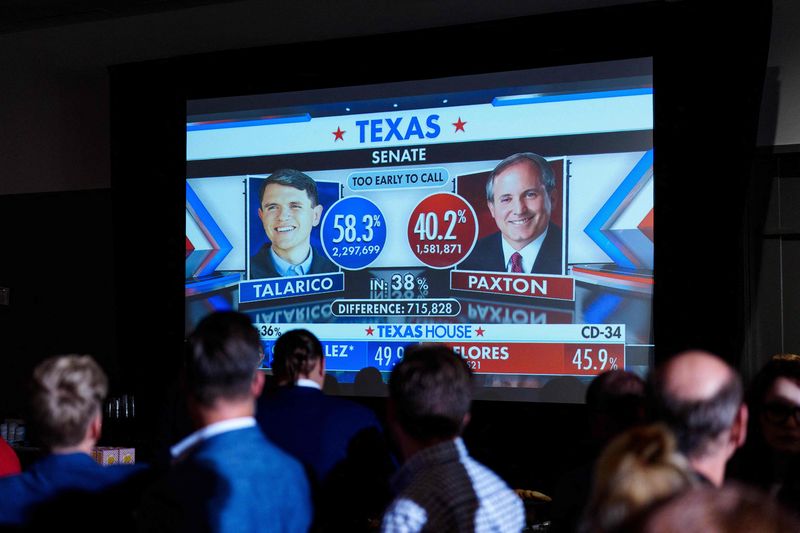
In the U.S. midterm elections held on the 3rd (local time), Democrats took control of both chambers of Congress, reversing the balance of power. Major U.S. media outlets, including CNN, had projected that Democrats would win at least 218 seats—a majority—out of the House’s 435 seats; they won 224. Some forecasts put the Democrats’ House seat total as high as 257.
The Senate also saw a series of traditional Republican strongholds fall, and, contrary to expectations, Democrats surpassed the 51-seat majority threshold with 54 seats. As Democrats captured not only highly competitive states but also long-standing Republican strongholds, the balance of power in the Senate was reversed. In South Carolina, Democratic candidate Annie Andrews won, giving the state a Democratic senator for the first time since 1998, 28 years ago. In North Carolina, former governor Roy Cooper took a Republican seat, while in Georgia, incumbent Democratic Senator Jon Ossoff won reelection by defeating Republican candidate Mike Collins, who had Trump’s backing.
A surprise upset also occurred in Texas, a key Republican stronghold. Democratic candidate James Talarico defeated Republican candidate Ken Paxton, making Talarico the first Democrat elected to the Senate from Texas since 1988. Kansas also elected a Democratic senator for the first time in 94 years, since 1932. Democrats also won in key battleground states, including Iowa, Ohio and Maine.
In an interview with The New York Times (NYT), President Trump said, “I am fully willing to accept the result,” adding, “I will work with the Democrats.”
Although President Trump has mentioned working with Democrats, significant clashes are expected in the conduct of government ahead. With Democrats in control of Congress, they could block key Trump policies, including tax cuts, tariffs and immigration measures. Democrats are expected to use their budgetary review authority and congressional investigative powers to closely scrutinize the cost of the Iran war, tariff policies and immigration enforcement.
Trump, by contrast, is likely to make active use of executive orders and his veto power to maintain his existing policy course. The White House is also reported to have already been considering ways to advance major policies without congressional approval. However, because overriding a presidential veto requires the approval of at least two-thirds of each chamber, it will not be easy for Democrats to reverse policies wholesale either. As a result, the remaining two years of his term are expected to bring intense confrontation and political deadlock between the White House and Congress.
[email protected] Reporter