“Thought it was indigestion, took digestive medicine and went to sleep”... The “dark room” that stole the sight of people in their 40s and 50s overnight [The Body: Off the Record]
- Input
- 2026-11-04 18:00:00
- Updated
- 2026-11-04 18:00:00
[Financial News] Wednesday night, November 4. The point in the week when fatigue is nearing its peak.
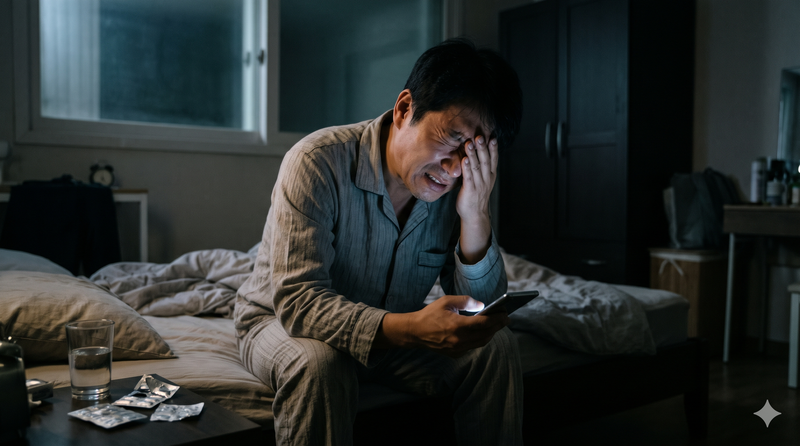
For a breadwinner in his 40s or 50s, utterly drained after work, the only pleasure is lying on the sofa and looking at YouTube or stock quotes on his smartphone, with the lights off in the living room or bedroom so he won’t wake his family. Little does he realize that this modest, weary way of resting could become a horrific trap that robs him of his eyesight forever.
As he stares at the screen, a sudden, excruciating pain hits, as if his eyeball were about to pop out.
At the same time, a splitting headache sets in, his stomach turns, and he feels like vomiting. This is where most men in their 40s and 50s make the most fatal misjudgment of their lives.
“I’ve got a stress-induced migraine from looking at my phone in the dark for too long,” or “Dinner must have disagreed with me.” He takes an ordinary painkiller or digestive medicine from the first-aid kit and forces his eyes shut, foolishly hoping that a night’s sleep will leave him feeling refreshed.
But this is no ordinary headache or indigestion. It is an attack of “acute angle-closure glaucoma,” considered the most immediate and terrifying ophthalmic emergency.
The mechanism is clear and brutal. In the dark, our pupils dilate to let in more light. The iris is then pushed backward, completely blocking the drainage outlet (the anterior chamber angle) for aqueous humor, the fluid that maintains the shape of the eye and supplies it with nutrients. Trapped inside the eye with nowhere to go, the aqueous humor causes intraocular pressure, normally around 15 mmHg, to shoot up in an instant to 60–70 mmHg or higher.
This overwhelming pressure crushes the optic nerve deep inside the eye, physically causing it to die.
According to ophthalmological society statistics, these acute attacks rise dramatically among people aged 40 and older, as the lens enlarges and the anterior chamber becomes shallower. More troubling, when intraocular pressure surges, severe headaches and gastrointestinal symptoms such as vomiting can be far worse than the eye pain. Patients mistake the problem for indigestion or a brain condition, bounce between internal medicine departments in emergency rooms, or try to endure it at home with painkillers, wasting the critical window for treatment.
The window for treating acute angle-closure glaucoma is up to 72 hours, but the longer high pressure is left untreated, the more irreversibly the optic nerve is damaged. There are many tragic cases in which someone endures an attack with painkillers and sleeps for just one night, only to be diagnosed with permanent vision loss—in other words, blindness—the next morning.
For a breadwinner in his 40s or 50s who has worked tirelessly for his family, watching his smartphone in a dark living room is a small refuge from the harsh realities of life.
But when pressure in your eyes as if they might burst, a headache, and vomiting hit all at once, dismissing them as simple fatigue and swallowing pills is like drawing a blackout curtain over your own eyes.
If you feel nauseated and your eyes hurt as if they might burst, don’t take medicine and lie down. Call for an ophthalmology consult in the emergency department immediately to bring down the pressure in your eyes.
Through the eyes of a breadwinner who has lost his sight forever, no tragedy in the rest of his life can truly be seen.
[email protected] Jeon Sang-il Reporter