Konkuk University’s ‘Global Conference on Mobility Humanities’: ‘Climate crisis response must look beyond technology to “people”’
- Input
- 2026-11-04 17:09:39
- Updated
- 2026-11-04 17:09:39
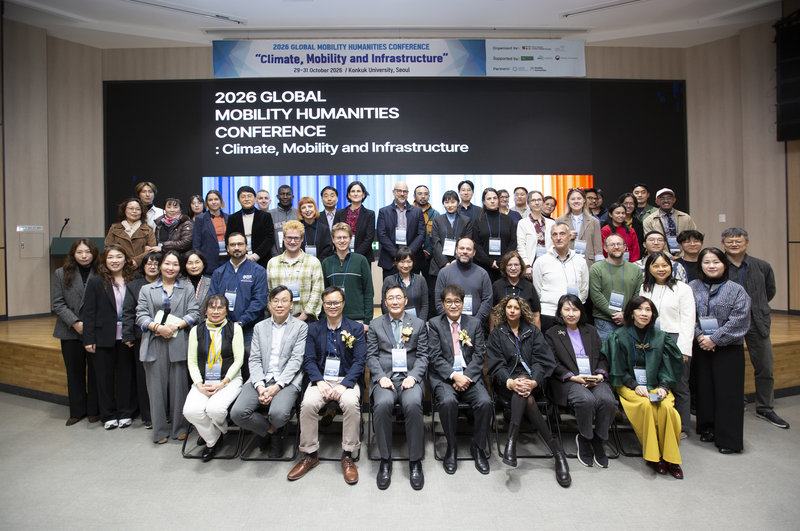
[Financial News] There were calls for climate crisis response to go beyond simply developing technology and expanding facilities, and to address social inequality and working conditions as well.
The Institute for Mobility Humanities at Konkuk University said on the 4th that it had held the ‘2026 Global Conference on Mobility Humanities’ over three days, from October 29 to 31, at Konkuk University’s Law Building in Gwangjin-gu, Seoul. Co-hosted with the Asia Research Institute at the National University of Singapore, the event brought together around 50 researchers from 15 countries worldwide, including South Korea, for in-depth discussions on the relationship between the climate crisis, mobility and infrastructure.
Participants presented specific examples of climate disasters, including El Niño, heat waves and floods, and examined how infrastructure is linked to social inequality. In the keynote address, Professor Zhang Jiahui of the National University of Singapore cited the cooling systems at Qatar’s World Cup stadiums. The analysis was that behind the technological achievement of creating a comfortable environment by installing advanced air-conditioning systems in the stadiums lay the burden on on-site workers who had to endure strenuous labor amid heat waves. This is a striking example of how the benefits and risks of technology are distributed unevenly across society.
Professor Sarah Sharma of the University of Toronto in Canada then presented on the effects of everyday digital technologies on workplaces and women’s lives. Academic sessions also shared research findings, including that the habit of using sensational labels such as ‘Godzilla El Niño’ for an exceptionally powerful El Niño could instead obscure the real causes of the climate crisis and legal responsibility.
Shin In-seop, director of the Institute for Mobility Humanities at Konkuk University, stressed, “When building facilities or establishing systems to respond to the climate crisis, it is important to consider what to build and how much, but we must also carefully consider whose lives we are protecting and whom we are placing a burden on.”
Now in its seventh edition, the conference has become a forum for international exchange, bringing together researchers from around the world each year to study mobility in everyday life and social infrastructure. The institute plans to continue holding academic events next October on urban mobility rights and inequality.
[email protected] Kim Man-gi Reporter