China’s Ministry of Foreign Affairs: “We Will Continue to Uphold and Implement Agreements Between U.S. and Chinese Leaders” [U.S. Midterm Elections]
- Input
- 2026-11-04 17:10:26
- Updated
- 2026-11-04 17:10:26
[Financial News] With the opposition Democratic Party appearing to have won majorities in both the House and the Senate in the U.S. midterm elections, the Chinese government said it hoped the agreements reached between U.S. President Donald Trump and Chinese President Xi Jinping would be maintained and implemented.
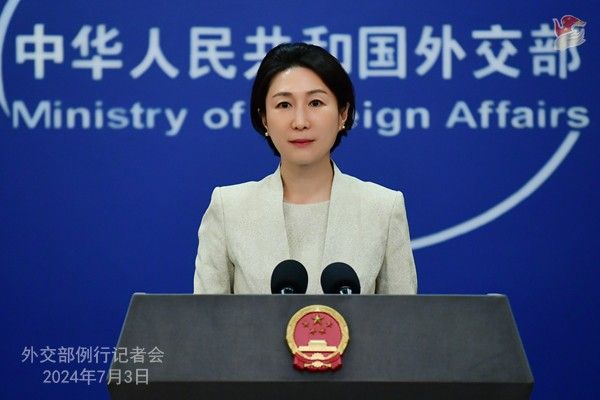
When asked about the U.S. midterm elections at a regular briefing on the 4th, Mao Ning, spokesperson for China’s Ministry of Foreign Affairs, began by saying, “The midterm elections are a domestic matter for the United States,” then added, “China is willing to continue working with the United States to properly uphold and implement the important agreements reached by the leaders of the two countries.”
Mao added, “We are willing to strengthen communication, appropriately manage differences, and expand cooperation to build a constructive strategic stability relationship between China and the United States based on respect, fairness, and equality.”
Last year, the first year of Trump’s second term, the United States and China exchanged high tariffs, export controls, sanctions on companies, and other measures. But they held a series of summits—in Busan that October, in Beijing in May this year, and in Washington, D.C., in September—to manage relations, including by agreeing to a truce in the “trade war.”
China regards the agreement to build a “constructive strategic stability relationship,” reached at the summit in May this year and reaffirmed at the September summit, as one of President Xi’s signature diplomatic achievements.
The core of the agreement is that the two countries recognize each other as equals and respect each other’s core interests.
On the basis of this agreement, China is seeking to reduce U.S. influence on major issues, including the Taiwan issue, which it regards as the “core of its core interests.”
Some experts in China have also suggested that the Democratic Party’s midterm election victory could be a factor in U.S. policy toward Taiwan.
According to Chinese media outlet The Paper, Chen Dongxiao, president of the Shanghai Institutes for International Studies, said that because the executive branch has greater discretion than Congress over foreign affairs in the United States, the current policy toward China is unlikely to be fundamentally reversed. He nevertheless predicted that the U.S. Congress could exert greater pressure to advance arms sales to Taiwan.
[email protected] Lee Seok-woo, International Affairs Correspondent Reporter