Nasdaq futures and Asian stocks swing on U.S. midterm election results [U.S. midterm elections]
- Input
- 2026-11-04 16:30:10
- Updated
- 2026-11-04 16:30:10
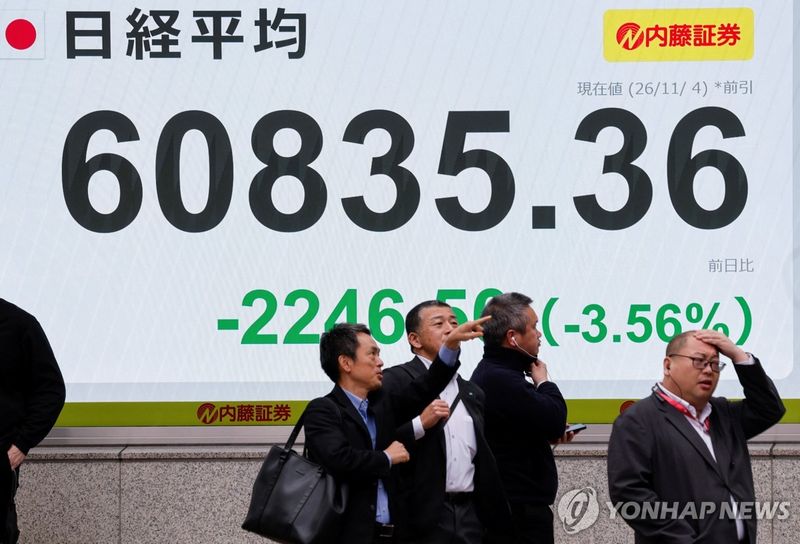
[Financial News] With Democrats making gains in the U.S. midterm elections and concerns growing about tighter regulation of the artificial intelligence (AI) sector, U.S. Nasdaq 100 futures and Asian stock markets swung on the 4th.
According to foreign media reports, Nasdaq 100 December futures were down 0.54% at 28.157 as of 3:35 p.m. Korea time on the 4th. After opening up 0.37%, Nasdaq 100 futures turned lower and plunged as much as 2.4% at one point, before recouping much of their losses.
At the same time, S&P 500 futures were down 0.32%, while Dow Jones Industrial Average (DJIA) futures were down 0.10%.
Weakness in Nasdaq 100 futures, which are heavily weighted toward large-cap technology stocks, stood out.
Dilin Wu, a strategist at online brokerage Pepperstone Group, said, "AI regulations, chip export restrictions and data center energy policies could all be affected by the election results."
Asian stock markets, which have a heavy weighting of technology stocks, also swung sharply.
The KOSPI rose as much as 3.2% at one point, then plunged 3.8% around 1 p.m. in a roller-coaster session, before closing up 0.62% at 5,683.80.
Japan's Nikkei 225 also fell as much as 3.3% to 34,474 during the session, then recouped some of its losses to close down 1.68% at 62,021.33.
Taiwan's Weighted Index also fell as much as 3.3% at one point, but narrowed some of its losses to close down 0.83% at 42,948.91.
By contrast, China's Shanghai Composite Index and Shenzhen Composite Index, as well as Hong Kong's Hang Seng Index, rose by between 1% and 3%.
[email protected] Lee Seok-woo, International Affairs Specialist Reporter