SeAH Steel Holdings Corporation posts 1.2 trillion won in 3Q revenue; operating profit up 134%
- Input
- 2026-11-04 15:58:52
- Updated
- 2026-11-04 15:58:52
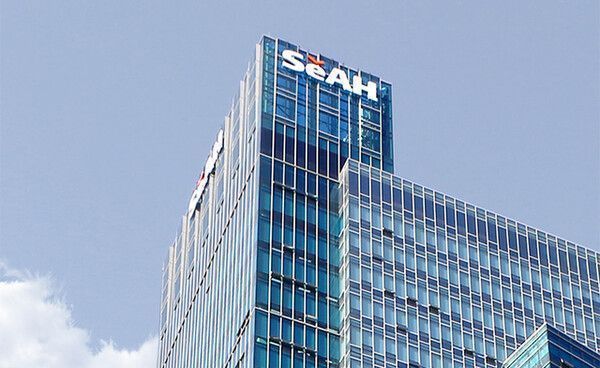
[Financial News] SeAH Steel Holdings Corporation posted its highest quarterly revenue since its 2018 spin-off, buoyed by strong sales of energy pipes in North America. Operating profit rose 134.4% year over year as increased sales volumes and higher prices for steel pipes in North America improved the profitability of its sales subsidiary in the Americas. Losses at SeAH Wind Ltd., its UK offshore wind production subsidiary, also narrowed, helping consolidated operating profit swing to a profit from the previous quarter.
SeAH Steel Holdings Corporation announced on the 4th that it recorded consolidated revenue of 1.221 trillion won and operating profit of 93.3 billion won in the third quarter of this year. Revenue increased 32.3% and operating profit rose 134.4% from a year earlier. Revenue was the highest quarterly figure since the 2018 spin-off.
Compared with the previous quarter, revenue rose 4.6%, and operating profit swung to a profit from a loss of 50.8 billion won. Net income was 6.8 billion won, down 58.2% from a year earlier, but swung to a profit from a net loss of 74.6 billion won in the previous quarter.
The improved results were driven by increased sales of steel pipes for the North American oil and gas industry. Although restrictions on passage through the Strait of Hormuz were partially eased, demand for energy pipes in North America remained solid amid ongoing logistics uncertainty in the Middle East. Increased sales volumes and higher prices for steel pipes in North America improved the profitability of the sales subsidiary in the Americas, while stronger demand for steel pipes used in data center construction also contributed to revenue growth.
Narrower losses at SeAH Wind Ltd., the UK subsidiary that manufactures offshore wind substructures and had recognized provisions related to offshore wind projects in the second quarter, also contributed to improved consolidated results. SeAH Wind had booked provisions for offshore wind projects in the previous quarter. As a result, its losses narrowed in the third quarter, and consolidated operating profit and net income both swung to a profit from the previous quarter.
SeAH Steel, the group's flagship affiliate, also improved its results. SeAH Steel's standalone revenue in the third quarter was 442.3 billion won, up 46.6% from a year earlier. Operating profit was 18 billion won, turning a profit from a loss of 5.4 billion won in the same period last year.
In the domestic market, profitability improved as sales volumes increased and higher raw material costs were reflected in product prices. In exports, volumes that had contracted amid changes in the US trade environment recovered, and sales increased as prices for North American oil country tubular goods (OCTG) rose. Expanded sales of steel pipes for data center construction in North America also contributed to results.
SeAH Steel Holdings Corporation forecast that demand for oil country tubular goods and pipelines would remain solid in the fourth quarter, supported by investment in North American energy infrastructure. It also expected prices for oil country tubular goods in the United States to continue rising and demand to grow for structural and stainless steel pipes used in data center construction.
The company also plans to pursue a selective sales strategy that takes into account the profitability of each product category in response to changes in US trade policy. SeAH Steel USA, its US-based production subsidiary, plans to invest in facility upgrades to ensure a stable supply of high-value-added steel pipes.
In the Middle East, the company plans to step up sales efforts by leveraging its local production bases in response to activity around gas field and offshore project contracts. It also expects to recognize revenue from high-value-added projects, including the Dorra project.
SeAH Wind Ltd. in the UK plans to gradually increase production on projects already secured and raise plant utilization to stabilize mass production, while pursuing orders for follow-on projects.
[email protected] Kim Mi-hee Reporter