Will North Korea-U.S. Contacts Begin After the U.S. Midterms? Concerns Also Over Delays in Implementing ROK-U.S. Security Agreements
- Input
- 2026-11-04 15:57:46
- Updated
- 2026-11-04 15:57:46
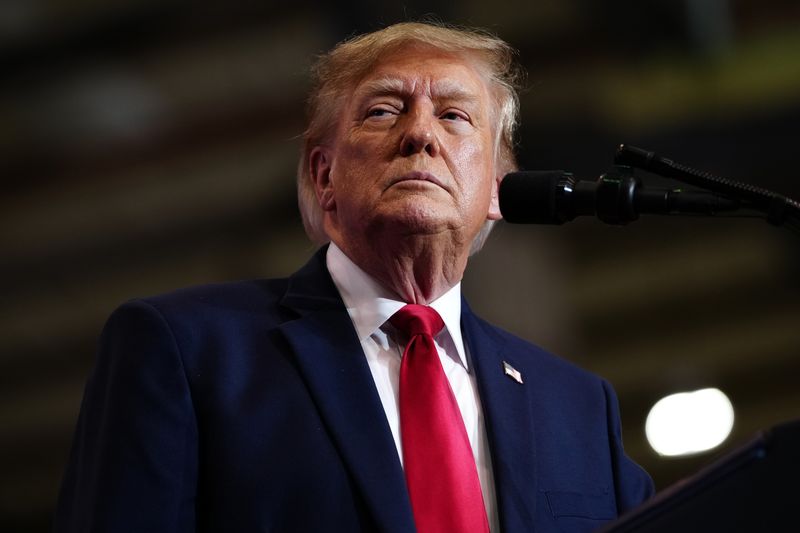
According to diplomatic sources on the 4th, attention is focused on the impact the midterms—which will determine who leads the U.S. government and the direction of its policies—could have on ROK-U.S. relations. Regardless of the election results, Trump may again pursue a “top-down” North Korea-U.S. summit to tout diplomatic achievements in the latter half of his term.
A Ministry of Foreign Affairs official said, “President Trump will come under domestic political pressure and will seek to achieve results in diplomacy, where the president has relatively greater discretion.”
During Trump's first term, he also strongly pursued North Korea-U.S. summit diplomacy after Republicans lost the House in the 2018 midterm elections. But North Korea, still traumatized by the “Hanoi no deal,” has become a complicating factor, as its willingness to engage has sharply diminished compared with Trump's first term.
Kim Yo Jong, chief of the Workers' Party of Korea's General Affairs Department, declared that North Korea would not engage in dialogue unless hostile acts against it stopped. North Korea also carried out a provocation by firing several missiles into the East Sea on the day of the U.S. midterm elections, marking its fourth consecutive show of force in the past week.
Kim said, “There is no need to sit down with people who are untrustworthy and hostile,” adding, “Dialogue is clearly among the options for safeguarding peace, but for us, it is not necessarily synonymous with the national interest.” She ruled out North Korea-U.S. talks.
She also listed calls for denuclearization, ROK-U.S. joint military exercises, the publication of a human trafficking report, cyber sanctions targeting North Korea, and the designation of North Korea as a country responsible for cryptocurrency hacks as hostile acts against North Korea, and demanded that they be halted.
The South Korean government is exploring scenario-based responses to potential changes in the trade and security landscape between South Korea and the United States after the U.S. midterms.
A Ministry of Foreign Affairs official said, “Anticipating the impact of the midterms, we have conducted outreach not only to key figures in the U.S. Congress but also to everyone involved in the elections.” The official added, “We will continue to strengthen communication with those elected in the U.S. midterms and expand our networks in support of the ROK-U.S. Alliance.”
The official added that it was still difficult to predict how U.S. policy would change depending on the midterm results. Through its ongoing communication with the U.S. side, the government plans to further strengthen communication channels to ensure that ROK-U.S. relations continue smoothly after the election.
The overall direction of the ROK-U.S. Alliance is unlikely to change significantly after the U.S. midterms, although some fine-tuning of policies such as the tariffs Trump has pursued is also expected. Even if the Democrats, having expanded their influence in Congress, confront the White House, they are unlikely to overturn Trump's high-tariff policy itself.
The Democrats may, however, step up hearings and investigations into ROK-U.S. nuclear cooperation, Korean-built nuclear-powered submarines, the transfer of wartime operational control, defense cost-sharing, and North Korea policy. A challenge of “congressional diplomacy” is expected to arise: persuading and managing Democratic lawmakers individually to work through major security agreements between South Korea and the United States. The Democrats also support attracting investment and reviving manufacturing at home, so pressure on South Korea to follow through on its promised investment in the United States is expected to continue. [email protected] Reporter Kim Kyung-soo
[email protected] Kim Kyung-soo Reporter