KOSPI rebounds after 4% intraday plunge, recovers above 5,680 as it digests ‘Blue Tsunami’ [fn Closing Market Report]
- Input
- 2026-11-04 15:46:01
- Updated
- 2026-11-04 15:46:01
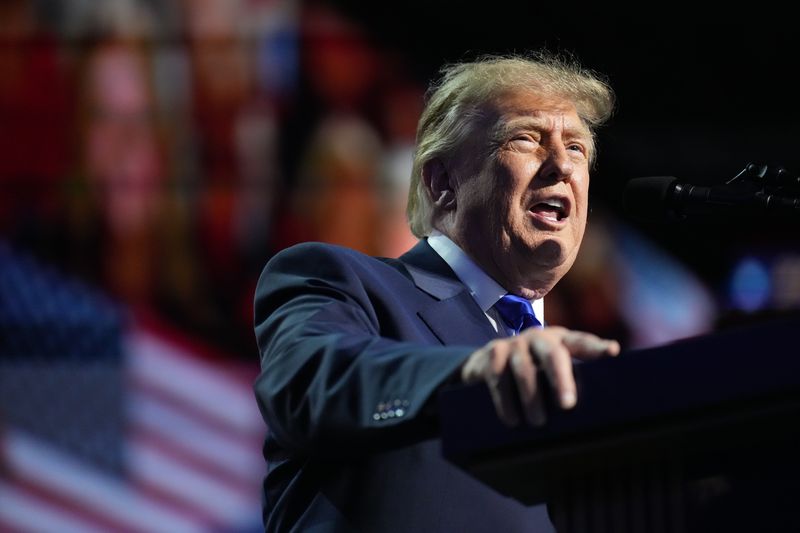
[Financial News] The so-called “Blue Tsunami”—Democrats taking control of both the House and Senate in the U.S. midterm elections—became a reality, but South Korea’s stock market managed to rebound late in the session.
The KOSPI opened higher, buoyed by strength in U.S. semiconductor stocks, but plunged more than 4% intraday as concerns over the midterm election results coincided with worries about regulation of the artificial intelligence (AI) industry.
However, it quickly pared its losses in the afternoon, turned higher and ended the session up. The KOSDAQ also fell below 700 intraday but rebounded in the afternoon to recover the 710 level.
■ Both markets ultimately close higher after a volatile session The Korea Exchange (KRX) said on the 4th that the KOSPI closed at 5,683.80, up 35.01 points (0.62%) from the previous trading day. The index rose early in the session but turned lower as vote counting in the U.S. midterm elections progressed. Volatility increased, with intraday losses exceeding 4%, but the index rebounded in the afternoon as buying interest emerged.
The KOSDAQ also staged a notable recovery. It closed at 714.95, up 10.56 points (1.50%) from the previous trading day. After falling below 700 intraday and slipping into the 600s for the first time in about three months, it extended its rebound in the afternoon and easily recovered the 700 level. Bargain hunting after the sharp intraday drop and a recovery in investor sentiment are believed to have helped lift the index.
Buying by individual and institutional investors supported the market’s recovery. In the KOSPI market, individual investors made net purchases of 1.5168 trillion won and institutions bought a net 880.9 billion won, while foreign investors were net sellers of 2.8097 trillion won. Despite heavy foreign selling, individuals and institutions absorbed the shares on offer, helping lift the index from its intraday low.
Among individual stocks, large-cap semiconductor shares moved in opposite directions. Samsung Electronics fell 1,500 won (0.68%) from the previous trading day to close at 218,000 won, while SK hynix gained 2,000 won (0.14%) to finish at 1,395,000 won. Samsung SDI Co., Ltd. surged 11.57%, while LG Energy Solution also rose 5.03%. Auto stocks, including Hyundai Motor Company and Kia Corporation, were also strong, helping the index rebound.
■ U.S. Democrats score a landslide victory; stocks reverse higher as midterm uncertainty eases The key factor driving the direction of South Korea’s stock market that day was the U.S. midterm election. In the election held on the 3rd local time, the Democrats took control of the Senate as well as the House.
Major U.S. broadcasters projected on the afternoon of the 3rd local time, as votes were being counted, that the Democrats would secure a majority in the House, and then issued successive forecasts that they would win the Senate as well. It has been 20 years since the Democrats last reclaimed both chambers at once, in 2006.
As the election results became clearer, the market’s focus shifted from political uncertainty itself to potential policy changes ahead. While some forecasts suggested Democratic control of Congress could constrain further tax cuts and fiscal expansion under the Trump administration, the possibility of tighter regulation of AI data centers emerged as a headwind for the semiconductor sector.
However, investor sentiment recovered in the afternoon after the sharp intraday decline, suggesting that some concerns surrounding the election results had been absorbed.
Lee Jae-won, a researcher at Yuanta Securities Korea Co., Ltd., emphasized that the possibility of Democratic control of Congress had already been substantially priced in before the election. “The Democrats’ efforts to curb further fiscal expansion could limit Treasury supply and upward pressure on long-term interest rates, potentially easing fiscal and interest-rate uncertainty instead,” he explained.
He also said actual investment suspensions should be distinguished from delays in project execution amid concerns about AI industry regulation. Lee said, “It is necessary to distinguish delays in starting construction due to tighter regulation from actual cancellations of server and memory orders.” Restrictions on data center permits and the burden of power-grid costs could delay some projects, but it would be difficult to conclude that this would mean a contraction in AI investment itself, he said.
On the memory market outlook, he said there was insufficient basis to conclude that memory average selling prices (ASP) would fall solely because some projects were delayed.
Given the expansion of long-term supply contracts and limited memory production capacity, even if some projects are deferred from 2027 to 2028, a continued supply shortage could mean only a slower rate of price increases. He said a genuine deterioration in supply and demand could be determined only if there were evidence of widespread order cancellations, reduced purchase commitments and rising customer inventories.
Going forward, the market is expected to focus on whether interest rates and foreign investor flows stabilize once election uncertainty has eased. Lee said stable long-term interest rates could lower AI companies’ financing costs and ease concerns about the continuity of their investments.
He said, “If, after election uncertainty eases, long-term interest rates and credit risks stabilize and foreign investors turn to net buying, expectations for a recovery led by large-cap semiconductor stocks remain valid.”
[email protected] Kang Jung-mo Reporter