“From 3D BIM to laser excavation” ... Korea National Railway unveils next-generation railway technology
- Input
- 2026-11-04 15:16:20
- Updated
- 2026-11-04 15:16:20
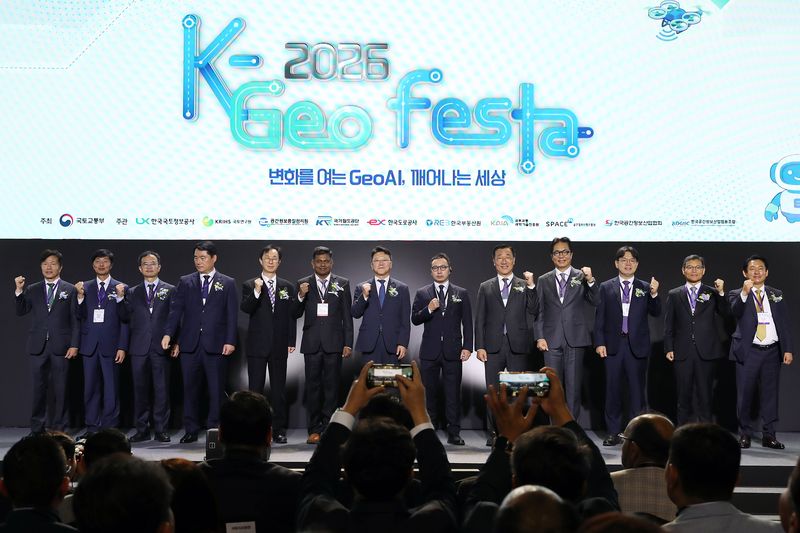
Korea National Railway said it will take part in ‘2026 K-Geo Festa,’ the country’s largest exhibition for geospatial information technology exchange, held at KINTEX in Goyang, Gyeonggi Province, over three days from the 4th to the 6th, and showcase next-generation railway technologies that combine geospatial information with advanced technologies.
Hosted by the Ministry of Land, Infrastructure and Transport, the event is being held under the theme ‘GeoAI that opens the door to change, a world awakening.’ The institute has participated as a co-organizer for three consecutive years since 2024, stepping up public outreach on next-generation railway technologies and presenting directions for the future development of the railway industry.
The three key technologies the institute is highlighting at the exhibition are a pilot model of a Building Information Modeling (BIM) platform for railway facility maintenance, high-power laser tunnel excavation technology, and a digital map of national railway construction projects.
The ‘Railway Facility Maintenance BIM Platform’ is a model that fully transitions from the existing management approach centered on 2D drawings and documents to a digital system based on 3D geospatial information. Starting next year, it is expected to be combined with data covering the entire life cycle of railway facilities, enabling proactive management of on-site hazards and serving as a key foundation for accelerating AI transformation (AX) in the railway sector.
The ‘high-power laser tunnel excavation technology,’ which could change the paradigm of urban construction, is also drawing attention. The technology dramatically reduces the noise and vibration generated by blasting and can flexibly adapt to confined spaces and changes in tunnel cross-sections. It is expected to make a major contribution to improving quality in urban tunnel construction, including by shortening construction schedules and enabling more precise work.
Also on display, the ‘Digital Map of National Railway Construction Projects’ is a service that maps the status of 36 major national railway construction projects across the country, including the Great Train eXpress (GTX). Visitors can view the progress and information for each project at a glance through kiosks installed at the venue.
Korea National Railway’s adoption of these digital technologies is a proactive measure to prepare for the aging of the nationwide railway network and improve management efficiency. Railway facility inspections have long relied heavily on manpower, prompting continued concerns about the risk of safety accidents and the emergence of management blind spots. If a smart maintenance system based on geospatial information and AI is established, real-time monitoring will enable predictive maintenance, with expected benefits including annual maintenance cost savings of several hundred billion won and improved track safety.
Korea National Railway Chairman Jeong Jin-hyeok said, “We will press ahead with digital innovation in railway construction and maintenance through the integration of geospatial information and advanced technologies,” adding, “On this basis, we will proactively manage on-site hazards and prevent safety accidents to create a railway environment that the public can use with confidence.”
[email protected] Kim Won-jun Reporter