“Move in after paying just 25% of the sale price”: Could public shared-equity apartments be a lifeline for genuine homebuyers?
- Input
- 2026-11-06 07:00:00
- Updated
- 2026-11-06 07:00:00
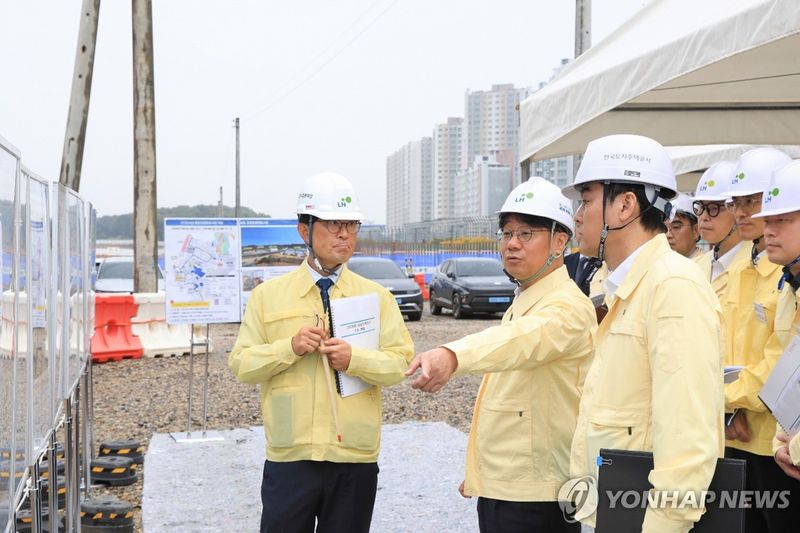
[Financial News] A shared-equity apartment scheme that lets buyers move into publicly sold apartments after paying just a quarter of the sale price will make its debut this year. Following GH’s Gwanggyo New Town in Suwon, LH will begin sales in Goyang Changneung in December. With the government saying public shared-equity apartments “will help genuine homebuyers,” the industry is watching to see whether they lead to actual housing supply.
According to the Ministry of Land, Infrastructure and Transport on the 5th, LH will begin selling shared-equity public apartments in Goyang Changneung this December. It plans to offer 284 of the 1,027 homes in the S-2BL area under the shared-equity scheme.
The shared-equity scheme allows people to buy a home without a large lump sum, purchasing shares in it over time. Buyers pay 10% of the sale price when they sign the contract and 15% when they move in, securing a 25% stake. They buy the remaining 75% in installments of 15–20% every four to five years. The price of each additional stake is calculated by multiplying the initial sale price plus interest accrued over the period by the share being acquired. This means the price of additional shares is set independently of market value, even if home prices rise. Buyers must purchase a stake at each scheduled round, but can defer the purchase by up to one year if they are facing financial difficulties. If they are still unable to buy during the grace period, the project operator will buy back the home or it will be resold. Buyers pay rent to the operator on the share they have yet to purchase.
The scheme is expected to significantly lower the barrier to entry for young people, including early-career workers who have not been able to save a large lump sum. Based on the average sale price of publicly offered homes in the Seoul metropolitan area (510 million won for a 55-square-meter unit), acquiring the initial stake would cost 128 million won. If buyers obtain 40% of that amount through a loan the government is considering introducing, the required personal funds would fall to 77 million won.
Industry figures were positive, saying shared-equity apartments would help genuine homebuyers. Lee Eun-hyeong of the Korea Research Institute for Construction Policy said, “This is a major advantage for people who lack a large lump sum,” adding, “Even if this is effectively a relaxation of lending restrictions, the benefits should primarily go to people who do not own a home. It would be fair to describe this measure as a policy for ordinary people.” Professor Shin Bo-yeon of the Department of Real Estate AI Convergence at Sejong University said, “People who had given up applying for homes because they hit the total debt service ratio (DSR) limit can now actually enter the market.” Shin predicted, “The effect of lowering the upfront financial barrier is clear, so this will become a viable option for young people.”
Concerns have also been raised about the obligation to buy a stake at each scheduled round. Since some households may be unable to secure the funds in time, critics say the grace-period system needs to be administered strictly. Lee said, “Just because the immediate rent burden is reduced does not mean everyone will diligently save that much money,” emphasizing, “A one-year grace period has been set, and it needs to be enforced strictly.” Professor Shin said, “The obligation to acquire a stake every few years and the limits on liquidity resulting from the 10-year resale restriction remain.”
The costs after moving in are also substantial. Based on its calculations for a Gwanggyo shared-equity apartment, assuming annual interest and rent rates of 2.5% each and a sale price of 630 million won, Financial News found that buyers would pay 157.5 million won by the time they move in, then need to spend 140 million to 180 million won on additional shares every five years. To save in advance for the next purchase, they would need at least 3.3 million won a month, including rent. The total cost over 20 years would be about 940 million won. If they bought an apartment at the same price through a conventional sale, borrowing 70% of the sale price over 30 years at an annual rate of 4%, monthly principal and interest payments would be about 2.11 million won, and the total 30-year cost, including their own funds, would be about 947 million won. In other words, the initial lump-sum burden is lower, but monthly costs could actually be higher.
[email protected] Jeong Gyeong-su Reporter