Virtual Asset Tax Deferral Looks Increasingly Likely ... Industry Says Tax Roadmap Must Be Firmly Set [Crypto Briefing]
- Input
- 2026-11-04 14:30:56
- Updated
- 2026-11-04 14:30:56
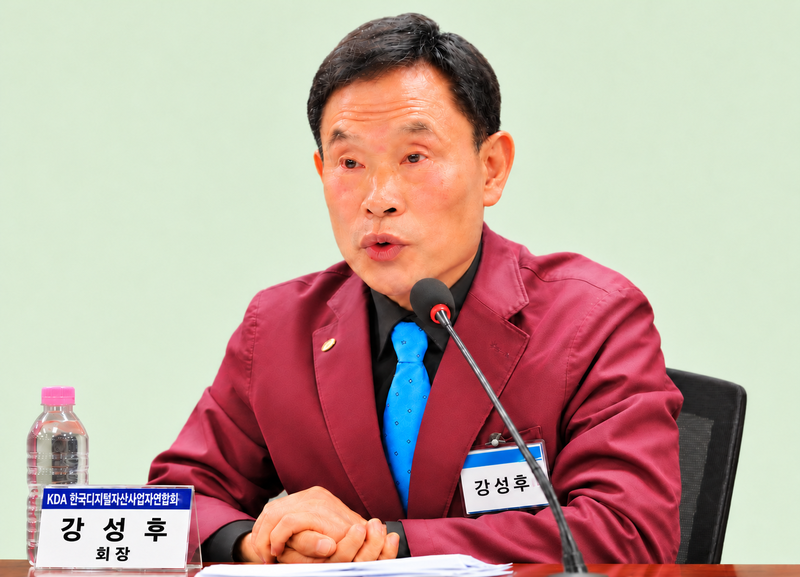
[Financial News] The government and ruling party are leaning toward postponing virtual asset taxation for a fourth time. On the 3rd, Democratic Party of Korea lawmakers on the National Assembly’s Strategy and Finance Committee decided to recommend a deferral to their party leadership. The focus has now shifted to what measures should be put in place during the delay. That is why the Korea Digital Asset Business Association (KDA) issued a statement on the 4th calling for a two-year deferral conditional on a legislative roadmap. The KDA said taxation of virtual assets, scheduled to take effect next January, should be postponed for two years so that it begins in 2029, on the condition that a “four-point legislative and implementation roadmap” is adopted. Chairman Kang called for “a decision to defer taxation for two years, with taxation starting in 2029 and conditional on a ‘four-point legislative and implementation roadmap,’ so there will be no further postponement.”
The current Income Tax Act classifies income from the transfer or lending of virtual assets as other income. Starting next January, a 22% tax, including local income tax, will be levied on the amount left after deducting 2.5 million won from annual income. Someone with annual income of 50 million won would owe 22% of 47.5 million won after the deduction, or 10.45 million won in tax. By contrast, ordinary shareholders who are not major shareholders pay no income tax on gains from stock trading.
Taxation of virtual assets began when an amendment to the Income Tax Act passed the National Assembly in December 2020, during the Moon Jae-in administration, under the principle of “taxing where there is income.” It was originally scheduled to take effect in January 2022, but was postponed three times, to 2023, 2025 and 2027.
Taking into account the reasons for the three previous deferrals and changes in domestic and overseas market conditions, the KDA proposed a four-point roadmap: enact a second-stage Virtual Asset Act (General Act on Digital Assets) that can provide investor protection on a par with that for stocks, by the first half of next year at the latest; legislate and announce detailed tax rules on a par with those for stocks by the end of next year; fully establish tax infrastructure by November 2028; and globalize domestic exchanges.
The KDA also cited examples from overseas. The International Organization of Securities Commissions (IOSCO), which has 130 member countries, issued a joint international recommendation in November 2023 based on the principle of “same activity, same risk, same rules,” drawing on existing securities laws. The European Union (EU) has been implementing the Markets in Crypto-Assets Regulation (MiCA) since July 2024. Japan has operated a licensing system for exchanges since 2017 and, as a result, is considered to have suffered the least damage during the Luna-Terra crisis in May 2022, the KDA explained. In South Korea, too, financial authorities, following a review by a specialized institution under a supplementary opinion accompanying the Phase-One User Protection Act, have already reported a bill to a standing committee of the National Assembly. Since both the ruling and opposition parties also introduced party-level bills after last year’s presidential election, the KDA said that “only the choice remains.”
There are two reasons the deadline for the second-stage law was set for the first half of next year. First, tax-related laws will be revised based on the definitions of assets and transactions set out in that law. Also, the Phase-One law—which covered only 20% of the provisions that should be included in the legislation—did not take effect until one year after it was promulgated. Given this, the second-stage law, too, will only be able to take effect in the second half of 2028, a year after promulgation, following revisions to subordinate legislation and administrative preparations.
Chairman Kang Seong-hu said, “We are exploring various ways to ensure the statement is reflected, including making policy recommendations to the National Assembly, the ruling and opposition parties’ policy committees, and government authorities.” The KDA said it had also issued a statement in November 2024, ahead of taxation scheduled for January 2025, calling for “the enactment and implementation of relevant laws first, followed by a two-year deferral of tax implementation,” and that this contributed to the decision to set taxation for 2027.
[email protected] Han Young-jun Reporter