Island-platform stops at a crossroads: Jeju BRT undergoes on-site review over whether to retain or replace them
- Input
- 2026-11-04 12:29:47
- Updated
- 2026-11-04 12:29:47
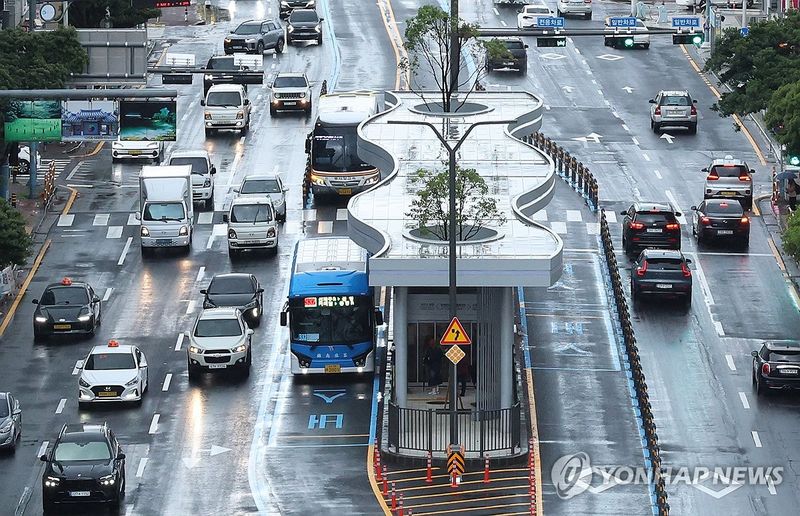
【Financial News, Jeju = Jeong Yong-bok】 An on-site inspection was conducted to review the operating model of Jeju’s Bus Rapid Transit (BRT) system—the first in the country to introduce island-platform stops—and the follow-up projects that have been suspended. The policy advisory panel plans to compare options for retaining or changing the existing stops and traffic conditions in each project section, and to issue recommendations for improvements by the end of November.
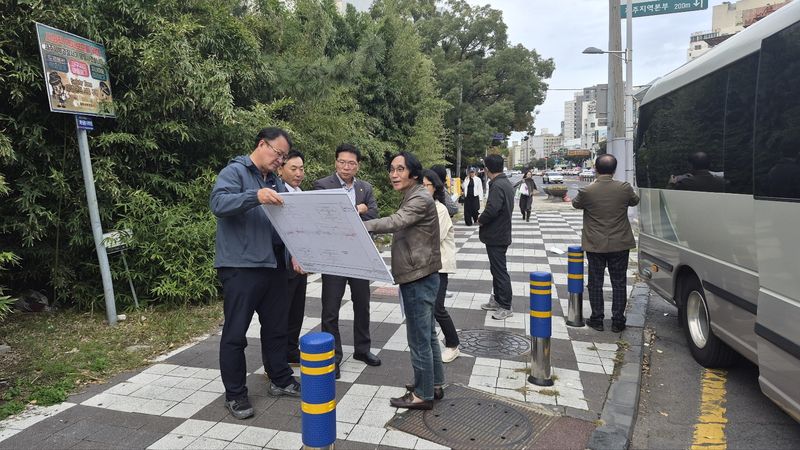
According to Jeju Special Self-Governing Province on the 4th, the Jeju BRT Policy Advisory Panel visited the operating section of Seogwang-ro in Jeju City and future project sections, including Donggwang-ro and Nohyeong-ro, on the 3rd to inspect road layouts, conditions for installing stops and traffic flow.
The on-site inspection began on Yeonsam-ro and proceeded in order along Iljudong-ro, Donggwang-ro, Seogwang-ro, Doryeong-ro and Nohyeong-ro. The panel first reviewed road conditions on Yeonsam-ro and Iljudong-ro, which are part of Phase 2, then moved through Donggwang-ro, part of Phase 1, to Seogwang-ro.
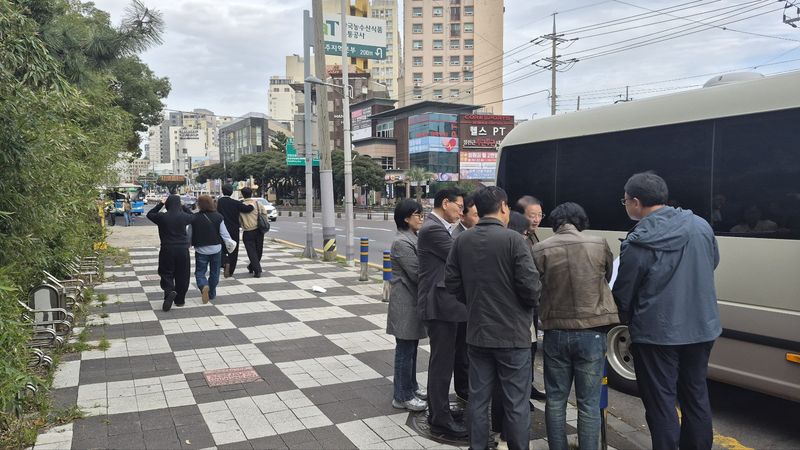
On Seogwang-ro, the panel drove along the bus-only lane to assess its operating conditions. At an island-platform stop near the Tamna Comprehensive Welfare Center for Persons with Disabilities, members got off the bus and inspected the stop and surrounding road environment.
The panel then checked traffic flow on Doryeong-ro and Nohyeong-ro and compared conditions for installing island-platform and opposing-platform stops. It also conducted an on-site inspection near Halla Hospital.
The key issues in this inspection are how to deal with the island-platform stops that have already been installed and how to proceed with the suspended follow-up BRT projects.
BRT is a public transportation system that improves bus-only lanes, stops and signal systems to increase bus speeds and punctuality. Jeju’s BRT system was designed to combine island-platform stops in the middle of the road, shared by buses traveling in both directions, with double-sided-door buses that have doors on both sides.
On May 9 last year, Jeju Province opened six island-platform stops along a 3.1-kilometer section of Seogwang-ro in Jeju City. However, nine existing stops were removed, and boarding and alighting locations varied by bus route, prompting concerns about access to stops and convenience for passengers.
Concerns also persisted over pedestrian routes to the stops in the middle of the road and the impact on vehicle traffic. Construction on the follow-up sections was suspended, and Jeju Province adjusted its policy to halt further introduction of island-platform stops and double-sided-door buses.
Options currently under consideration for improving Seogwang-ro include retaining the existing island-platform stops, converting to opposing-platform stops, and converting to curbside stops. Opposing-platform stops have separate boarding areas in the middle of the road for each direction of travel. Curbside stops, like ordinary bus stops, allow passengers to board and alight on the right side of the road.
The options differ in stop accessibility, use of road space, bus operating efficiency and the cost of modifying facilities. Retaining the existing facilities could reduce additional construction costs, but inconvenience for users may remain. Changing the stops would alter how passengers board and alight, while raising the costs of reinstalling facilities and the question of what to do with existing infrastructure in which money has already been invested.
Responsibility for the policy decision rests with Jeju Province. On October 22, Governor Wi Seong-gon said at a parliamentary audit session of the National Assembly’s Public Administration and Security Committee that abolishing the island-platform stops was being considered as the basic principle. However, he said a final decision would be made after taking into account the advisory panel’s recommendations and residents’ opinions.
To inform its policy decision, Jeju Province has been conducting in-person surveys of 1,000 residents since October 30. The respondents include 450 public transit users, 450 non-users and 100 stakeholders, including businesses near Seogwang-ro.
The survey asks about the need to proceed with BRT, how bus-only lanes should be operated and options for improving stops on Seogwang-ro. However, questions have also been raised about the neutrality of the survey questions and the composition of the sample, making the interpretation of the results and how they are reflected in policy key issues.
At a monthly policy meeting on the 2nd, Governor Wi instructed officials to hold a forum involving residents and experts and to fully gather the views of both administrative cities. He also called for the schedule for improving the bus system as a whole to be brought forward, with preparations made to enable substantive policy implementation around March or April next year.
The policy advisory panel will draw up its final recommendations by the end of November, taking into account the results of this on-site inspection and the survey, as well as interviews with local stakeholders. Jeju Province plans to review the advantages, disadvantages and impacts of each option in the recommendations before deciding on a course of action.
Whether the existing facilities are retained or converted to a different type of stop could affect additional financial burdens, the routes bus passengers take and how future BRT projects proceed. The remaining challenge is how to incorporate the findings of the on-site inspection, traffic data and residents’ opinions into the policy decision.
[email protected] Jeong Yong-bok Reporter