Yeouido also gets busy over U.S. midterms; ruling and opposition parties launch “parliamentary diplomacy” for Trump’s remaining two years
- Input
- 2026-11-04 10:53:02
- Updated
- 2026-11-04 10:53:02
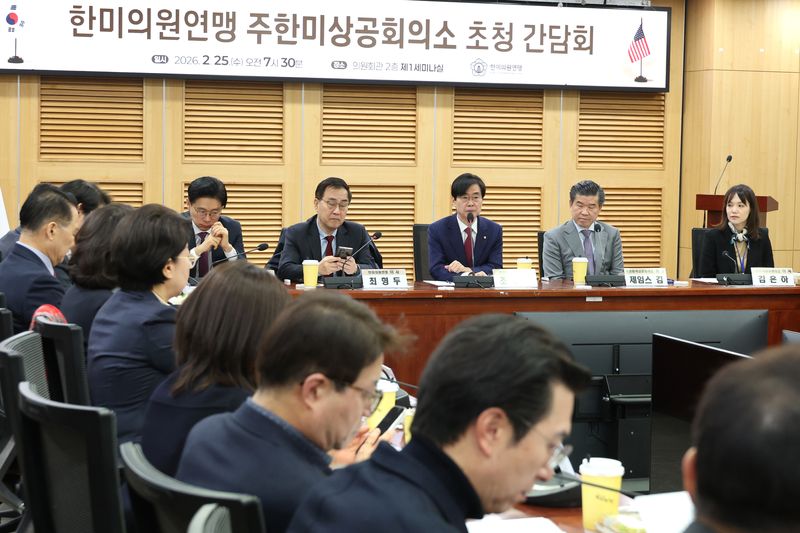
[Financial News] South Korean political circles have also begun to reorganize diplomatic channels with the United States, using the U.S. midterm elections as a catalyst. The move is aimed at addressing trade and security issues between South Korea and the United States during the remaining two years of the Donald Trump administration, as the balance of power in the U.S. Congress shifts. With the ruling and opposition parties at odds over investment in the United States and tariffs, attention is focused on whether bipartisan parliamentary diplomacy can provide a breakthrough.
According to political sources on the 4th, the National Assembly’s Korea-U.S. Parliamentary Association is pursuing a visit to the United States in mid-December. It plans to meet key members of the newly constituted U.S. Senate and House after the midterm elections to discuss trade and security issues between South Korea and the United States. In particular, it is expected to focus on updating channels for cooperation in response to changes in major congressional committees and leadership.
Before the U.S. visit, the association will also move to reorganize its leadership by holding a board meeting and general meeting on the 10th of this month. It is pursuing the election of six-term lawmaker Song Young-gil, special adviser for peace and diplomacy to President Lee Jae-myung, as co-chair on the Democratic Party of Korea (DPK) side, a position that is currently vacant. The People Power Party’s co-chair is six-term lawmaker Cho Kyoung-tae. The DPK-side post became vacant after former co-chair Cho Jeong-sik was elected speaker of the National Assembly in June. The Korea-U.S. Parliamentary Association is an official body of the National Assembly launched in March last year to strengthen the ROK-U.S. Alliance, and serves as a channel for parliamentary diplomacy with the United States, with lawmakers from both the ruling and opposition parties participating.
The pressing issues are investment in the United States totaling $350 billion (approximately 468 trillion won) and tariffs. The ruling and opposition parties have disagreed over the passage of a special bill related to U.S. investment and the role of the National Assembly. Another factor is how shifts in the balance of power in the U.S. Congress may affect the Trump administration’s trade policy and implementation of the investment agreement. As tariff and investment issues are directly tied to the interests of major domestic industries, including automobiles and semiconductors, the need for action by the National Assembly is growing.
There are also many issues to discuss in the security field. Key issues between South Korea and the United States, including nuclear-powered submarines and the transfer of wartime operational control, remain unresolved. Observers say continued communication with members of the U.S. Congress is important, as these matters may be linked not only to the U.S. administration but also to congressional budgetary, legislative, and policy support.
Differences within South Korea’s political circles are, however, seen as a challenge for parliamentary diplomacy. Given that the ruling and opposition parties have different views on investment in the United States and trade policy, coordination is needed to deliver a consistent message to the U.S. side. The key question is whether the parties can pursue bipartisan cooperation to manage economic and security cooperation between South Korea and the United States steadily during the remainder of the Trump administration.
Lawmaker Kim Young-bae, the DPK-side secretary of the association, said, “We are considering how the National Assembly can reconcile differences that arise in the course of investment in the United States,” adding that he would pursue a meeting with the leadership of the majority party in the U.S. House of Representatives after the U.S. midterm elections. Cho Kyoung-tae also recently expressed his willingness to expand economic cooperation with the United States, saying, “We want to share information and views on the shipbuilding, nuclear power, and energy industries, as well as mineral resources such as rare earths.”
[email protected] Kim Gyeong-min Reporter