Jeju proposes relocation to Korea Environmental Conservation Institute, stepping up drive to attract public institutions
- Input
- 2026-11-04 10:08:30
- Updated
- 2026-11-04 10:08:30
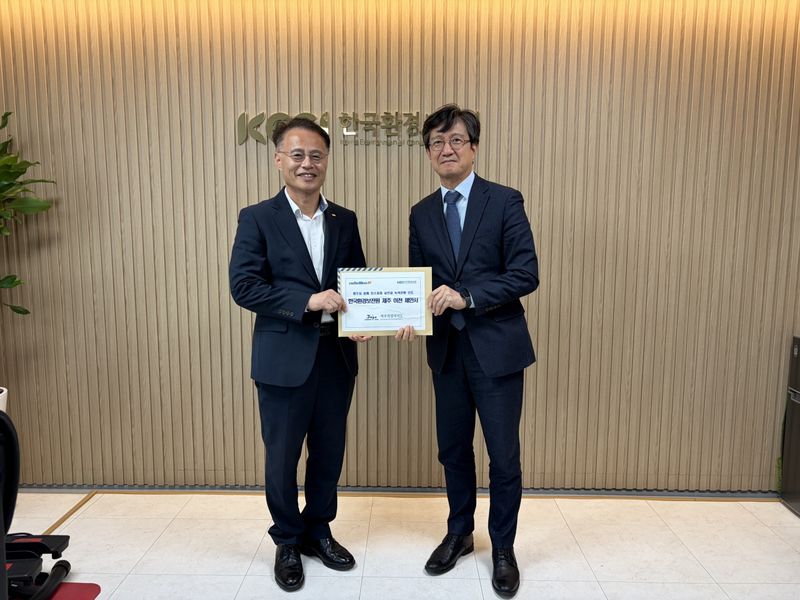
【Financial News, Jeju—Reporter Jeong Yong-bok】 Ahead of the government’s finalization of its second plan to relocate public institutions to provincial areas, Jeju Province has officially proposed that the Korea Environmental Conservation Institute relocate to Jeju. The province is seeking to attract a specialized public institution in the environmental sector by combining support for office space and staff settlement with cooperation on ecological restoration research and environmental education.
According to Jeju Special Self-Governing Province on the 4th, Lee Chang-heum, the province’s vice governor for climate and economy, met with Korea Environmental Conservation Institute President Shin Jin-su on the afternoon of the 3rd, delivered a proposal for relocating to Jeju, and requested cooperation on the relocation and joint projects.
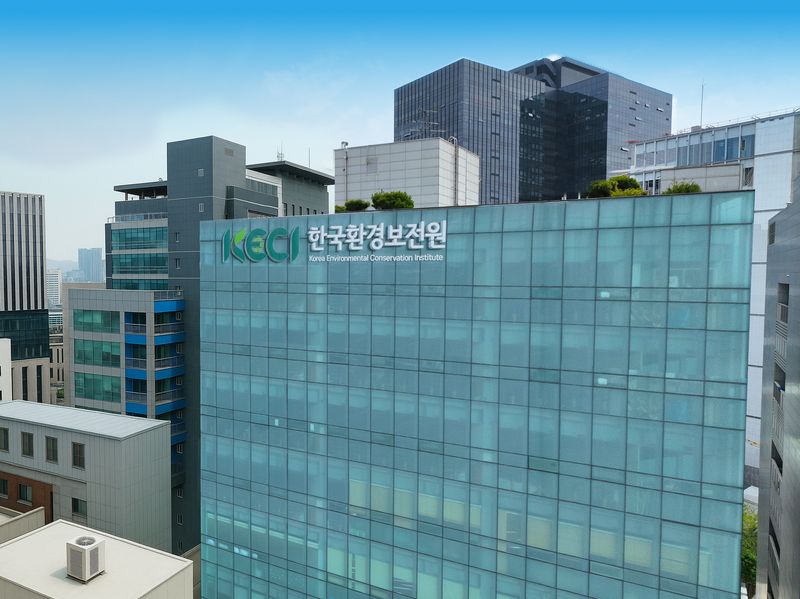
The Korea Environmental Conservation Institute is a miscellaneous public institution under the Ministry of Climate, Energy and Environment (MCEE), based in Seoul’s Seongdong District. It was transformed from the Environmental Preservation Association into the Korea Environmental Conservation Institute in 2023 and carries out work including environmental education, ecological restoration, environmental pollution surveys and research, and environmental technology development. It currently has 238 executives and employees.
The proposal is linked to the government’s second round of relocating public institutions to provincial areas. In September, the Ministry of Land, Infrastructure and Transport (MOLIT) set out key principles, including minimizing the number of institutions remaining in the Seoul metropolitan area, prioritizing existing innovation cities, and connecting institutions with local universities and industries. The plan is to finalize the relocation plan in the fourth quarter of this year and begin leading relocations in 2027. The institutions to be relocated and their regional placements will be decided after reviews by relevant ministries and deliberation and approval by the Presidential Committee for the Era of Local Autonomy, among other steps.
Jeju Province outlined to the Korea Environmental Conservation Institute its plans for securing office space, selecting a site, and supporting the settlement of executives, employees and their families, including assistance with housing, children’s education and transportation. The province’s plan is to help staff and their families settle in Jeju while enabling the relocated institution to continue its work.
The province also proposed ways to connect the institute’s specialized functions with Jeju’s natural environment. These include providing a “test bed” for research on restoring Jeju’s natural environment and jointly conducting surveys and monitoring of the natural environment, as well as applying research findings in the field.
The Korea Environmental Conservation Institute is one of the Natural Environment Restoration Support Centers designated by the Ministry of Climate, Energy and Environment in April this year. It is responsible for managing the track record and performance of natural environment restoration projects, expanding private-sector participation, and training personnel in related fields. The field research cooperation proposed by Jeju Province is related to these functions.
In environmental education, Jeju Province proposed its redesignation as an Environmental Education City as a basis for cooperation. On the 2nd, the province was designated for the second consecutive time in the Ministry of Climate, Energy and Environment’s Environmental Education City competition. The designation covers three years, from 2027 to 2029. This year, 21 local governments nationwide applied, and 10, including Jeju, Busan and Sejong, were selected.
Jeju Province proposed ways to bring the Korea Environmental Conservation Institute’s expertise in environmental education to the work of schools, universities, educational institutions and environmental groups in the province. It also plans to discuss co-hosting the 2027 Environmental Education Cities Forum and cooperating with Environmental Education Cities nationwide.
The two institutions already have a basis for cooperation. The Korea Environmental Conservation Institute worked with the Jeju Environmental Health Center to provide environmental health education from October 28 to 30. On October 30, Institute President Shin visited the center and discussed the results of local environmental health projects and ways to expand cooperation.
The key factors going forward are whether the Korea Environmental Conservation Institute is willing to relocate and how the government decides to place institutions. Further discussions are also needed on the specific scale and funding for the office and settlement support proposed by Jeju Province, as well as the personnel who would actually be subject to relocation.
Vice Governor Lee Chang-heum said, “We proposed relocating to Jeju so that the island’s outstanding natural environment and environmental policies could be connected with the Korea Environmental Conservation Institute’s expertise,” adding, “We will listen to views on the institute’s operating conditions and employees’ settlement needs, and continue discussions with central ministries and relevant institutions.”
[email protected] Jeong Yong-bok Reporter