“I get short of breath just climbing stairs”... One in 10 people aged 40 or older has COPD [Health Talk]
- Input
- 2026-11-04 10:18:22
- Updated
- 2026-11-04 10:18:22
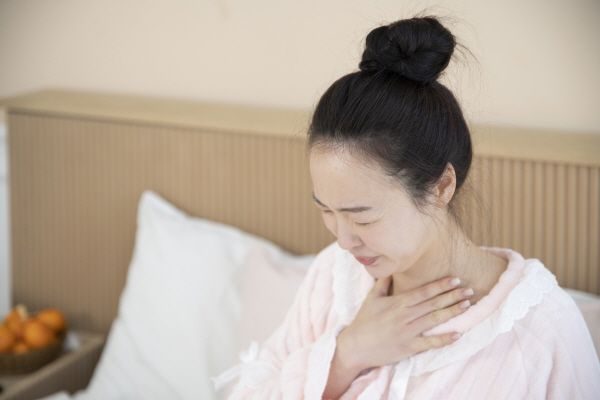
[Financial News] Just climbing a few flights of stairs leaves some people short of breath, and they cough up phlegm every morning. It is easy to dismiss these symptoms as a consequence of aging, but they may signal chronic obstructive pulmonary disease (COPD), in which the airways gradually narrow. The disease is common—affecting one in 10 people aged 40 or older—but only about two in 100 people know about it.
COPD is a disease in which chronic inflammation in the airways and lungs gradually impairs respiratory function. Its early symptoms are subtle and difficult to notice, and it can worsen rapidly when compounded by respiratory infections such as influenza or pneumonia, making early winter a time for particular caution. Ahead of World COPD Day on the 18th, we look at the causes and symptoms of COPD and how to manage it.
Smoking is the leading cause... One in four patients has never smoked
Smoking is the leading cause of COPD. Tobacco smoke causes chronic inflammation in the lungs, gradually narrowing the bronchial tubes and also destroying the alveoli, which exchange oxygen and carbon dioxide. This makes it easy to become short of breath. Because the disease develops as inflammation builds up over a long period, it usually begins after age 40. The longer and more heavily a person smokes, the greater the risk.
Professor Choi Cheon-woong of the Department of Pulmonary and Allergy Medicine at Kyung Hee University Hospital at Gangdong explained, “Not smoking doesn’t mean you can rest easy,” adding, “According to the Korea Disease Control and Prevention Agency, about one in four people with COPD have never smoked.”
Secondhand smoke, air pollution, smoke from cooking and heating, and occupational exposure to dust and chemicals can also cause COPD. The risk is higher for people born prematurely or at low birth weight whose lungs did not fully develop, as well as for those who had tuberculosis or whooping cough in childhood.
According to the Health Insurance Review and Assessment Service, the number of patients treated for COPD rose 13.3%, from 192,636 in 2021 to 218,171 last year. Last year, people in their 70s accounted for the largest group, at 83,677 (38.4%), followed by those in their 60s (27.0%) and those aged 80 or older (26.5%). In the Korea Disease Control and Prevention Agency’s 2025 Korea National Health and Nutrition Examination Survey, the prevalence rate was 10.4% among people aged 40 or older and 25.3% among those aged 70 or older—about one in four. Yet a Ministry of Health and Welfare survey found that only 2.3% were aware of the disease. In effect, most patients live without knowing they have COPD.
The main symptoms are shortness of breath when climbing stairs or hills, along with a cough that brings up sticky phlegm. The problem is that symptoms can remain mild until the airways have sustained more than 50% damage, making them easy to dismiss. As the disease progresses, people become short of breath even with slight movement, and their breathing capacity can fall so much that they struggle to blow out a candle.
A cough, shortness of breath and wheezing can occur together, leading some people to mistake COPD for asthma. Asthma tends to begin at a relatively young age and is closely linked to allergies; symptoms repeatedly appear and subside at night or after exposure to a trigger. COPD, by contrast, mainly affects smokers over 40. Coughing and breathing difficulties are worse early in the morning, and the condition does not improve but gradually worsens.
Pneumonia can be dangerous... Lung function tests, quitting smoking and vaccines are key
The greatest concern for people with COPD is an acute exacerbation. It should be suspected if shortness of breath suddenly worsens, phlegm increases or darkens in color, or usual medications stop working well. The most common cause is a respiratory infection caused by a virus or bacteria. Damaged airways are less able to expel pathogens, making them more vulnerable to infection; if pneumonia develops, hospitalization is likely.
According to the Ministry of Data and Statistics’ 2025 Causes of Death Statistics, pneumonia was the third-leading cause of death in South Korea and the second-leading cause among people aged 80 or older, after cancer. The Korea Disease Control and Prevention Agency classifies COPD as an underlying condition associated with a high risk of pneumococcal infection.
A chest X-ray often looks close to normal until COPD symptoms become very severe, making the disease difficult to diagnose through imaging alone. A lung function test, which measures the ability to breathe out, is essential. COPD is diagnosed when the volume of air exhaled in one second after taking the deepest possible breath and then breathing out forcefully is less than 70% of the person’s vital capacity.
The Ministry of Health and Welfare introduced lung function tests into national health screenings for people aged 56 and 66 starting this January. Anyone with an abnormal finding should receive an accurate diagnosis from a specialist. Even those outside these age groups are advised to have regular tests if they are over 40.
Once damaged, the airways and lung tissue do not recover, making COPD difficult to cure. Treatment aims to relieve symptoms, slow the disease’s progression and prevent acute exacerbations. Inhaled bronchodilators, the standard treatment, widen narrowed airways and make breathing easier; they offer advantages over oral medication in terms of effectiveness and side effects. Because inhalers differ in how they are used, patients should learn the correct technique when they are prescribed one. They should use it consistently rather than stopping on their own when symptoms improve.
Quitting smoking is the most effective way to prevent COPD and slow its progression. Although already damaged lungs cannot recover, quitting can slow the decline in lung function. On days when fine dust pollution is severe, it is best to avoid going outside; when cleaning, ventilate the area and wear a mask. Frequent handwashing and avoiding crowded places can also help prevent infection.
Vaccinations are also important. The pneumococcal vaccine cannot prevent pneumonia entirely, but it can reduce the chance of getting it and help prevent severe illness. People aged 65 or older can receive one free dose through the national immunization program. People with COPD are advised to consult a healthcare professional about getting vaccinated even if they are under 65. They should also get a flu shot every year. Influenza can cause pneumonia directly or lead to a secondary bacterial infection that develops into pneumonia.
Professor Choi stressed, “Many patients dismiss shortness of breath after climbing a few flights of stairs as a consequence of aging and don’t go to the hospital until daily life becomes difficult,” adding, “Because narrowed airways cannot be restored, it is important for anyone with a history of smoking to have a lung function test starting at age 40.”
[email protected] Jung Myung-jin, Medical Correspondent Reporter