AI calculates my kidney risk and even offers lifestyle coaching ... Seoul St. Mary’s Hospital begins clinical validation of app
- Input
- 2026-11-04 08:37:15
- Updated
- 2026-11-04 08:37:15
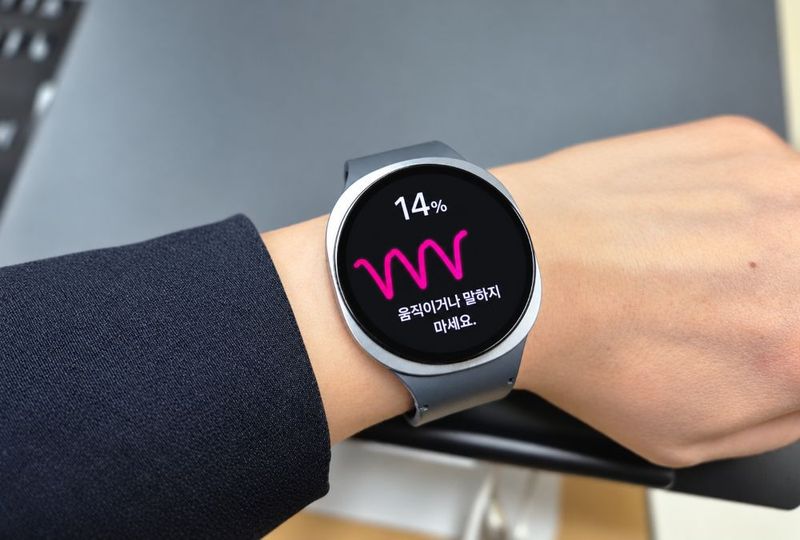
[Financial News] Could the smartwatch on my wrist also look after my kidney health? An app that analyzes health checkup results, genomic information, and activity and sleep data collected by wearable devices to assess the risk of chronic kidney disease and provide lifestyle coaching has begun validation in actual patients.
A research team led by Professor In-seok Lee of the Department of Gastroenterology at Seoul St. Mary’s Hospital, the Catholic University of Korea, has begun validating the effectiveness of a mobile app that predicts the risk of chronic kidney disease. The validation is part of a project under the “AI-Based Personalized Care Service Convergence Leading Project,” supported by the Ministry of Science and ICT and the Institute for Information and Communications Technology Planning and Evaluation (IITP). The project is titled “Development of Breakthrough Technologies for AI-Based Prediction and Management of Health Risks Across the Life Course Using Phenome Data.”
“Phenome” combines “phenotype” with the suffix “-ome,” meaning “the entire set,” and refers to the full range of biological characteristics and health conditions that emerge from the interaction between genetic information and the environment. Phenome data include test results such as blood pressure and blood glucose, medical history, and lifestyle information such as sleep and physical activity.
More Than Prediction ... Calculating Risk and Providing Lifestyle Coaching
The research team is developing an AI model to predict the risk of developing and progression of chronic kidney disease and other conditions. The team is linking and standardizing electronic medical records (EMRs) and health checkup data from multiple medical institutions, then combining genomic analysis data with information on physical activity, sleep, and eating habits collected through wearable devices and apps.
Existing risk-prediction models only calculate the likelihood of disease based on clinical information from a particular point in time, making it difficult to turn their results into actual health management. That is because continuously tracking individual risk factors and providing feedback in response to lifestyle changes requires ongoing time and staffing from medical professionals. The research team aims to connect AI-calculated risk levels with personalized, app-based lifestyle coaching and create a management system that continually incorporates changes in an individual’s health and lifestyle to help prevent disease.
The app looks at more than one or two risk factors. It combines multiple clinical variables, including health checkup and genetic test results, to calculate each person’s absolute risk, and adds activity, sleep, and heart rate data collected by a Galaxy Watch. This process takes place on the AI patient health platform PHAIR, and the app provides lifestyle coaching along with risk information. The team has also applied federated learning, a technology that enables multiple hospitals to jointly train AI without directly exchanging patient data.
Seoul St. Mary’s Hospital provides health checkup and clinical information, while the Department of Medical Informatics at the Catholic University of Korea is responsible for developing AI models to predict the risk of chronic kidney disease and lung cancer. Digital Pharm handles AI analysis and platform operations, while Pyeonghwa I&S is responsible for hospital information systems and the conversion and transfer of data.
50 participants to use the app for 3 months ... Changes in kidney function to be checked
In the clinical validation study that began last month, 50 participants will use the app and wearable devices for three months. In the third month, kidney function (estimated glomerular filtration rate, eGFR) will be assessed using chest imaging and follow-up blood tests. The study will last six months in total, and the research team plans to assess use of the service, satisfaction, and usefulness to determine whether it can be applied in everyday life.
The research team said the technology is significant because it reflects the health characteristics of Koreans and can identify high-risk groups early and provide personalized care before disease develops or worsens. The team expects it to contribute to the advancement of precision medicine and strengthen the competitiveness of medical technology.
Professor Lee said, “This study will determine in actual clinical settings whether AI and wearables can address ongoing risk management and feedback, which have been difficult to achieve through outpatient care alone.” He added, “As a Catholic healthcare institution, we hope this research will help connect advanced technology with patient-centered care, reduce suffering, and improve quality of life.”
Meanwhile, the project, led by Seoul St. Mary’s Hospital, involves Kangbuk Samsung Hospital, the Sungkyun Institute of Bio-Convergence Science and Technology, Waysen, Samsung Electronics Co., Ltd., NAVER Cloud, Miso Information Technology, Macrogen, and Digital Pharm, among others.
[email protected] Jeong Myeong-jin, Medical Correspondent Reporter