Supreme Court: Money received before trade secrets are handed over can also be criminal proceeds
- Input
- 2026-11-04 08:26:45
- Updated
- 2026-11-04 08:26:45
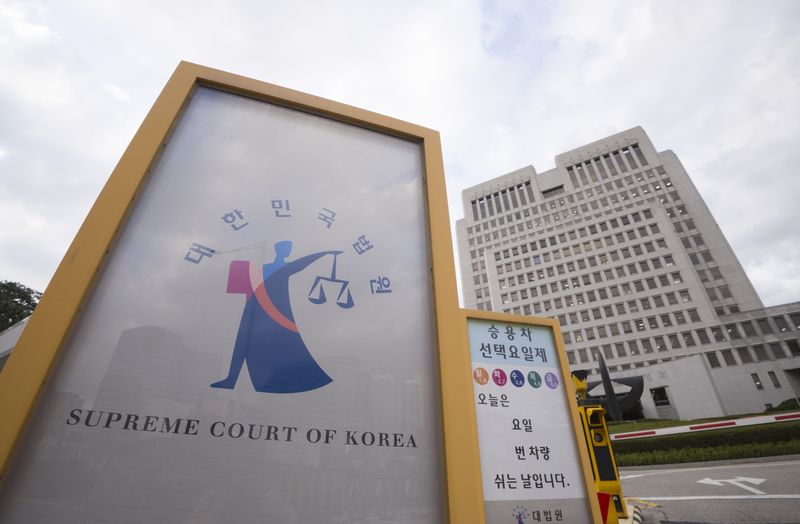
According to legal sources on the 4th, the Supreme Court's Third Division, with Justice Lee Sook-yun as the presiding justice, overturned on the 8th of last month a lower court ruling that did not order the forfeiture of money from A, who was indicted on charges of violating the Unfair Competition Prevention and Trade Secret Protection Act (disclosure of trade secrets abroad, etc.) and occupational breach of trust, and remanded the case to the Seoul High Court.
On January 12, 2024, A left the chemical company where they had worked. Although asked to delete or return all technical materials related to the production of polyolefin elastomer (POE), A continued to keep them. A was later indicted on charges of sending B photo files of the materials on January 30 and February 28, knowing they would be passed on to a Chinese petrochemical company.
B was introduced to a Chinese company in May 2023 and then introduced to A, who was preparing to leave their job that September. Starting that month, A held video conferences with people from the Chinese company and, from October to December, attended four in-person meetings in Seoul, answering questions about the technology or handing over materials. On October 31 that year, B signed a $6 million technology transfer agreement with the Chinese company through a U.S. corporation B operated. From October 26, 2023, through February 27 of the following year, A received 30.5 million won and $10,188 from B in 10 payments described as salary.
The issue was whether the money could be treated as criminal proceeds and forfeited. The first trial ordered 45,119,177 won forfeited, but the second trial overturned that order and imposed no forfeiture. It reasoned that most of the money had been paid before the materials were handed over, and that A had also attended meetings and answered questions, making it difficult to regard the money as property obtained through the crime or as payment for it. The court also said that even if some of the money was compensation for the crime, there was no evidence to determine the proportion.
The Supreme Court said, “The fact that a payment was made before or after the criminal act, in terms of timing alone, is not enough to readily deny that it was consideration for the criminal act.” It also said that even if the work for which the remuneration was paid included non-criminal acts, all the money received was subject to forfeiture if those acts were merely incidental or ancillary conduct serving the same purpose as the crime. A’s attendance at meetings with the Chinese company and responses to questions, the court said, were likewise merely acts serving the same purpose as the crime of continuing to possess and handing over trade secrets.
The panel particularly explained, “In addition to strictly punishing acts such as using trade secrets abroad or disclosing or leaking them while knowing they will be used abroad, it is necessary to confiscate and forfeit criminal proceeds to fundamentally deprive people of the economic benefits that serve as an incentive for criminal acts.”
However, the Supreme Court held that forfeiture could not be imposed on B. The $1,528,299 B received as payment under the technology transfer agreement could not be regarded as property obtained through, or as compensation for, the trade-secret “acquisition” offense charged against B. Because the appeals court had not ordered any forfeiture, that part could not be overturned separately, and the portion of the ruling finding A guilty was therefore overturned in its entirety.
[email protected] Kim Dong-gyu Reporter