“Homeless people don’t go bald?” ... A specialist reveals the surprising truth [Health Talk]
- Input
- 2026-11-04 08:31:26
- Updated
- 2026-11-04 08:31:26
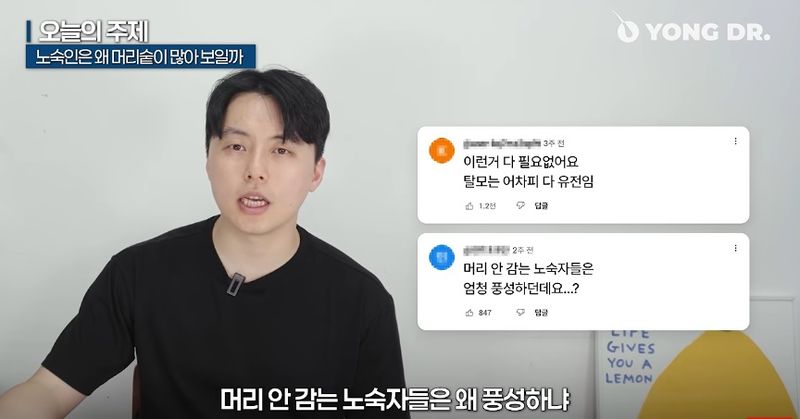
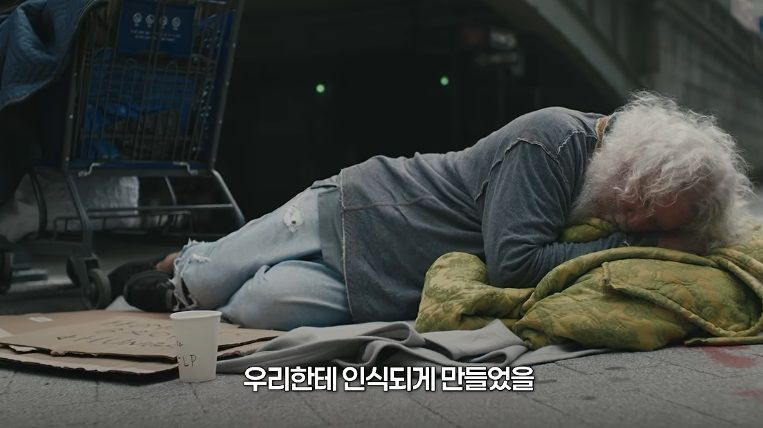
[Financial News] “There’s no point in washing and caring for your hair every day. Homeless people who don’t wash their hair seem to have plenty of it.”
A hair-loss specialist has offered a scientific and visual analysis of the “myth that homeless people are immune to hair loss,” a self-deprecating joke often heard among people experiencing hair loss. The short answer is that being homeless does not make someone immune to genetic hair loss; the explanation is that “visual illusions” and “actual age” have a significant influence.
Kim Yong-bin, director of Yong Doctor Hair Clinic and operator of the YouTube channel “Yong Doctor,” which specializes in hair loss, recently addressed common misconceptions about homeless people’s hair. “To date, there have been no academic studies directly comparing hair-loss prevalence among homeless people and the general population,” Kim said, offering several practical explanations.
“Younger than they look”: Average age of homeless people in developed countries is around 41
The first factor Kim cited was an “age illusion.” Male-pattern hair loss tends to become more common and severe with age.
However, because of the harsh conditions of life outdoors, homeless people often look much older than they actually are. Citing a 2021 study on the mental health of homeless people in developed countries, Kim said, “The average age of the homeless people in the study was about 41.” He explained, “The actual age range of the homeless population tends to be younger than people think, so it’s likely that their hair loss has not yet fully developed.”
A “gut microbiome-DHT” hypothesis exists, but its effects on the scalp are unconfirmed
He also addressed a possible link between diet and hormones that has been raised by some. Dihydrotestosterone (DHT), the primary substance responsible for male-pattern hair loss, is metabolized in the liver and then excreted into the intestines. Some studies suggest that certain gut bacteria may reactivate it.
This has led to speculation that irregular eating habits in such an environment could affect hormone metabolism. However, Kim stressed that “there is no medical evidence showing whether DHT reactivated in the gut travels through the bloodstream back to the hair follicles on the scalp and affects them,” adding that “there have been no studies directly examining the gut microbiome of homeless people, either.”
The key is “the coverage provided by long hair”: styling and gentle cleansing matter
The most decisive reason Kim offered was “the visual illusion created by a hairstyle.”
Kim noted, “If you grow your hair out for a long time without cutting it, your bangs can cover an M-shaped receding hairline, while long hair on the sides and top can cover hair loss at the crown. Regardless of actual hair density or thickness, it can make your hair look very full.”
Kim also shared practical hair-care tips for people who find it difficult to manage their hair. “If you’re concerned about areas of hair loss, it can help to use visual techniques to add volume, such as a side-part perm,” he said. “In your daily routine, it’s best to choose a shampoo that adds volume while being gentle on the scalp, and to keep your hair clean consistently.”
[email protected] Moon Young-jin Reporter