Will Democrats Sweep Both Chambers of Congress? Prediction Markets Put the Odds at 95% and 76%
- Input
- 2026-11-03 22:44:58
- Updated
- 2026-11-03 22:44:58
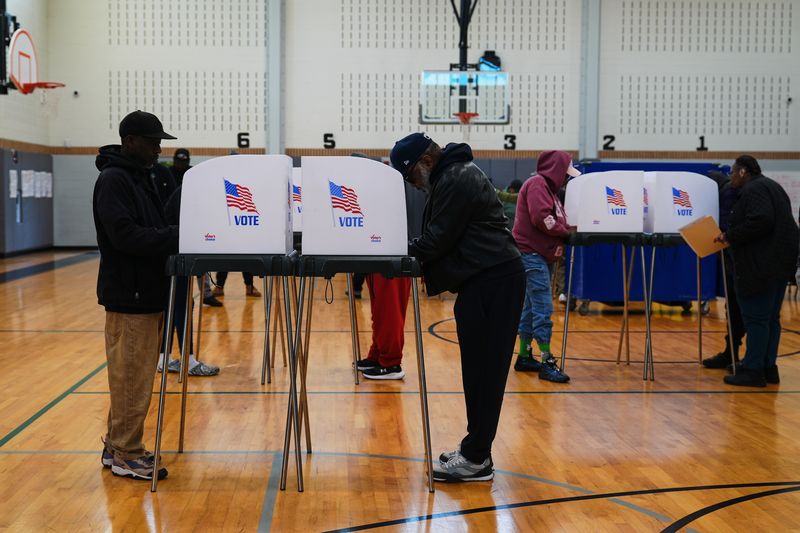
Ahead of the U.S. midterm elections on the 3rd (local time), an unprecedented amount of political betting money flowed into major prediction markets, including Kalshi and Polymarket.
According to prediction-market prices compiled by analytics firm BetInt as of the 2nd, Democrats had a 95% chance of becoming the majority party in the House and a 76% chance of securing a Senate majority. In other words, the odds are tilted toward Democrats taking control of both chambers.
Betting volumes also surged. Kalshi’s trading volume related to the midterms reached $1.33 billion, while the amount wagered on congressional elections on Polymarket was about $145 million. More than 28,000 prediction markets related to this midterm election have been launched.
Trading was especially concentrated in key battleground states that could determine which party holds the Senate majority, including Texas, Michigan, Maine and South Carolina. The reliability of prediction markets is also expected to vary significantly depending on the election results in these states.
Prediction markets operate by having users buy and sell “Yes” or “No” contracts on whether a particular candidate will win, among other outcomes. Prices formed in the market are interpreted as the probability that the event will occur. The industry argues that because users trade with real money at stake, these markets can make more accurate predictions than simple opinion polls.
Indeed, during the 2024 U.S. presidential election, Kalshi and Polymarket drew worldwide attention by assigning a high likelihood to President Trump’s victory, unlike many opinion polls. Since then, media outlets and investors have used them as one of the key indicators for assessing the state of election races.
However, a series of recent prediction failures has raised questions about their reliability. In last month’s Brazilian presidential election, prediction markets put President Luiz Inácio Lula da Silva’s chances of winning at 20%, but Lula won.
The possibility of market manipulation is also a source of controversy. Some U.S. election candidates were found to have bet directly on the outcomes of their own races, and the nonprofit Anti-Corruption Data Collective (ACDC) published research showing that even relatively small sums can move probabilities in political prediction markets.
Kalshi and Polymarket said they are strengthening their internal controls in response. Kalshi prohibits politicians and campaign staff from placing bets related to politics.
Academics recognize the usefulness of prediction markets but caution against placing too much trust in them. A Vanderbilt University study analyzing about 2,500 prediction markets related to the 2024 presidential election found that the probabilities indicated by the markets generally aligned well with the actual outcomes.
However, Joshua Clinton, a professor at Vanderbilt University who led the study, noted, “It is impossible to determine how accurate the price formed in any particular individual market is.”
Harry Crane, a professor of statistics at Rutgers University, said a small number of professional investors use opinion polls and various data to correct mispriced markets, explaining that prediction markets should be evaluated seriously.
[email protected] Correspondent Lee Byeong-cheol Reporter