Michigan and Texas are key battlegrounds in the U.S. midterms...8–9 p.m. is the turning point
- Input
- 2026-11-03 22:15:16
- Updated
- 2026-11-03 22:15:16
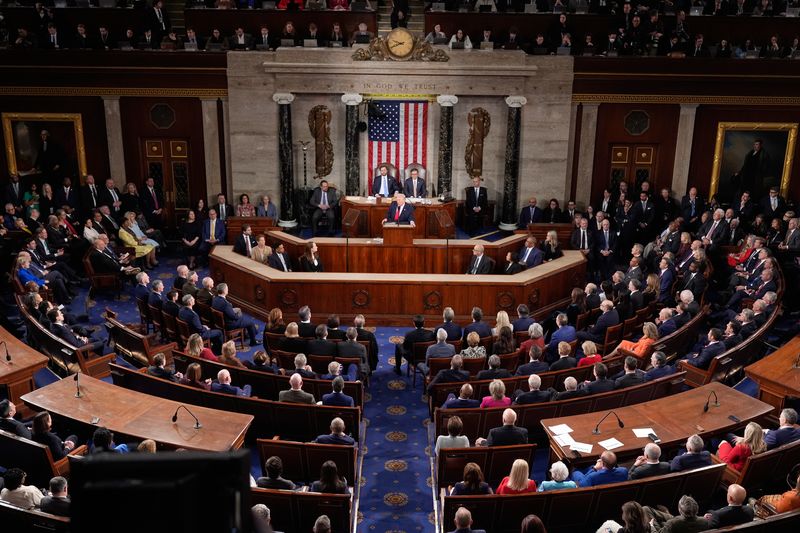
【Financial News correspondent Lee Byung-chul in New York】 The U.S. congressional midterm elections will be held on the 3rd (local time), and the outcome for the Democrats and Republicans is expected to begin taking shape around 8–9 p.m. that night (10–11 a.m. on the 4th in Korea). In particular, the Senate races in Michigan and Maine are seen as key factors in gauging the Democrats’ chances of reclaiming the Senate. If Democrats perform well in traditionally Republican strongholds such as Texas and Iowa, a “Blue Wave”—a sweeping Democratic victory that would go beyond flipping control of the House—could also become a reality.
The Wall Street Journal (WSJ) on the 3rd outlined key battleground states to watch at different points during the midterm vote count.
7 p.m. (9 a.m. on the 4th in Korea)...Georgia and South Carolina
The first states to watch are Georgia and South Carolina. In Georgia, the governor’s race is extremely close, and the contest could continue late into the night.
In South Carolina, the key question is how well Democratic candidate Annie Andrews performs against Republican incumbent Sen. Graham. If the Democratic candidate takes the lead, it could be interpreted as an early sign of a nationwide electoral trend unfavorable to Republicans. Conversely, if Republicans hold on to the seat, the Democrats’ path to reclaiming the Senate will narrow accordingly.
7:30 p.m. (9:30 a.m. on the 4th in Korea)...North Carolina and Ohio
This is the time slot when Democrats could flip their first Republican-held Senate seat. However, Democrats need to win three additional seats to secure a Senate majority.
In Ohio, Democratic candidate Sherrod Brown is challenging Republican Sen. Jon Husted. The gubernatorial race in the same state is also a factor. Democratic candidate Amy Acton and Republican candidate Vivek Ramaswamy are facing off, and controversy surrounding Ramaswamy late in the campaign could become a liability for Republicans overall.
8 p.m. (10 a.m. on the 4th in Korea)...Michigan and Maine: the biggest turning point
This is one of the most important time slots in this midterm election. In Michigan, Democratic candidate Abdul El-Sayed and former Republican congressman Mike Rogers are competing for a Senate seat. Polls have shown El-Sayed with an advantage, but the actual vote count is expected to be close.
In Maine, Democratic candidate Troy Jackson is challenging Republican Sen. Susan Collins. Collins is a prominent moderate Republican who has won several times even in areas where Democrats are strong.
If Republicans win both Michigan and Maine, their chances of retaining the Senate majority will increase. Conversely, if Democrats win both states, their chances of reclaiming the Senate will rise substantially. However, vote counting in Michigan is slow, so it may take time to confirm the final result.
9 p.m. (11 a.m. on the 4th in Korea)...Texas and Iowa to determine whether there is a “Blue Wave”
Iowa, Kansas and Texas are traditionally Republican strongholds. In a typical election, Republicans would be expected to win comfortably, but this year, voter dissatisfaction has grown amid high inflation and the burden of living costs, making the outcome difficult to predict.
In particular, the Texas Senate race pits Democratic candidate James Talarico against Republican candidate Ken Paxton. With several million people having voted early, the gap between the two candidates’ shares of the vote could be narrow.
If Democrats perform unexpectedly well in these states too, it could confirm a nationwide trend favoring the party. The WSJ predicted that if a Democratic Blue Wave materializes, Democrats could effectively clinch a House majority in this time slot.
11 p.m. (1 p.m. on the 4th in Korea)...Focus on Democrats gaining House seats in California
The Democrats’ strategy is to expand their advantage in the House by winning a substantial number of the Republican-held House seats remaining in California.
The Los Angeles mayoral race and a vote related to a wealth tax are also drawing attention. The mayoral contest pits incumbent Mayor Karen Bass against candidate Nithya Raman, a member of the Democratic Socialists.
However, because vote counting in California takes a long time, including due to mail-in ballots, it could take several days or more to finalize the distribution of seats.
1 a.m. on the 4th (3 p.m. on the 4th in Korea)...Alaska is the final factor
In Alaska, Republican Sen. Dan Sullivan is facing Democratic candidate Mary Peltola.
The state’s importance lies in the possibility that control of the Senate could come down to the final seat. If the two parties are locked in close races in other battleground states, the result in Alaska could determine the balance of power in the Senate.
If the two candidates are locked in an extremely close race, it could take a considerable amount of time to determine the final winner of the U.S. midterm elections.
[email protected] Correspondent Lee Byung-chul Reporter