[Editorial] Sharp rise in prices felt by ordinary people calls for slowing cash-based budget spending
- Input
- 2026-11-03 18:41:34
- Updated
- 2026-11-03 18:41:34
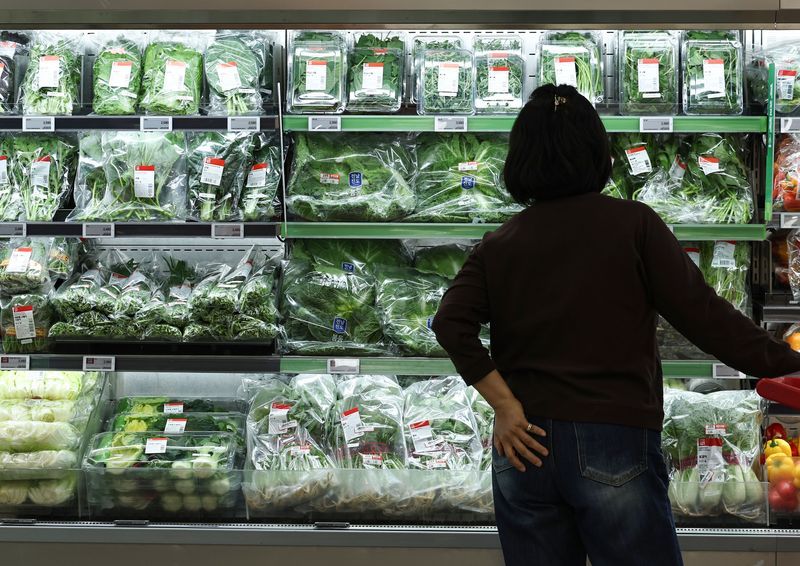
The immediate source of volatility in prices is the rapidly changing external environment. On the 3rd, West Texas Intermediate crude oil (WTI) fell about 7% to $96.46 a barrel. The fact that daily swings are this large is itself a warning sign. The ongoing U.S.-Iran war is another source of unease. The Wall Street Journal reported that day that U.S. forces had bombed Iran’s Qeshm Island, at the entrance to the Strait of Hormuz, and U.S. President Donald Trump has rattled global oil markets by suggesting attacks on Iran after the midterm elections.
Domestically, the expansionary fiscal stance is the biggest variable. In his policy address to the National Assembly on the 2nd, President Lee Jae Myung presented a record-breaking budget proposal of 821 trillion won for next year. In particular, of the 162.3 trillion won allocated to the newly established Future Fund, 45.4 trillion won is slated for spending next year. Of that, 15.5 trillion won is reportedly for cash-based welfare programs. There are concerns that releasing cash spending all at once while prices are rising could push them up further.
The economic argument that “money must be injected to revive domestic demand and get the growth engine running” is sound in principle. Providing subsidies to groups with diminished spending power can ease their cost of living and help sustain consumption. That does not mean inflationary pressure should be ignored. On the 22nd of last month, the Bank of Korea held its base rate steady at 3.00% per year. If fiscal authorities inject money and inflate demand for consumption and investment, the monetary authorities will have less room to cut interest rates, and the resulting burden will fall on households and businesses in the form of interest costs.
There are limits to extending fuel tax cuts and increasing cash assistance simply because the prices people feel are high. The fuel tax cut, introduced as a temporary measure in November 2021, has become effectively permanent, clouding price signals and reducing tax revenue. The oil price cap introduced on the 13th of last March was said to have lowered October’s inflation rate by 0.8 percentage points, but keeping it in place for too long could distort market prices.
The government should put forward a strategy that links the timing of cash spending to inflation indicators. It should identify in advance programs whose implementation can be delayed and carefully review their progress each quarter. Rather than using the temporary tax revenue gains from the semiconductor boom to expand new ongoing programs, it would be better to reduce national debt and strengthen fiscal soundness and external credibility. The government should adjust the budget based on grocery-basket prices, not just headline statistics, and the National Assembly should closely scrutinize the spending conditions and sustainability of cash-based programs.