[Editorial] Actively expand manufacturing AI to drive productivity innovation among SMEs
- Input
- 2026-11-03 18:41:27
- Updated
- 2026-11-03 18:41:27
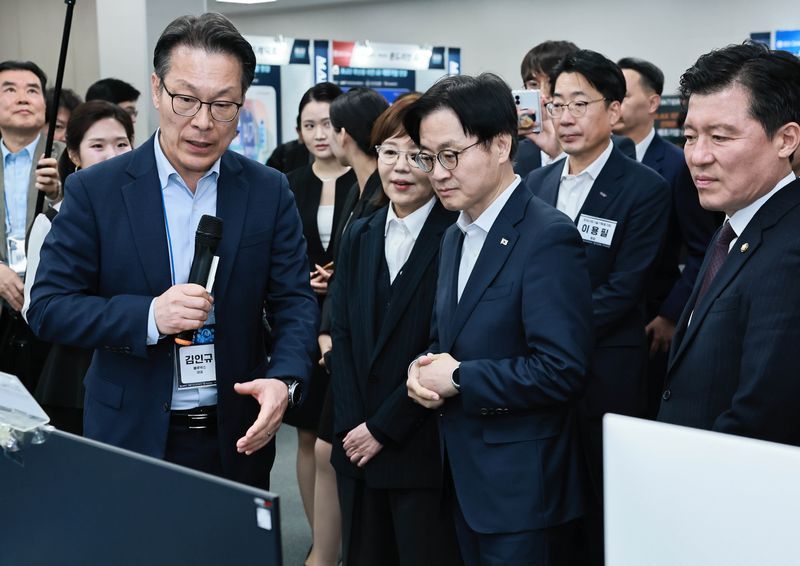
The potential of manufacturing AI is evident in several areas. Among the 245 AI factories supported by the Ministry of Trade and Industry, 38 exemplary cases saw productivity rise by 30.1% and defect rates fall by 15.5%. This shows that AI-based process optimization and quality control can deliver tangible results.
But the success of a few leading companies does not mean the manufacturing sector as a whole has been transformed. Production equipment and working conditions vary from factory to factory, and there are also significant gaps in technology, funding, and skilled labor. The key is to widely deploy proven technologies on the factory floor and achieve similar results. For small and medium-sized manufacturers facing labor shortages and slowing productivity, this could be an opportunity for a fresh start.
However, there is still a long way to go. AI adoption among small and medium-sized manufacturers currently stands at just 1%. Last month, the government also announced its “Physical AI Expansion Strategy for Small and Medium-Sized Manufacturers,” pledging to invest at least 5 trillion won by 2030 to raise the adoption rate to 10% and increase the number of companies adopting AI from 600 to 6,000. Even if these targets are met, nine out of every 10 small and medium-sized manufacturers will still not have adopted AI. If AI-driven innovation in manufacturing is concentrated in large companies and a handful of successful SMEs, the productivity gap across the industrial ecosystem could widen further. It is therefore all the more important to help SMEs ease the burden of upfront investment and make it easier for them to use proven technologies.
Expanding manufacturing AI will do more than raise productivity at SMEs. It will lay the foundation for South Korea to become a physical AI powerhouse, a key objective in the next-generation AI race. Competitiveness in physical AI depends on data accumulated on real manufacturing floors and experience operating robots. South Korea has a world-class manufacturing base in semiconductors, automobiles, and shipbuilding, as well as a high level of automation.
By making active use of these strengths, South Korea can secure a leading position in the global physical AI market. NVIDIA CEO Jensen Huang’s efforts to expand cooperation with South Korea in robotics and AI factories are also closely tied to this manufacturing base. Data accumulated across the diverse processes of small and medium-sized manufacturers will be a valuable asset for advancing AI technology.
Above all, the industry must first address the standardization of manufacturing data and technological compatibility. Even within the same industry, differences in equipment and processes from factory to factory make it difficult to apply proven AI models as they are. Rules for protecting trade secrets and using data must also be clearly defined so companies can use data without fear of technology leaks.
Cooperation among government ministries is also essential. Support programs run by the Ministry of Trade and Industry, the Ministry of SMEs and Startups (MSS), and the Ministry of Science and ICT must be coordinated to prevent overlap or a drift toward competition over deployment figures. True innovation means that companies can use AI on their own and make further investments even after government support ends. South Korea must pave the way to becoming a global physical AI powerhouse, using productivity innovation in small and medium-sized manufacturing as a springboard.