Unification Church leader Hak Ja Han Moon faces re-arrest as 200 million won bail bond is forfeited
- Input
- 2026-11-03 17:39:43
- Updated
- 2026-11-03 17:39:43
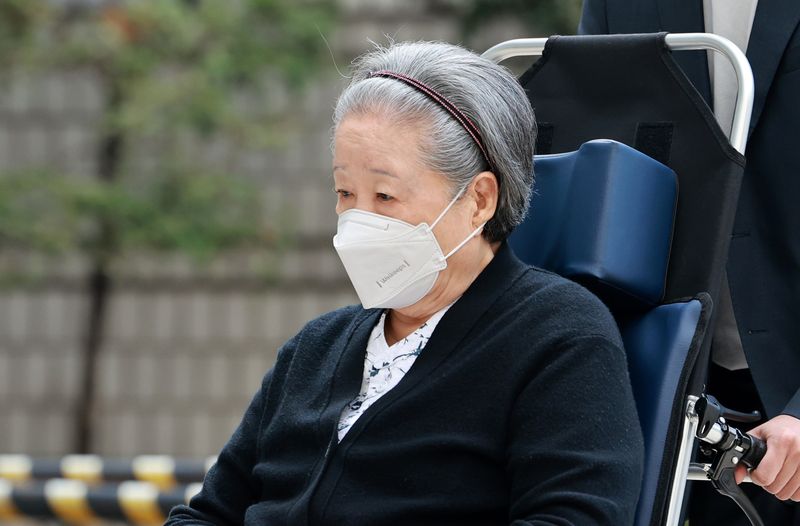
[Financial News] Hak Ja Han Moon, leader of the Family Federation for World Peace and Unification (Unification Church), who was released on bail to receive treatment for a chronic illness, now faces being taken back into custody. The court abruptly revoked bail and forfeited the 200 million won bond, finding that Han had directly violated the court-imposed residence restrictions and that there was a considerable risk of evidence being destroyed.
According to legal sources on the 3rd, Criminal Division 13 of the Seoul High Court, comprising Kim Mu-sin, Lee U-hui and Judge Yoo Dong-gyun, all High Court judges, ruled that day to revoke bail for Han, who is standing trial on appeal on charges including violations of the Political Funds Act. The panel also ordered the forfeiture to the state of the 200 million won bail bond paid by Han’s side when Han was released.
The court revoked bail under Article 102(2), Subparagraph 2 of the Criminal Procedure Act (when there are sufficient grounds to believe that the defendant may flee or destroy evidence) and Subparagraph 5 (when conditions set by the court have been violated). The entire 200 million won bail bond was ordered forfeited.
Han was brought to trial on charges of violating the Political Funds Act, including by providing money and valuables to political figures, and the Act on the Aggravated Punishment, etc. of Specific Economic Crimes (embezzlement). At the first trial last August, Han was sentenced to two years in prison. Han’s side appealed the ruling and then sought bail, citing deteriorating health and the need for treatment of a chronic illness. The appellate court granted bail subject to strict conditions limiting Han’s residence to medical facilities where Han was receiving treatment, such as Seoul Asan Medical Center, and prohibiting outings or departures from the designated residence without court permission.
Han was later reportedly making frequent trips to places including the Cheonjeonggung Museum, a key Unification Church facility in Gapyeong County, Gyeonggi Province. At the appellate hearing the previous day, the panel pointed out that court documents, including a motion to amend the indictment that it had sought to serve on Han, had been marked undeliverable by the hospital on the grounds that the “recipient was absent.” The panel sent an official letter to Seoul Asan Medical Center requesting confirmation of Han’s treatment progress and whether Han had left without authorization, and began a full-scale review of possible violations of the bail conditions.
Han’s side reportedly acknowledged that Han had gone outside the hospital on some occasions, but explained that the trips were unavoidable for treatment or other reasons and did not constitute intentional violations of the conditions. The panel, however, found that leaving the hospital without permission violated the core residence restriction and seriously breached the bail conditions under the Criminal Procedure Act, and that there was a considerable risk of evidence being destroyed in the future.
Following the court’s decision to revoke bail, prosecutors are expected to begin procedures to return Han to custody. Under the Criminal Procedure Act, the detention warrant for a defendant whose bail has been revoked regains its force, and the defendant is returned to a detention center and stands trial in custody from then on.
[email protected] Lee Chang-hoon Reporter