JCS chairman: “Deter enemy provocations with superior mobility and firepower... Strengthen readiness to counter drone threats”
- Input
- 2026-11-03 17:18:53
- Updated
- 2026-11-03 17:18:53
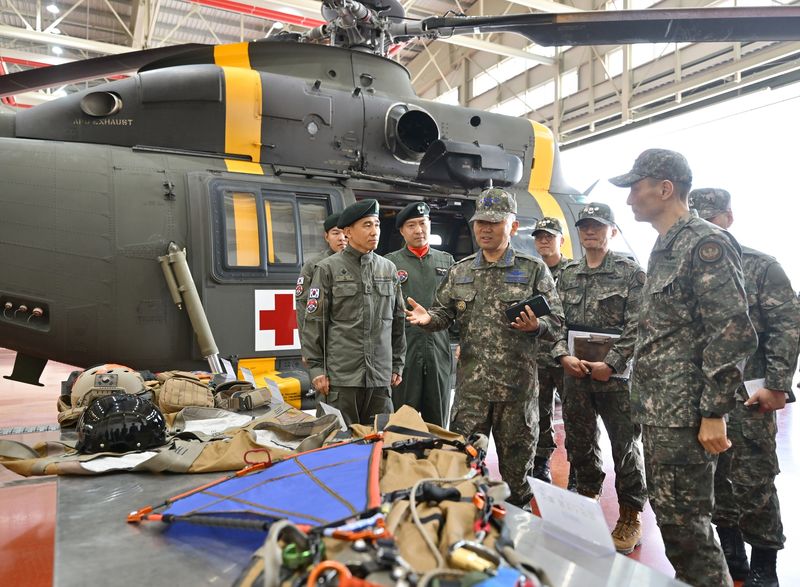
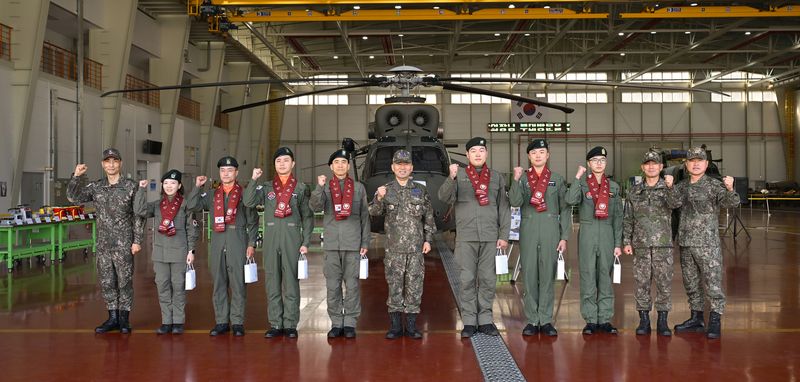
According to the Republic of Korea Joint Chiefs of Staff (ROK JCS), JCS Chairman Jin Young-seung visited attack and utility helicopter units under Aviation Command that day, received a briefing on aviation operational readiness, and closely reviewed preparations for winter operations. At the site, Chairman Jin called for responses that take changes in enemy threat patterns into account. He ordered the forces to “establish immediate-response readiness against enemy provocations and deter them with superior mobility and firepower that overwhelm the enemy.” He also emphasized that they should “strengthen firm readiness and defenses against drone and unmanned aircraft threats while bolstering operational capabilities by bringing key attack and utility helicopter assets into service.”
The importance of exercises that are as realistic as actual combat was also raised. Chairman Jin reminded the forces to “maintain the highest level of readiness through realistic joint exercises that take recent warfare into account, and ensure victory through rapid air mobility and overwhelming firepower.”
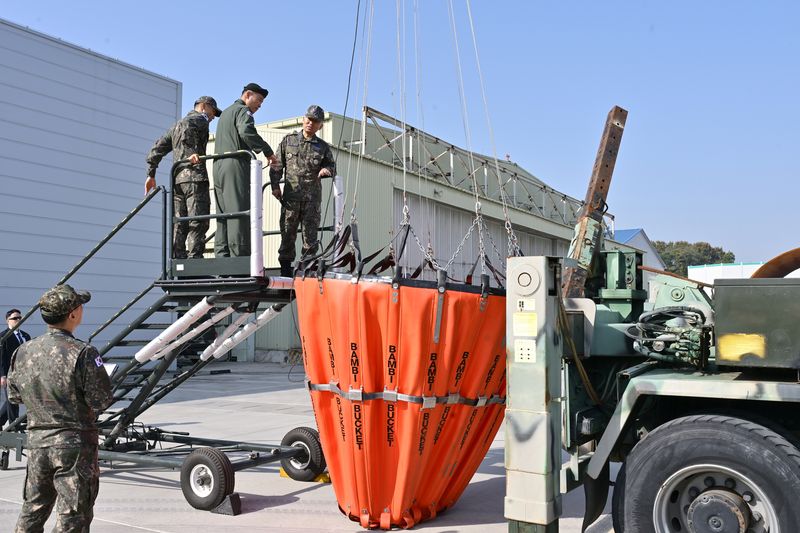
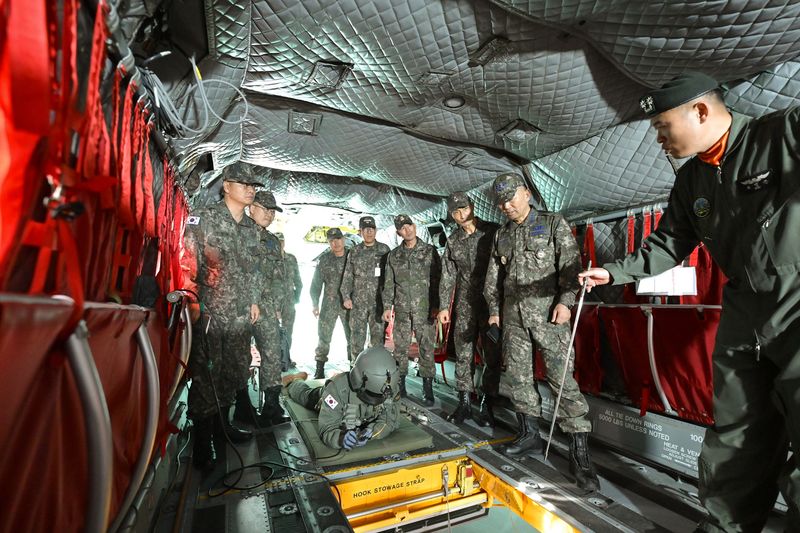
Along with the inspection of winter operational readiness, the JCS also reviewed support for the public and servicemember welfare systems. Reminding the troops that it was the autumn forest-fire prevention season, Chairman Jin urged them to “do their utmost to protect the lives and property of the public by preventing fires from spreading into major wildfires through immediate military firefighting helicopter support from the very outset.” He also stressed the need to maintain the medical evacuation helicopter Medion’s readiness for immediate dispatch at all times and ordered that the golden hour be secured for air evacuation of emergency patients from remote islands and isolated areas in both the front and rear.
After completing the on-site inspection, Chairman Jin visited and comforted servicemembers who were injured during an operation in the Demilitarized Zone (DMZ) on September 21 and are receiving inpatient treatment. Meeting with the servicemembers and their families, he said, “I will not forget their valuable service and sacrifice for the nation,” and added, “I will carefully review the necessary measures so they can focus solely on treatment and recovery.”
Recent reports by global military research institutes analyzing modern warfare have noted that, in a battlefield environment dominated by low-altitude suicide drones, ensuring the survivability of attack and utility helicopters requires moving beyond conventional, simple methods of employing firepower. Experts recommended that aircraft be equipped with organically integrated active counter-drone (C-UAS) defense systems capable of detecting and intercepting small drones, or jamming equipment, and said it was urgent to advance manned-unmanned teaming (MUM-T) tactics for monitoring and deceiving drones. The South Korean military leadership’s emphasis on strengthening defenses and conducting realistic exercises beyond the customary level during its inspection of Aviation Command is also seen as a strategic move to effectively address these global security trends and the threat posed by unmanned aircraft.
Military experts are watching closely as North Korea has recently stepped up its so-called “asymmetric mixed-salvo” tactics, simultaneously deploying various types of multiple rocket launchers and ballistic missiles alongside small suicide drones. Analysts say that in the Korean Peninsula’s battlefield environment, where the enemy’s rapidly advancing large-scale drone capabilities and complex asymmetric threats persist, the South Korean military must further enhance the survivability and responsiveness of its traditional rotary-wing forces and the way they are deployed and supported. Accordingly, analysts say that to maximize the operational efficiency of Army aviation forces in the future, measures to strengthen the survivability of individual attack and utility helicopter platforms must be pursued closely alongside their effective integration with an integrated low-altitude air defense network.
[email protected] Lee Jong-yoon Reporter