Jeju's first tertiary general hospital designation to be decided at year-end; medical fees and referral procedures to change
- Input
- 2026-11-03 16:26:36
- Updated
- 2026-11-03 16:26:36
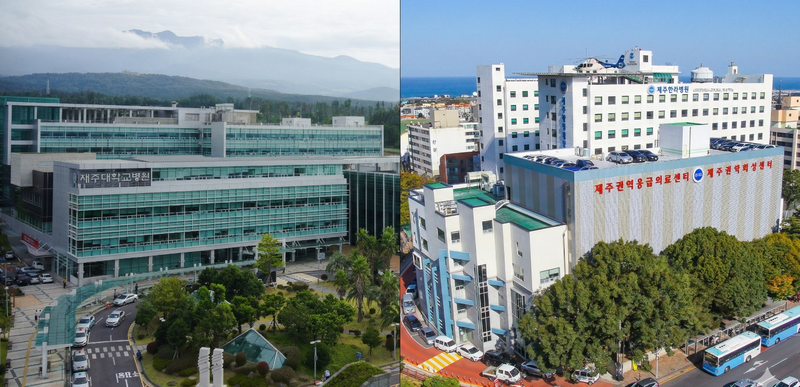
【Financial News, Jeju = Reporter Jeong Yong-bok】 A decision on whether Jeju will have its first tertiary general hospital will be made this December. As Jeju National University Hospital and Cheju Halla General Hospital undergo designation reviews, Jeju Province has begun building a cooperation system among medical institutions to prepare for changes in referral forms and patients' out-of-pocket medical costs.
According to Jeju Special Self-Governing Province on the 3rd, the province held the first meeting that day of a task force responding to the tertiary general hospital designation process. It discussed how to inform residents before and after designation, ways for medical institutions to cooperate, and systems for handling patient inquiries and complaints.
The six-member task force is led by Jo Sangbeom, head of Jeju Province's Safety and Health Bureau, and includes staff from the public relations department, the Jeju Public Health and Medical Support Group, and representatives of hospitals that applied for designation.
A tertiary general hospital is a medical institution designated by the Ministry of Health and Welfare to provide specialized care for serious illnesses and complex surgeries. Institutions are designated every three years after an assessment of their clinical capabilities, medical personnel, patient mix, and education and research functions.
Until now, Jeju had been a region without a tertiary general hospital. In particular, being grouped into the same medical service area as Seoul meant it had to compete for designation with large hospitals in the capital region, putting it at a disadvantage.
On April 3, the government separated Jeju from the Seoul area and established it as an independent medical service area. Then, on October 14, it revised the rules to require the designation of at least one medical institution that meets the criteria, even if the number of beds required in the area is exceeded.
The bed-count limit was a major obstacle for Jeju. The required number of beds for the Jeju area is 545, while Jeju National University Hospital has 655 authorized beds and Cheju Halla General Hospital has 550, meaning both hospitals exceeded the limit. The latest revision resolved the problem of hospitals being excluded from designation solely because of their number of beds.
The two hospitals are currently undergoing the sixth-cycle tertiary general hospital designation review. They completed on-site evaluations last September, and the final results are scheduled to be announced at the end of December. If designated, they will operate as tertiary general hospitals for three years, from 2027 through 2029.
For residents, changes in how they use medical institutions are important. As a rule, patients need a referral issued by another medical institution to receive outpatient care covered by national health insurance at a tertiary general hospital. Exceptions apply to emergency patients and childbirth, among other cases.
Patients' medical costs may also change. For general national health insurance outpatients at a tertiary general hospital, patients pay the full consultation fee and 60% of the remaining covered medical costs out of pocket. The actual amount varies depending on the patient's condition and the applicable insurance coverage rules.
Jeju Province plans to establish a guidance system at each hospital to maintain continuity of care for existing patients and those with appointments after designation. It will also explain the referral and return system among medical institutions: clinics provide routine care and chronic disease management, general hospitals provide specialized care and inpatient treatment, and tertiary general hospitals handle serious and complex cases.
Designating a tertiary general hospital in Jeju could help ease the burden on seriously ill patients who have to travel to the mainland for treatment. However, designation alone does not guarantee that all complex treatments will be provided on the island. More specialized medical personnel, expanded medical facilities, and improvements to the emergency patient transfer system will also be needed.
Jo Sangbeom, head of Jeju Province's Safety and Health Bureau, said, “The designation of a tertiary general hospital in the Jeju area will provide an opportunity to strengthen our capacity to treat serious and complex cases,” adding, “We will step up guidance to reduce confusion among residents when accessing medical care.”
[email protected] Jeong Yong-bok Reporter