Jeju–Qingdao cargo route support capped at under 5 billion won a year ... Cargo volume just 12% of break-even level
- Input
- 2026-11-03 16:11:25
- Updated
- 2026-11-03 16:11:25
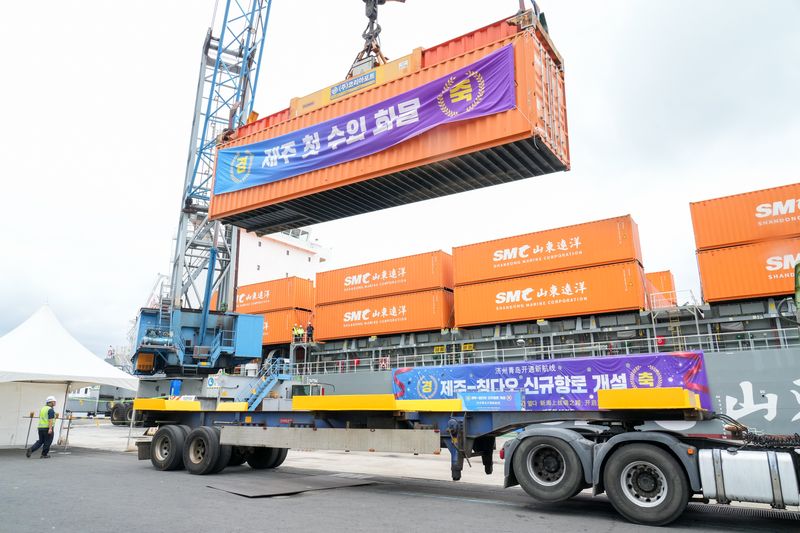
【Financial News, Jeju = Reporter Jeong Yong-bok】 Jeju Special Self-Governing Province has drafted a new agreement to lower the annual cap on loss compensation for regular cargo ships on the Jeju–Qingdao route from a previous maximum of about 7.3 billion won to under 5 billion won, as low cargo volumes have increased the financial burden. However, since the route began operating, the average cargo volume per voyage has remained at about 12% of the break-even point, leaving the route’s financial self-sufficiency as an outstanding challenge.
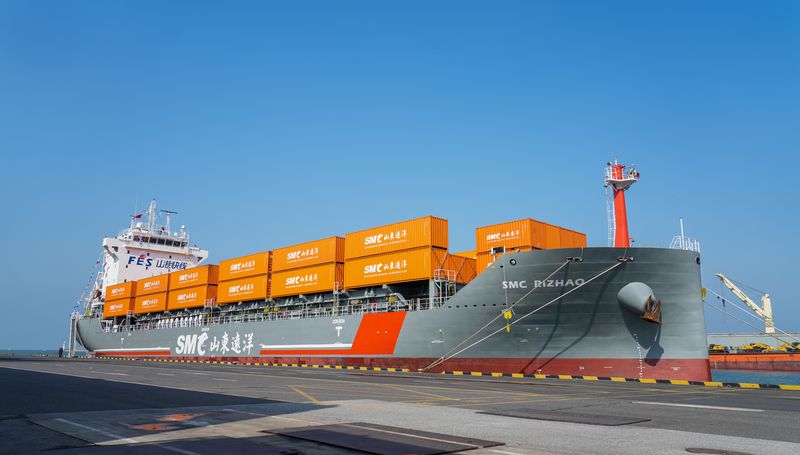
According to Jeju Special Self-Governing Province on the 3rd, it has drafted a new agreement, after consultations with China Shandong Ocean Shipping Group Co., Ltd., revising the terms of financial support and the rules for suspending operations on the international regular cargo route between Jeju and Qingdao.
The key change is a reduction in the scale of financial support. Under the previous agreement, the loss-compensation cap was about 7.3 billion won a year and about 21.9 billion won over three years, at the exchange rate in effect when it was signed. The new draft caps annual support at under 5 billion won and total support over the next two years at under 10 billion won.
The new draft divides the support period into two phases: the first covers one year from the date of signing, and the second runs from then until October 15, 2028. For the second phase, the support cap will be calculated in proportion to the actual term of the agreement. The basic structure remains unchanged: the shortfall in operating costs after deducting cargo transport revenue will be compensated.
The agreement’s contractual rights and responsibilities have also been revised. Jeju Special Self-Governing Province said it had incorporated the principle of reciprocity into provisions on penalties and suspension of operations that had been contentious under the previous agreement.
The biggest problem remains insufficient cargo volume. Since opening in October last year, the Jeju–Qingdao route had made 52 voyages and carried a total of 1,352 TEU as of October 28 this year. The average was 26 TEU per voyage, just 11.8% of the break-even volume of 220 TEU, at which transport revenue alone covers operating costs. A TEU is a unit of cargo volume equivalent to one 20-foot container.
Recent transport figures have improved. Average cargo volume per voyage rose from 21.3 TEU in August to 36.8 TEU in September and 54.7 TEU in October. However, October’s figure was still only about 25% of the break-even level. The increase in cargo volume has not yet reached a point where it would immediately end financial support.
Jeju Special Self-Governing Province had paid 7.62 billion won in loss compensation from the route’s opening in October last year through the 3rd, according to the tally. Because vessel rental fees are paid three months in advance and operating costs are settled monthly, the full amount paid cannot be considered a confirmed loss for a one-year period.
The Jeju–Qingdao route was launched in October last year to directly connect the Port of Jeju with Qingdao Port in China and reduce logistics costs and transportation burdens for companies in the province that import and export goods. But the failure to secure the expected cargo volume brought to light issues including large loss-compensation payments and the failure to complete administrative procedures under the previous agreement.
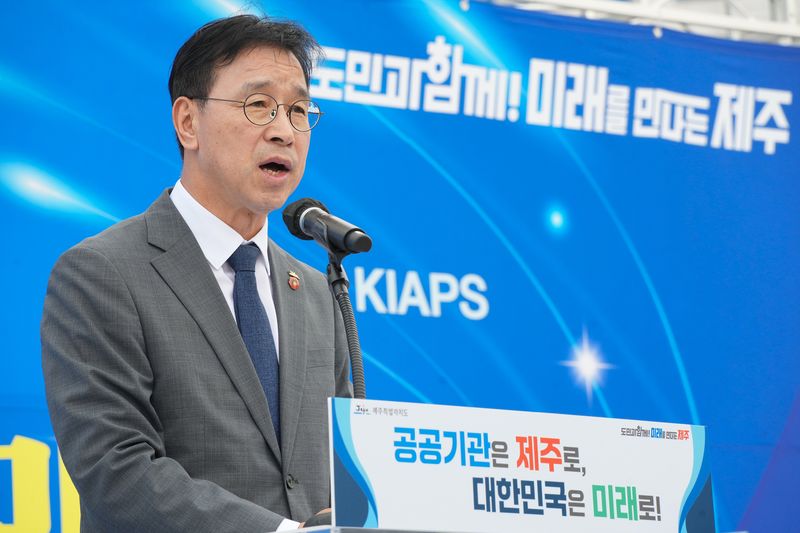
Wi Seong-gon, governor of Jeju Special Self-Governing Province, admitted that cargo volumes had been forecast incorrectly and apologized during a provincial administration question session at the provincial council in September. He has since been working to revise the agreement with the Chinese shipping company.
Administrative procedures must also be completed for the new agreement to take effect. After undergoing a local government investment review last week, Jeju Special Self-Governing Province plans to secure provincial council approval and then sign the agreement with the Chinese shipping company. It is also preparing for possible financial disadvantages, including a reduction in local allocation tax, resulting from the failure to complete administrative procedures under the previous agreement.
Jeju Special Self-Governing Province is also preparing measures to secure cargo volume. It plans to provide logistics subsidies to companies that directly import or export goods using the route and give such companies additional points when selecting recipients for related support programs. It will also work with relevant agencies to address difficulties in transporting small shipments and in customs clearance and quarantine.
Specific transport targets have not yet been set. Jeju Special Self-Governing Province plans to establish a feasible cargo-volume target by the first quarter of next year through a 2027 policy project of the Jeju Research Institute.
Efforts are also underway to expand sales channels in China. Next year, Jeju Special Self-Governing Province plans to expand exchanges with Shandong Province and broaden the export base for Jeju products by taking part in trade fairs in Qingdao and Zibo and promoting and selling Jeju beer at the Qingdao Beer Festival.
Governor Wi said, “We are pursuing a new agreement to address the fact that the Jeju–Qingdao route has failed to secure the cargo volume originally anticipated and to remedy shortcomings in the administrative procedures under the previous agreement,” adding, “We will work to obtain the provincial council’s approval.”
[email protected] Jeong Yong-bok Reporter