Only daughter welcomes home father whose intact remains were recovered at White Horse Hill: “Now I want to let go of all my grief and cry my heart out”
- Input
- 2026-11-03 16:15:02
- Updated
- 2026-11-03 16:15:02
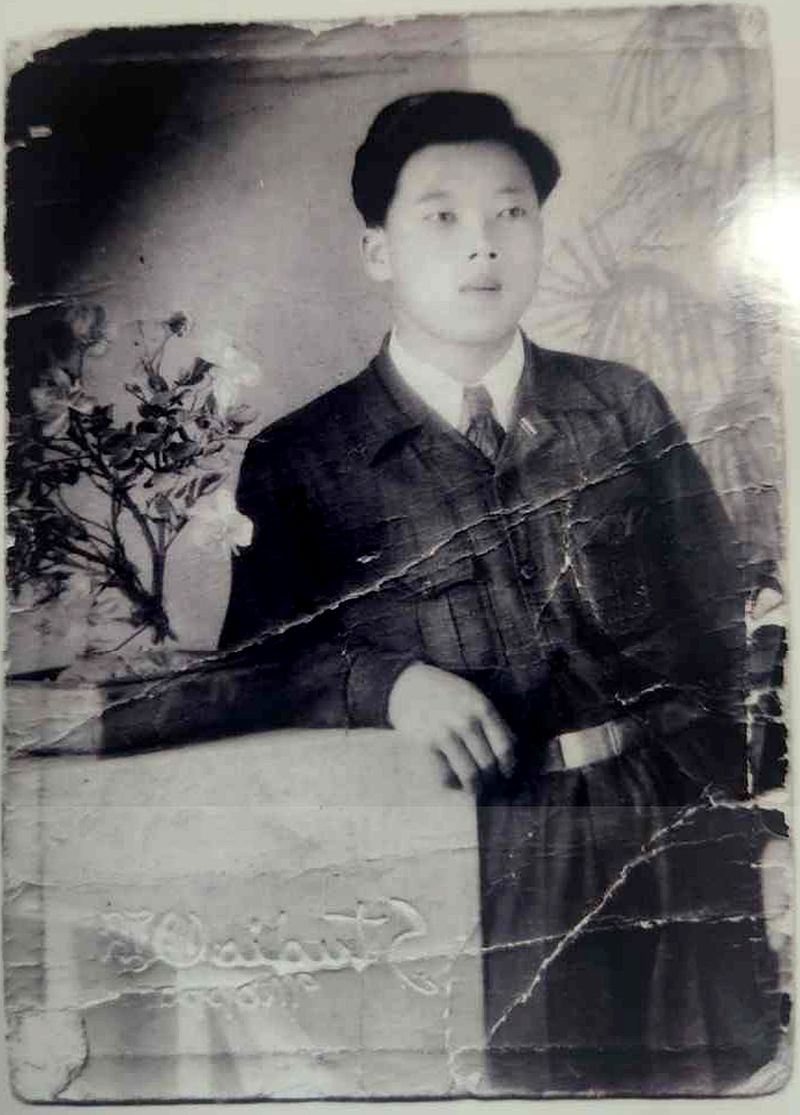
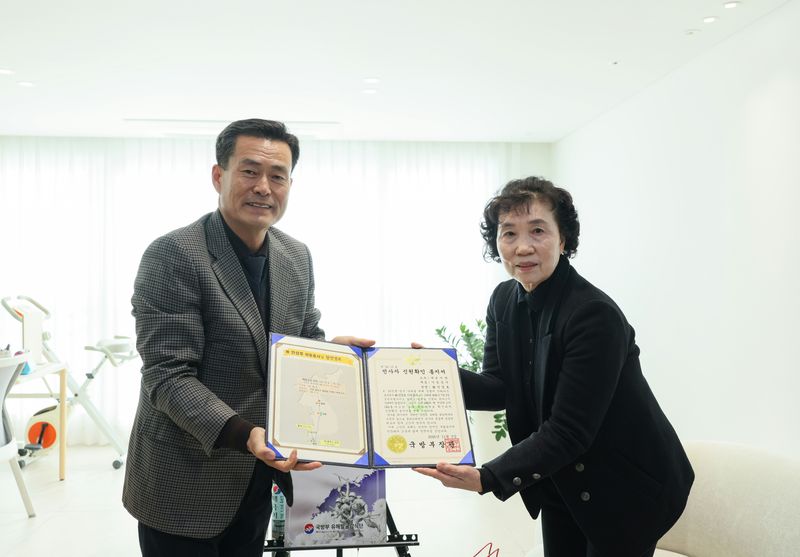
The Ministry of National Defense’s Agency for KIA Recovery and Identification (MAKRI) announced that it had identified the complete remains excavated near White Horse Hill in Cheorwon County, Gangwon Province, this July as those of the late Ahn Seong-ho, a Second Class Staff Sergeant with the ROK Army’s 9th Division (a rank equivalent to today’s sergeant). On November 3, it held a “Hero’s Return Ceremony” at the family’s home in Icheon, Gyeonggi Province. Ahn was the 283rd fallen ROK soldier to return to his family since the remains recovery project began in April 2000.
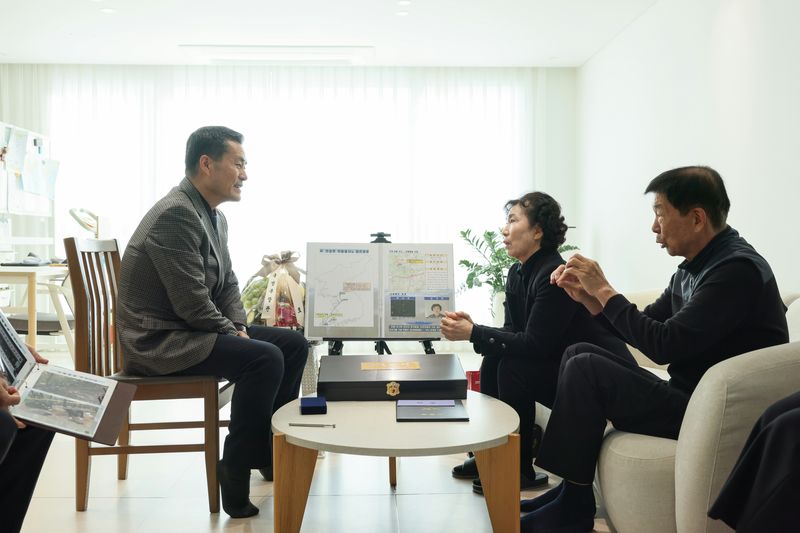
At the family’s request, the return ceremony was held at the home of its representative, the deceased’s only daughter, Ahn Gyeong-hui (75), in Icheon, Gyeonggi Province. Jeon Byeong-hui, head of MAKRI, who presided over the ceremony, presented the family with a Hero’s Return plaque, a notice confirming the identification, and a “Spirit of the Nation” box containing recovered personal effects, and explained the course of the deceased’s service during the war.
The deceased’s only daughter, Ahn Gyeong-hui, reflected: “When I heard that they had found my father’s remains, I couldn’t sleep properly for days.” She added, “Now I want to let go of all the grief in my heart and cry my heart out in front of my father’s grave.”
The deceased was born in Sinan County, Jeollanam-do, in September 1927, the eldest of five siblings. He enlisted through the Army’s 1st Training Center on July 20, 1951, at the height of the war, and was assigned to the 30th Regiment of the 9th Division. He was deployed to the Battle of White Horse Hill to defend the Cheorwon Plain, a strategic location for military operations in central Korea. He was killed in action on October 8, 1952, while carrying out his duties during the fierce battle that lasted from October 6 to 15.
The Battle of White Horse Hill was led primarily by the ROK Army’s 9th Division and secured control of the Cheorwon Plain and major roads, both vital to military operations in central Korea. It was also a fierce engagement in which South Korean forces suffered considerable casualties.
The deceased’s remains were first identified this July at the White Horse Hill excavation site, where work had resumed the previous October after being halted in November 2022. Because civilian access to the area had been restricted for more than 70 years, most of the remains had been preserved intact and were recovered as “complete remains.” An identification tag bearing the deceased’s name and military serial number (0629811), along with his rank insignia, was found near the right femur.
The rapid identification, just two months after the excavation, was made possible by DNA samples the family had registered in advance. The deceased’s younger brother, Ahn Seong-bok, provided a sample at a public health center in Mokpo, South Jeolla Province, in 2010. The deceased’s only daughter, Ahn Gyeong-hui, also provided a sample at a public health center in Suncheon, South Jeolla Province, in 2014. In September this year, MAKRI compared and analyzed the DNA from the remains and the family’s samples, ultimately confirming the father-daughter relationship.
MAKRI said public participation was urgently needed to identify the Korean War fallen—heroes who gave their lives for the Republic of Korea but have yet to return to their families.
Family members up to the eighth degree of kinship on both the paternal and maternal sides of those killed in the Korean War may provide DNA samples at public health centers and military hospitals nationwide. A reward of 10 million won is paid when a person’s identity is confirmed through DNA information. If someone has difficulty getting around and cannot visit in person, they can call MAKRI’s main number, and dedicated staff will visit their home to collect a sample.
[email protected] Lee Jong-yoon Reporter