FKTU urges ruling party to raise retirement age to 65 by year-end and withdraw labor exemptions in super-regional special zones
- Input
- 2026-11-03 15:01:41
- Updated
- 2026-11-03 15:01:41
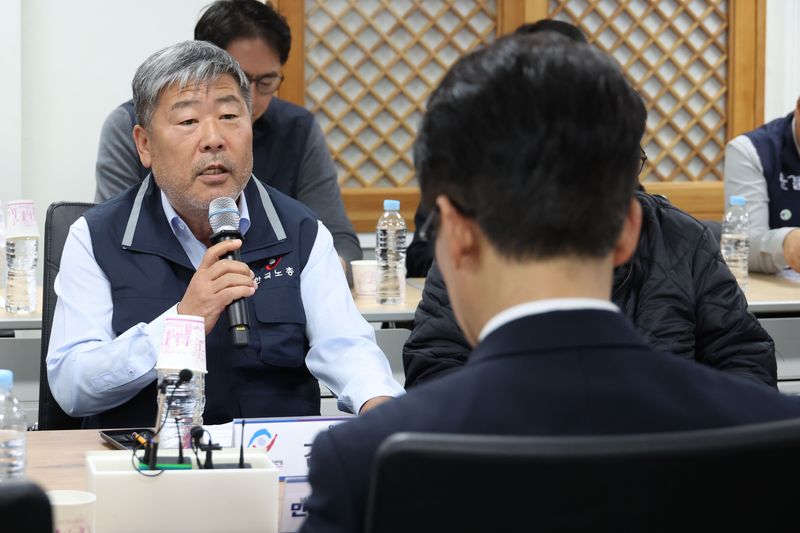
The FKTU conveyed this position at its third high-level policy consultation with the Democratic Party, held that day at the party’s headquarters in Yeongdeungpo-gu, Seoul.
In his opening remarks, FKTU Chair Kim Dong-myeong pleaded, “The extension of the retirement age, our most urgent issue, has already been at a standstill for two years. The age at which people can begin receiving National Pension benefits is being pushed back, while the statutory retirement age remains at 60, leaving workers facing a serious gap in income in the meantime.”
He went on to criticize the government and ruling party, saying, “On this issue, which is directly tied to workers’ lives, they keep citing different circumstances and conditions and putting off a decision.”
The FKTU also took issue with the Democratic Party’s introduction of a bill specifying labor exemptions under the Super-Regional Special Zone Act. The National Assembly currently has two bills before it: the National Policy Committee’s version, which specifies labor exemptions within special zones, and the Climate, Energy, Environment and Labor Committee’s version, which does not include them.
On this, FKTU Chair Kim said, “The Democratic Party has introduced a bill on super-regional special zones that, in the name of corporate investment and economic revitalization, expands exemptions concerning working hours and labor rights and even excludes the application of labor laws.” He added, “The list of co-sponsors includes the floor leader and lawmakers from the Labor Respect Practice Group. Is it really the role of the Labor Respect Practice Group to put its name to a bill that restricts workers’ rights?”
Kim criticized the party, saying, “What is even more concerning is whether the ruling Democratic Party is making its own judgments and voicing its views responsibly on labor and people’s livelihoods. If it is a party that only acts when instructed and cannot make any decisions without the Blue House’s judgment, what is its role as the ruling party?”
He urged the party, saying, “Policy alliances begin with trust and are completed through action. Now, please respond with action, not promises.”
At the subsequent closed-door meeting, the FKTU again set out its opposition to labor exemptions, along with its calls to reconvene the special committee on extending the retirement age and to finalize a legislative proposal through the party, government and presidential office.
On the consolidation of public institutions and the second phase of their relocation outside the capital region, the FKTU proposed establishing a policy consultation body and expanding public-sector jobs. It also called for the passage of legislation to guarantee the basic political rights of civil servants and teachers.
[email protected] Kim Jun-hyeok Reporter