Bariatric surgery consultations in Almaty, operations in Incheon: Incheon Sejong Hospital’s medical outreach
- Input
- 2026-11-03 14:44:22
- Updated
- 2026-11-03 14:44:22
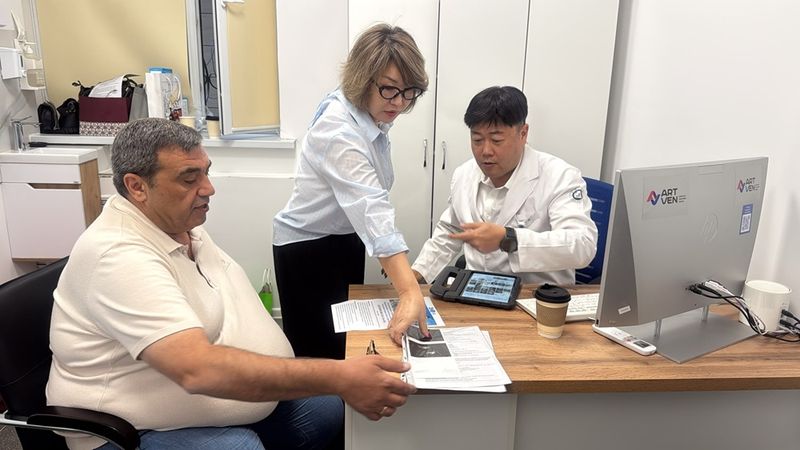
[Financial News] Korean medical staff met local patients with obesity at a hospital run by a Kazakh doctor who returned home after learning medical skills in Korea. Incheon Sejong Hospital traveled to Almaty, Kazakhstan, and examined 27 local patients seeking metabolic and bariatric surgery.
Incheon Sejong Hospital recently saw local patients with obesity at ART VEN, a medical institution in Almaty. The visit aimed to provide overseas patients with specialized care in metabolic and bariatric surgery and guidance on treatment options, and to connect those needing surgery with treatment in Korea. The delegation included Lee Seong-bae, head of the Metabolic and Bariatric Surgery Center and a surgeon, administrative director Kim Myeong-hun, and section chief Hong Hyeon-su.
ART VEN, where the consultations took place, is run by director Azimbayev Galimzhan, a specialist who completed Sejong Hospital’s overseas medical staff training program. The connection formed through the training has led to consultations for local patients and cooperation on their treatment.
The center director assessed patients’ degree of obesity, coexisting conditions and previous treatment history, and explained treatment options, including metabolic and bariatric surgery. The center director assessed that some patients needed further diagnostic tests and treatment. Based on these consultations, the hospital plans to coordinate examinations and surgery consultations for patients who need treatment in Korea and continue cooperating with local medical institutions.
1,800 cases to date, single-port robotic surgery—and coordinated cardiac care
Incheon Sejong Hospital reached a cumulative total of 1,800 metabolic and bariatric surgeries last October. Since opening its Metabolic and Bariatric Surgery Center in December 2022, it has built up experience treating patients with severe obesity as well as older adults and patients with underlying conditions such as cardiovascular disease. Patients from Kazakhstan, Russia, China, Thailand and other countries have also undergone surgery there.
The hospital also performs single-port robotic metabolic and bariatric surgery using the da Vinci SP surgical system. In this procedure, a camera and surgical instruments are inserted through a single incision at the navel to perform a sleeve gastrectomy. Compared with conventional laparoscopic surgery, which involves incisions at multiple sites, this approach can reduce the number of incision sites and the visibility of scars.
Another strength is its coordinated care system, which also addresses cardiovascular and cerebrovascular diseases commonly associated with obesity. Incheon Sejong Hospital belongs to Hyewon Medical Foundation, which operates Bucheon Sejong Hospital, a heart-specialty hospital, and shares its expertise in treating heart disease. Before surgery, specialists in cardiology and cardiothoracic surgery jointly assess patients’ heart function and overall health to develop individualized treatment plans.
Russian- and Mongolian-speaking coordinators on site help lower language barriers
The hospital also has a support system for foreign patients. Incheon Sejong Hospital has received Korea Accreditation Program for Hospitals Serving Foreign Patients (KAHF) accreditation from the Ministry of Health and Welfare, and is designated each year by the Ministry of Justice as an “Excellent Medical Tourism Attraction Institution.”
Dedicated coordinators who speak Russian, Mongolian and other languages are stationed at the International Healthcare Center. They provide consultations and interpretation so patients from Russia, Kazakhstan and other Commonwealth of Independent States (CIS) countries, as well as Mongolia and China, can receive care without language barriers.
“Meeting patients in person locally, assessing their health and explaining treatment options is an important process in helping overseas patients choose appropriate care,” the center director said. “We will provide personalized care based on the hospital’s capabilities, including da Vinci SP single-port robotic surgery and coordinated care for underlying conditions.” He added, “Metabolic and bariatric surgery is a treatment that must be followed by nutritional management and lifestyle changes,” and emphasized, “We will work closely with local medical staff to build a care system that extends from connecting patients with treatment in Korea through to postoperative care.”
[email protected] Jung Myung-jin, Medical Correspondent Reporter