“Phones off, forced silence” ... Where hipsters go these days to zone out: “Rediscovering the Sauna” [Smart Wellness]
- Input
- 2026-11-08 07:24:19
- Updated
- 2026-11-08 07:24:19
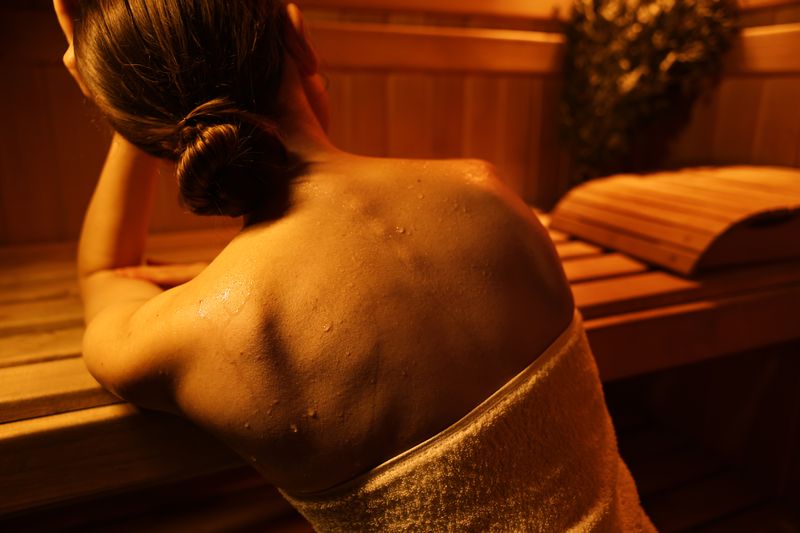
[Financial News] As “recoverynomics”—spending money to rest well and recover fully—gains popularity, the sauna has taken center stage as a place to escape overheated routines and restore body and mind. Experts say that sauna culture, which goes beyond simple cleansing to combine stress relief with mental care, has evolved into a space where people today can actively recover.
Saunas take over retail and city centers ... Wellness craze spreads as far as Paris and SF
Saunas are all the rage. Spa Land, a jjimjilbang at Shinsegae Department Store’s Centum City Branch, has long been an established urban wellness destination drawing a steady stream of foreign tourists and Gen MZ visitors. U.S. network CNN also described Spa Land as “a special culture that can only be experienced in Korea.” Recently, Lotte Department Store introduced outdoor offerings combining camping and saunas, including “sauna tents,” at the Uiwang branch of Lotte Premium Outlets. Earlier, the department store had operated a “Sauna Bus” that brought saunas to a running festival at the World Park branch of Lotte World in Jamsil.
Saunas have also found a home in the heart of the city. KT&G operates Spoterra, a multipurpose fitness facility offering saunas, exercise facilities and more in the basement of its Seoul headquarters near Samseong Station on Seoul Subway Line 2. The “red ginseng bath,” which calls to mind the specialist red ginseng brand Jung Kwan Jang, is hugely popular. In Hannam-dong, Hanwha General Insurance Co., Ltd. held a wellness festival at its Hannam headquarters and drew attention with a meditation program in an ondol-style sauna.
Overseas, too, is no exception. Midjourney, a company specializing in generative AI, plans to open a “Midjourney Spa” in San Francisco, U.S., in 2027. Japanese lifestyle brand niko and ... operates “niko and ... Sauna,” based on “Totonoi,” a distinctive Japanese sauna culture. In Paris, France, “Sang Rok,” a wellness space that gives the sauna a modern reinterpretation, is gaining popularity.
Forced digital detox ... The “heat effect” that helps regenerate cells
Experts link the sauna’s resurgence to “digital detox.” Their analysis is that the sauna environment, where people have no choice but to put down their smartphones, offers modern people enforced silence and time for reflection, serving as an analog refuge where they can enjoy complete rest.
Yasutaka Kato, representative director of the Japan Sauna Society and a specially appointed professor at Keio University School of Medicine, explained: “Even when the brain is at rest, the ‘default mode network (DMN)’ is active and continues to consume 70–80% of its energy.” He added, “When you enter a high-temperature sauna where you can’t look at your smartphone, the brain has to process sensory stimuli and forcibly switches off the DMN, bringing stray thoughts and information overload to a halt and allowing genuine recovery from brain fatigue—a ‘brain reset.’”
The effects are not limited to the psychological. Medical findings show that exposure to sauna heat dilates blood vessels and sharply increases blood flow, helping relieve muscle fatigue and remove waste products such as lactic acid. It also promotes the secretion of heat shock proteins (HSPs), which help regenerate damaged cells, and produces cardiopulmonary and circulatory stimulation similar to that of light aerobic exercise.
According to a clinical research paper published in Experimental Gerontology, a leading international sports medicine journal, sauna use improves cardiac output and vascular endothelial function and induces physiological adaptations that aid recovery from muscle damage and help maintain cardiovascular homeostasis. The researchers said, “Heat therapy produces cardiopulmonary and metabolic stimulation similar to light-intensity aerobic exercise, providing practical help in alleviating chronic fatigue and systemic inflammatory responses.”
People with cardiovascular or cerebrovascular conditions should take care ... Follow “hydration and time limits” rather than believing saunas are a cure-all
But it is important not to believe that saunas are a cure-all. Sudden temperature changes can cause blood pressure to fluctuate, while the loss of bodily fluids can increase blood viscosity.
In particular, anyone with a history of cardiovascular or cerebrovascular disease, such as hypertension or angina, should avoid rapidly alternating between a high-temperature sauna and a cold bath. Only by drinking plenty of fluids before and after a sauna and sticking to an appropriate session length can you truly recover.
Ways to make life healthier and more vibrant are not far away. [Smart Wellness] shares insights on caring for body and mind, drawing on scientific evidence and the latest trends. Subscribe to the reporter’s page to receive [Smart Wellness] with ease.
[email protected] Kim Hyeon-seon Reporter