Busan Chosen as a Leading Region for Education Innovation ... Five Autonomous Districts to Run Specialized Curricula
- Input
- 2026-11-03 14:35:02
- Updated
- 2026-11-03 14:35:02
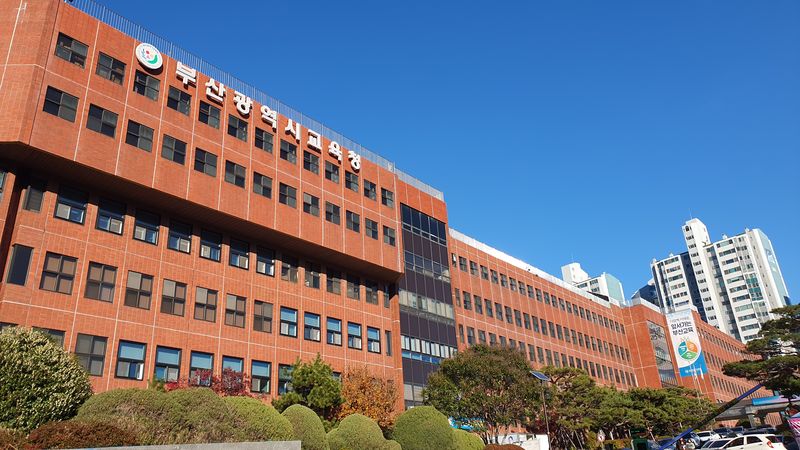
[Financial News] An education innovation model developed by the Busan Metropolitan City Office of Education to address changes in the education environment resulting from population decline and a shrinking school-age population has been selected by the Ministry of Education as an “Education Innovation Leading Region.”
The Busan Metropolitan City Office of Education said on the 3rd that it had been selected for the Ministry of Education’s Type 2 Education Innovation Leading Region program, for which it applied jointly with Busan Metropolitan City and the districts of Jung, Dong, Seo, Yeongdo and Geumjeong.
A total of 41 regions nationwide applied for the program, and 11 were selected. Among metropolitan cities, three regions, including Busan, were designated. Selected regions will receive 4 billion won in special grants annually, with approximately 3.7 billion won slated for allocation in 2027. The program will run for three years, after which regions may receive additional support for up to two more years following a phased evaluation. Busan is therefore expected to receive up to 20 billion won in special grants over a maximum of five years.
The Busan Metropolitan City Office of Education plans to develop an education innovation model reflecting local conditions, focusing on five autonomous districts where population decline and school shrinkage are particularly pronounced. The core of the plan is to provide students with diverse educational opportunities regardless of school size or where they live, and to connect local universities, industries and cultural resources with school education.
First, the office will launch the “Small Schools BIG3 Innovation” project to improve educational conditions at small schools. It will operate joint curricula across schools and combine school-structure improvements with efforts to recruit outstanding teachers and provide administrative support, addressing the limitations small schools face in delivering their curricula.
It will also establish a care and after-school system involving schools and communities through “Busan-style On·Dol·Bang,” and expand educational opportunities for students from immigrant backgrounds and students from vulnerable groups through “Glocal Jump Up.”
A project to incorporate the characteristics of each district into its curriculum is also planned. Through the “Infinite Growth Campus” initiative, the districts will offer specialized local curricula focused on global studies and tourism in Jung District, port logistics and history in Dong District, medicine and healthcare in Seo District, maritime studies in Yeongdo District, and ecology and AI in Geumjeong District.
To strengthen career and further-education support for students, the office will develop tailored growth pathways through “Busan Growth Navigation” for students at general and vocational high schools, as well as young people outside the school system. It will also run “Autonomous Public High School 2.0 Open School,” sharing the specialized curricula of individual schools with local middle and high school students.
Superintendent Kim Seok-jun said, “Education innovation can only be achieved when local governments, universities, businesses and other members of the community join forces, going beyond the education office,” adding, “We will bring together the region’s strengths to present a new model for education innovation and create an educational environment where children born in Busan can learn and grow in Busan and pursue their futures.”
[email protected] Kwon Byeong-seok Reporter