Extorted maternal uncle 82 times, with a year in prison in between... Supreme Court: “Cannot say criminal intent was severed”
- Input
- 2026-11-03 14:07:54
- Updated
- 2026-11-03 14:07:54
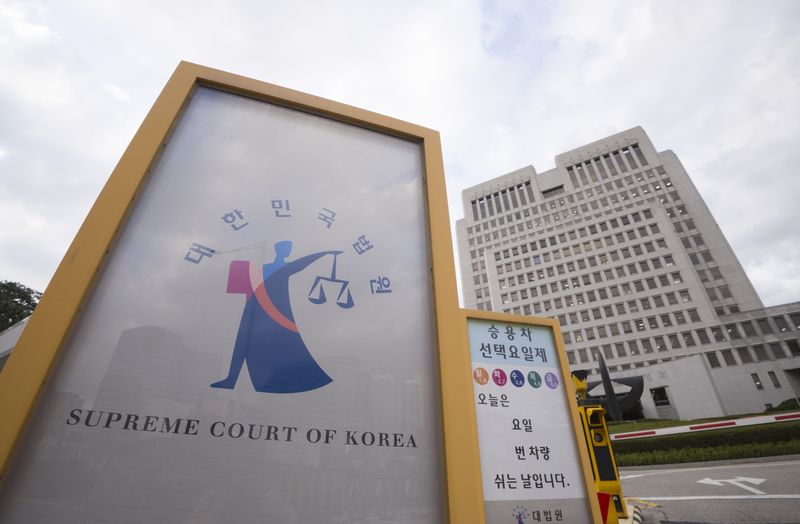
According to legal sources on the 3rd, the Supreme Court’s Second Division, with Justice Park Young-jae as the justice in charge, overturned the lower court ruling on the 8th of last month and sent the case back to Daejeon District Court. The ruling had split the sentence imposed on A, who was indicted on charges of extortion and violating the Act on Welfare of Persons with Disabilities, into three terms totaling four years in prison. A was tried on allegations of threatening B, a person with a severe disability and A’s maternal uncle, and extorting 39,428,100 won on 82 occasions from November 23, 2021, through June 30 of last year.
A exploited the fact that B, who has a severe disability due to cerebral palsy, managed the accounts for disability benefits and basic livelihood security benefits. On November 23, 2021, A went to B’s home in Seosan, South Chungcheong Province, threatened B, saying, “If you don’t give me money, I’ll smash everything in the house and kill everyone,” then took B to a post office, obtained B’s bankbook and password, and transferred 2.3 million won to A’s own account. A repeatedly used similar methods afterward, either withdrawing cash directly from B’s account or making B send money to a designated account.
The first trial treated all 82 offenses as a single continuing offense and sentenced A to one year and eight months in prison. The appeals court overturned that ruling on its own motion. It reasoned that, since A had in the meantime received a final sentence of one year and six months in prison for fraud and had been incarcerated for about a year, it was difficult to find that the unity and continuity of the intent to commit the offenses had been maintained. The appeals court divided the 30 offenses committed before imprisonment and the 52 committed after parole into separate extortion offenses, sentencing A to one year and two years and six months in prison, respectively, and separately imposing a six-month prison sentence for emotional abuse.
The issue was whether similar offenses committed with a period of imprisonment in between could be treated as a single continuing offense. This means combining multiple acts into one crime and imposing only one sentence. By contrast, crimes committed before and after a final judgment are treated as concurrent offenses under the latter part of Article 37 of the Criminal Act, and must be sentenced separately.
The Supreme Court panel said, “Whether multiple acts constitute a single continuing offense or concurrent offenses has a significant impact on the defendant, from sentencing and the statute of limitations for prosecution to res judicata, so the matter must be judged with great care.” It said courts should examine the methods and motives of the offenses, the time between them, and whether later offenses occurred while circumstances involving the same opportunities or relationships continued to be exploited.
The Supreme Court panel cited A’s statement to investigators that “I called the victim from prison and asked them to transfer money,” as well as the fact that A resumed the offenses in the same manner immediately, beginning on February 2, 2024, just after being released on parole on January 30 that year. The court said that, considering the relationship between the two and the victim’s vulnerability to the offenses, “it cannot be said that the criminal intent was severed or renewed.”
The Supreme Court panel added that, once it overturned the extortion conviction, which involved a crime related to the abuse of persons with disabilities, it also had to overturn the accompanying order restricting employment at institutions related to persons with disabilities, and had no choice but to overturn the remaining conviction for violating the Act on Welfare of Persons with Disabilities as well.
[email protected] Kim Dong-gyu Reporter