S&P 500 ‘undefeated’ after U.S. midterms... What about the KOSPI?
- Input
- 2026-11-03 16:10:02
- Updated
- 2026-11-03 16:10:02
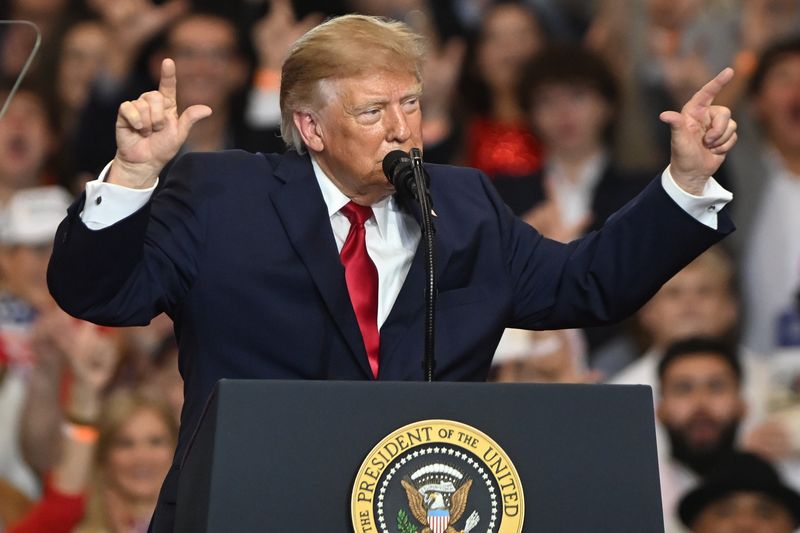
[Financial News] As the U.S. midterm elections take place, analysts in South Korea’s securities industry say that an easing of U.S. policy uncertainty and stable Treasury yields could create conditions for a KOSPI rebound. Others, however, see whether U.S. big tech companies can continue investing in artificial intelligence (AI) as a bigger variable than the election results.
■ U.S. stocks have risen every time in the year after midterm elections
According to the financial investment industry on the 3rd, the S&P 500 rose one year later in all 17 U.S. midterm elections held between 1958 and 2022. The average gain was 13.98%. On the first trading day after the elections, the index rose 13 times and fell four times.
The frequency of gains was also high in Novembers of midterm election years. According to Korea Investment & Securities, the S&P 500 rose in November 71% of the time from 1958 onward; among years in which midterm elections were held, the figure was 82%. Jeong Jeong-young, a researcher at Korea Investment & Securities, said, “The market sees the end of the event itself, rather than the election results, as resolving uncertainty,” adding, “It is also worth watching for the possibility of short covering, led by technology stocks, after the midterm results are confirmed.”
Kim Du-eon, a researcher at Hana Securities, also said, “We expect risk appetite to recover as uncertainty eases after the U.S. midterm elections,” adding, “The strength of the rebound will vary depending on the balance of power in the two chambers, but we recommend maintaining core holdings backed by earnings.”
The KOSPI also rose in all seven Novembers of midterm election years since 1998, with an average gain of 5.72%. However, in the year following the two most recent midterm elections, the KOSPI’s gains fell short of the S&P 500’s. One year after the 2018 midterms, the S&P 500 had risen 11.66%, while the KOSPI was up 2.61% over the same period. In 2022, the S&P 500 rose 14.49%, while the KOSPI gained just 0.94%.■ Easing policy uncertainty vs. doubts about AIAnalysts say whether this election leads to a medium- to long-term KOSPI rebound will depend on how the makeup of the U.S. Congress affects Treasury yields and exchange rates. Lee Yeong-gon, head of the research center at Toss Securities, said, “If the makeup of Congress changes depending on the election results, conditions for pursuing fiscal spending, AI regulation and trade policy could also change.” He added, “If policy uncertainty eases and Treasury yields and inflation stabilize, we can expect a positive impact on the domestic stock market as well.”
With weakness in U.S. technology stocks weighing on the KOSPI, whether foreign investors return following the election results is also in focus. Over the course of last month, foreign investors were net sellers of Samsung Electronics shares worth 3.8814 trillion won and SK hynix shares worth 10.3777 trillion won. The KOSPI, which had rebounded 2.24% the previous day, closed down 3.59% that day, while Samsung Electronics and SK hynix shares also fell 4% to 5%.
Ultimately, a recovery in AI investment sentiment is expected to be the most important factor in a rebound. Han Ji-young, a researcher at KIWOOM Securities, said, “The main source of recent market anxiety is deteriorating cash flows amid doubts about AI investment, rather than political uncertainty originating in the United States,” adding, “A fundamental recovery in investor sentiment depends on how much concern about the AI industry can ease.”
[email protected] Joo Won-gyu Reporter