Island communities call in helicopters to transport emergency patients... Incheon moves to close transport gaps via air routes
- Input
- 2026-11-03 13:04:08
- Updated
- 2026-11-03 13:04:08
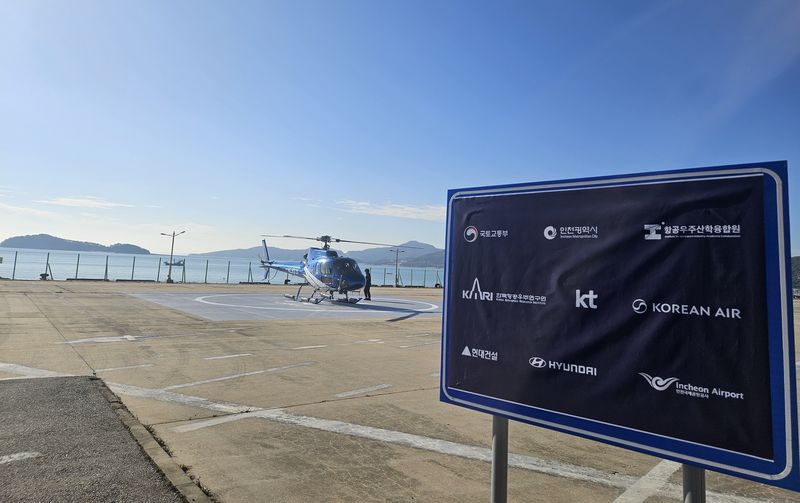
【Financial News, Incheon—Reporter Han Gab-soo】 A new mode of transport using air routes is expected to be introduced in Incheon's island areas, which rely on maritime transport. A urban air mobility (UAM) project is moving into full swing, aiming to improve emergency patient transfers and residents' access to medical and everyday services while encouraging transit passengers at Incheon International Airport to visit the islands.
Incheon City said on the 3rd that it plans to conduct UAM demonstrations focused on a route linking Deokjeok Island and Yeongjong Island, and to apply for designation as a pilot operating area in 2027.
The push to introduce UAM stems from poor transportation conditions in island areas. Unlike people on the mainland, island residents rely on boats to get around and have difficulty accessing medical and everyday services when maritime transport is disrupted by bad weather and other factors. In particular, rapidly transporting emergency patients to the mainland is considered a key challenge.
Deokjeok Island's ferry routes carry around 43,000 passengers a year on average, and there are around 25 emergency helicopter transfers annually. Incheon City is considering UAM as a new mode of transport that can respond to this urgent demand for travel.
The city conducted demonstration flights using a surrogate aircraft on the Deokjeok Island–Yeongjong Island route on the 19th and 20th of last month. It checked the communications environment and flight procedures needed for future UAM operations, and plans to continue refining the route and assessing safety based on the results.
Geojampo and Wangsan Marina on Yeongjong Island are being considered as operating hubs. Plans to link the Incheon Port International Passenger Terminal in Songdo International City and Michuhol Tower are also under discussion. Geojampo, in particular, could serve as a transport hub connecting the islands with the Seoul metropolitan area, as it can link to Incheon International Airport and ground transport such as rail and buses.
UAM is also expected to help expand airport-related tourism demand into the region, in addition to improving island residents' mobility. The plan is to build a transport network that enables transit passengers at Incheon International Airport to visit island areas such as Deokjeok Island, rather than limiting their sightseeing to the area around the airport.
The city is also pursuing designation of a pilot operating area under Article 8 of the Act on the Promotion and Support of Urban Air Mobility. It completed a preliminary application to the Ministry of Land, Infrastructure and Transport on October 22 and plans to submit a formal application in 2027 after drawing up an operating plan and consulting with relevant agencies.
The project aims to begin conceptual demonstrations in 2026, secure designation as a pilot operating area in 2027, and roll out commercialization in stages from 2028 to 2030. However, actual commercialization will require safety validation, suitable operating conditions, and consultations with relevant agencies to be in place first.
Park Gwang-geun, head of the city's Marine and Aviation Bureau, said, “UAM is a new mode of transport that can respond to urgent travel needs in island areas reliant on maritime transport and connect the airport with local tourism,” adding, “We will pursue designation as a pilot operating area and develop a public-service model that citizens can experience firsthand.”
[email protected] Han Gab-soo Reporter